
AMD’s Ryzen CPUs are some of the best options for gamers right now.
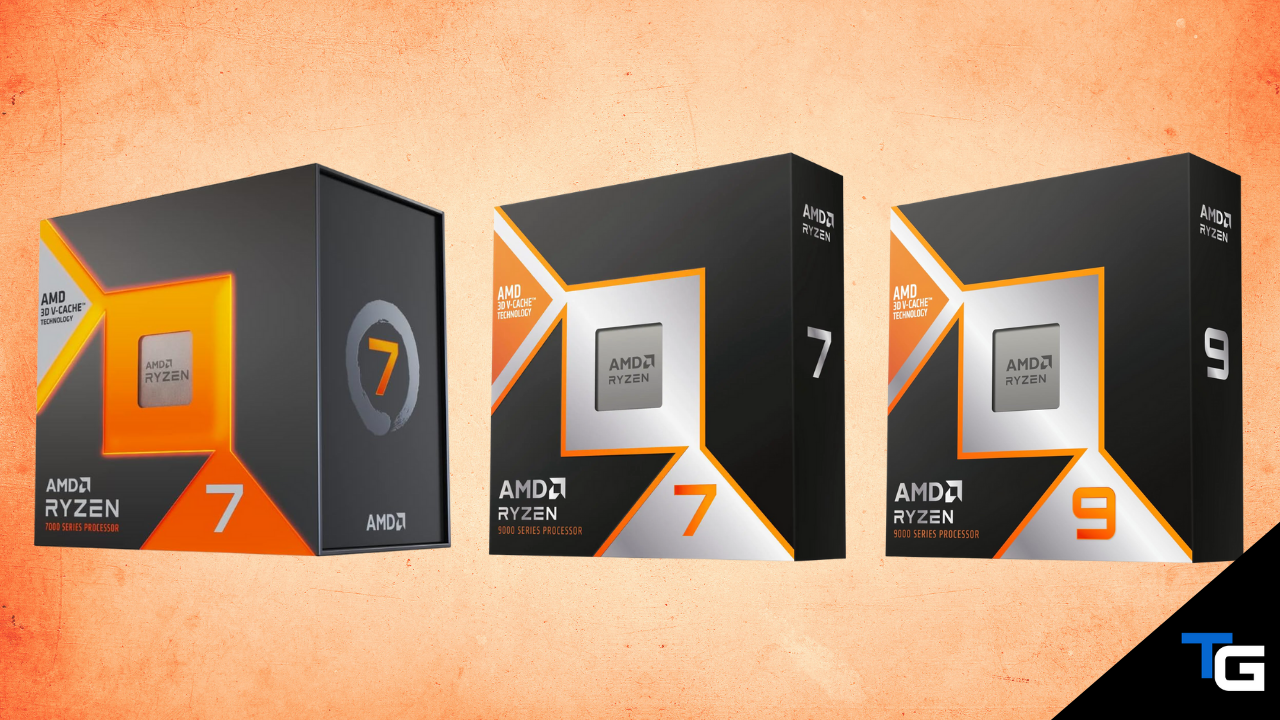
There are two main reasons why AMD’s CPUs remain such strong options for gamers who are looking to build a new PC.
The first is AMD’s 3D V-Cache technology. By adding a large amount of extra cache to its X3D processors, AMD has been able to deliver excellent gaming performance, particularly in CPU-heavy games and competitive titles where high frame rates are the priority.
The second advantage is AMD’s commitment to platform longevity. AMD’s AM4 socket supported multiple generations of Ryzen processors, and AMD has now committed to supporting its newer AM5 platform through 2029.
That makes AM5 particularly attractive if you’re building a new gaming PC today, as you’ll have a much better chance of being able to upgrade your processor in the future without replacing your motherboard and memory.
And AMD’s CPU lineup has grown again in 2026. The Ryzen 7 9850X3D has taken over as the company’s fastest gaming-focused Ryzen 7 processor, while AMD has also introduced the ultra-high-end Ryzen 9 9950X3D2 Dual Edition.
In this guide, we’ve highlighted the AMD CPUs that make the most sense for gamers right now. Whether you’re building an extreme gaming/workstation PC or trying to save as much of your budget as possible for your graphics card, one of the processors below should work for you.
Watch: What to Look for in A CPU
Watch our Beginner’s Guide to Choosing A CPU below, or on our YouTube channel.
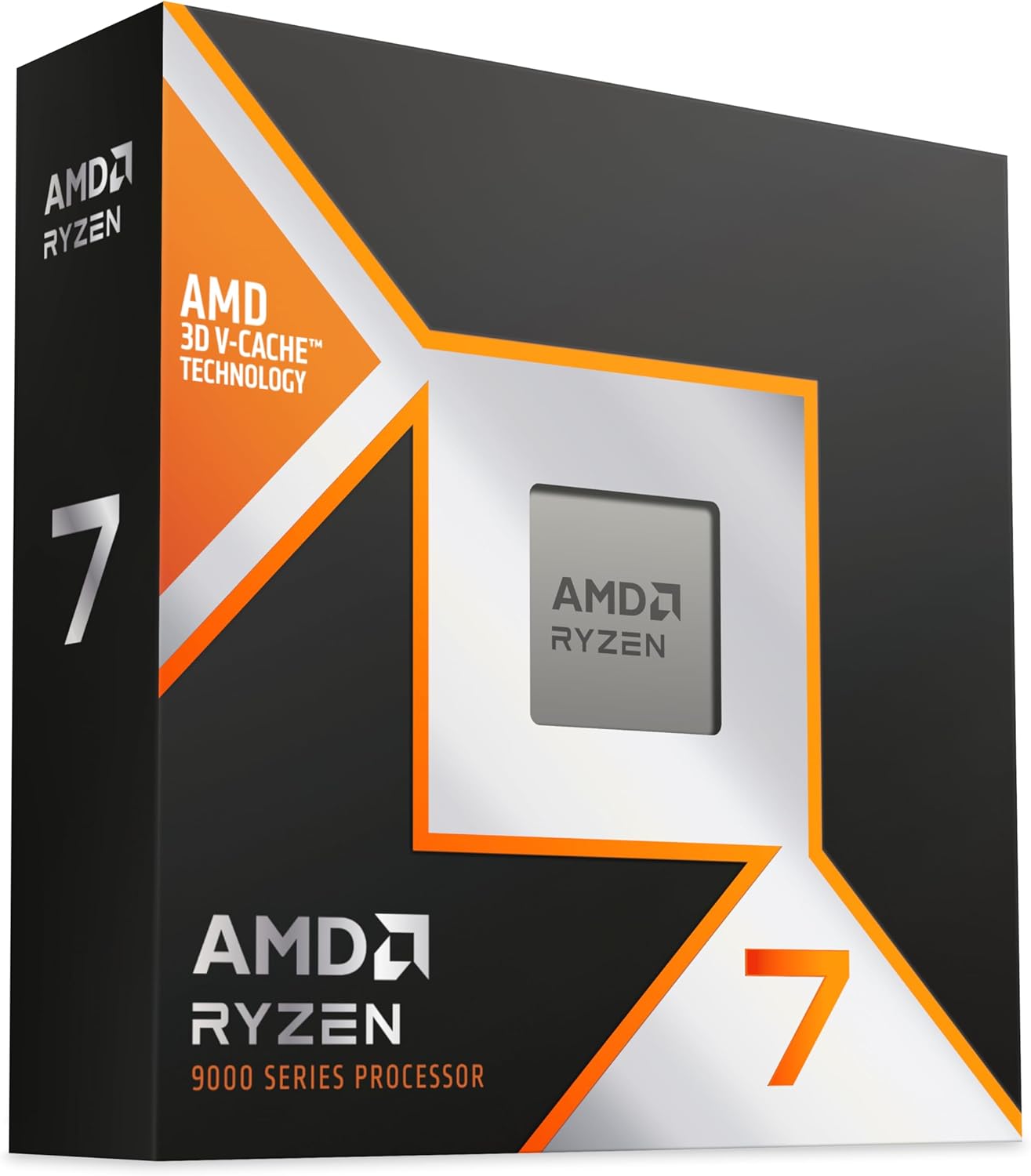
AMD Ryzen 7 9850X3D
The best AMD gaming CPU right now.
Tech Specs
- SOCKET: AM5
- ARCH.: Zen 5
- CORES: 8
- THREADS: 16
- BASE: 4.7 GHz
- BOOST: 5.6 GHz
- TDP: 120W
Pros & Cons
- Excellent gaming performance
- 2nd-gen 3D V-Cache technology
- Faster boost clock than 9800X3D
- AM5 offers an excellent upgrade path
- Only slightly faster than 9800X3D
AMD Ryzen 7 9850X3D Overview
AMD’s Ryzen 7 9850X3D is our top AMD CPU for gaming right now.
It essentially takes what made the Ryzen 7 9800X3D so good and pushes it a little further. You still get eight Zen 5 cores, 16 threads, AMD’s 2nd-generation 3D V-Cache technology, and a 120W TDP, but the maximum boost clock has increased from 5.2 GHz on the 9800X3D to 5.6 GHz.
That doesn’t suddenly make the 9800X3D obsolete. In fact, the two processors are close enough that price should play a major role in determining which one you buy.
If the 9850X3D only costs a little more than the 9800X3D, it makes sense to choose the newer chip. You’re getting the highest-end gaming-focused Ryzen 7 available and you won’t have to wonder whether spending a little extra would have been worth it.
If the price gap grows significantly, though, the 9800X3D becomes the better value.
Like the 9800X3D, the 9850X3D also doesn’t require an ultra-expensive motherboard. A good B650 or B850 motherboard can make sense for a gaming-oriented build, although you should still make sure whichever board you choose has adequate power delivery and the features you need.
Ultimately, if gaming performance is your main priority and your budget can accommodate it, the Ryzen 7 9850X3D is the AMD CPU we’d start with.
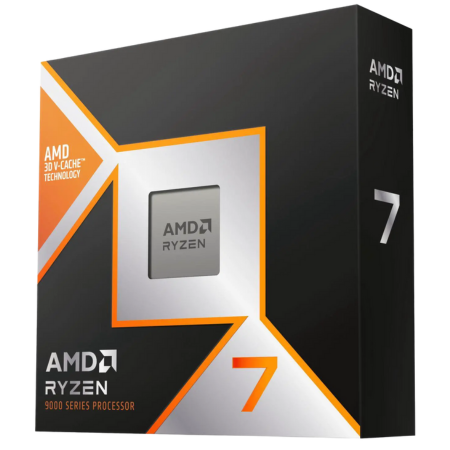
AMD Ryzen 7 9800X3D
The best value high-end AMD gaming CPU.
Tech Specs
- SOCKET: AM5
- ARCH.: Zen 5
- CORES: 8
- THREADS: 16
- BASE: 4.7 GHz
- BOOST: 5.2 GHz
- TDP: 120W
Pros & Cons
- Excellent gaming performance
- 3D V-Cache excels in CPU-heavy games
- Cheaper than the 9850X3D
- Works well with B-series motherboards
- 9850X3D is slightly faster
AMD Ryzen 7 9800X3D Overview
The arrival of the Ryzen 7 9850X3D means the 9800X3D is no longer AMD’s fastest gaming-oriented Ryzen 7. But that doesn’t mean you should stop considering it.
The 9850X3D is essentially a higher-clocked version of the same basic formula, and the 9800X3D remains an incredibly powerful gaming processor.
Also Read: Best Motherboards for the AMD Ryzen 7 9800X3D
The main reason to choose the 9800X3D is price.
If it is noticeably cheaper than the 9850X3D, you can save some money while giving up relatively little gaming performance. That extra money could instead go toward your graphics card, memory, storage, or monitor.
This is especially relevant for higher-resolution gaming. As resolution and graphical settings increase, your graphics card generally becomes the bigger performance bottleneck, which reduces the practical impact of spending extra money on a slightly faster CPU.
There’s also the older Ryzen 7 7800X3D. It’s still an excellent gaming processor, but at this point it only makes sense if you can find it at a meaningful discount versus the 9800X3D.
For most high-end gaming builds, the decision is therefore between the 9850X3D and 9800X3D. Get the 9850X3D if their prices are close; get the 9800X3D if it is significantly cheaper.
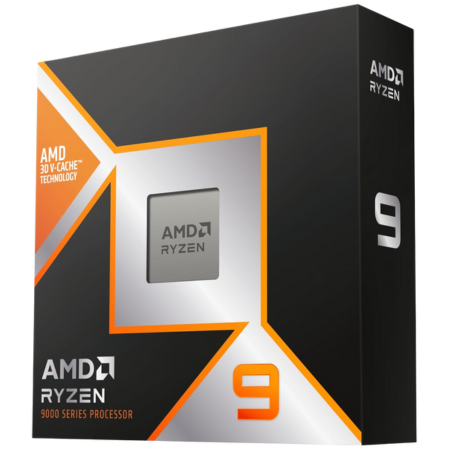
AMD Ryzen 9 9950X3D
The best AMD CPU for gaming and productivity.
Tech Specs
- SOCKET: AM5
- ARCH.: Zen 5
- CORES: 16
- THREADS: 32
- BASE: 4.3 GHz
- BOOST: 5.7 GHz
- TDP: 170W
Pros & Cons
- Excellent gaming performance
- 16 cores and 32 threads
- Excellent productivity performance
- Requires stronger cooling
- Overkill for gaming-only builds
AMD Ryzen 9 9950X3D Overview
If you’re building a PC that needs to handle both high-end gaming and demanding productivity workloads, the Ryzen 9 9950X3D is the AMD CPU we’d look at first.
Its 16 cores and 32 threads give it a major advantage over the Ryzen 7 X3D processors in heavily threaded workloads, while AMD’s 3D V-Cache technology allows it to retain excellent gaming performance.
However, those extra cores aren’t particularly useful if all you’re doing is gaming.
For a dedicated gaming PC, we’d rather save the money and go with the Ryzen 7 9850X3D or Ryzen 7 9800X3D. You can put the savings toward your graphics card and likely end up with a better overall gaming system.
The 9950X3D also has a 170W TDP, so we’d pair it with a quality motherboard and a strong cooling solution.
AMD has also released the Ryzen 9 9950X3D2 Dual Edition, which takes things even further by placing 3D V-Cache on both of its compute dies.
The 9950X3D2 comes with 16 cores, 32 threads, 192MB of L3 cache, and a 200W TDP. But its biggest advantages are aimed more toward demanding creation, development, and workstation workloads than gaming.
So, unless your PC is going to spend a lot of time doing heavily CPU-intensive work, we’d stick with the significantly less expensive 9950X3D—or simply choose one of the Ryzen 7 X3D processors for a gaming-focused build.
AMD Ryzen 5 9600X
The best mid-range AMD gaming CPU.
Tech Specs
- SOCKET: AM5
- ARCH.: Zen 5
- CORES: 6
- THREADS: 12
- BASE: 3.9 GHz
- BOOST: 5.4 GHz
- TDP: 65W
Pros & Cons
- Excellent single-core performance
- Lower price leaves more for your GPU
- Low 65W TDP
- Excellent AM5 upgrade path
- No 3D V-Cache
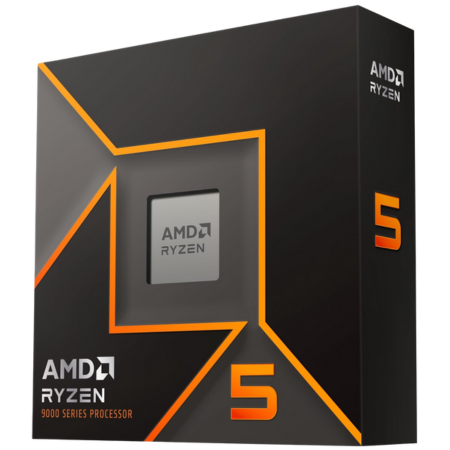
AMD Ryzen 5 9600X Overview
You don’t need an X3D processor to build a high-end gaming PC.
If your budget doesn’t accommodate one of AMD’s Ryzen 7 X3D processors, the Ryzen 5 9600X is an excellent alternative.
It has six Zen 5 cores and 12 threads, boosts up to 5.4 GHz, and has a relatively low 65W TDP. That makes it inexpensive not only to buy, but also to accommodate with your motherboard and cooling configuration.
Yes, it will fall behind AMD’s X3D processors in games that benefit heavily from the additional cache.
But that’s not the only factor that determines gaming performance.
If saving money on your CPU allows you to jump up a tier on your graphics card, the 9600X can result in the faster gaming PC overall—especially if you’re targeting 1440P or 4K gaming.
It also gets you onto the AM5 platform, giving you a straightforward upgrade path if you decide you need more CPU performance in the future.
For most mid-range gaming builds, the 9600X is one of the easiest AMD processors to recommend.
AMD Ryzen 5 7600X
A cheaper AM5 gaming CPU.
Tech Specs
- SOCKET: AM5
- ARCH.: Zen 4
- CORES: 6
- THREADS: 12
- BASE: 4.7 GHz
- BOOST: 5.3 GHz
- TDP: 105W
Pros & Cons
- Strong gaming performance
- Inexpensive entry into AM5
- Lower price leaves more for your GPU
- Good future upgrade path
- Slower than newer Zen 5 options
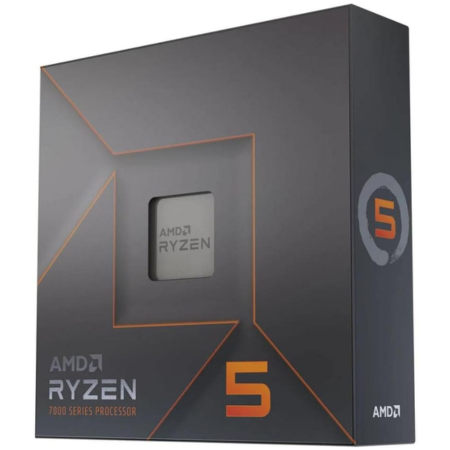
AMD Ryzen 5 7600X Overview
The Ryzen 5 7600X might be an older Zen 4 processor, but it’s still a very capable gaming CPU.
Its biggest selling point is price.
If the 7600X is noticeably cheaper than the Ryzen 5 9600X, choosing it can free up extra money for the component that matters most to gaming performance: your graphics card.
And you’re still getting an AM5 processor, so choosing the 7600X doesn’t lock you into an outdated platform.
There’s also the Ryzen 5 7600 to consider.
The non-X 7600 has a lower 65W TDP and comes with AMD’s Wraith Stealth cooler, making it particularly attractive for budget builds where you want to avoid purchasing an aftermarket CPU cooler.
As a general rule, we’d compare the current prices of the Ryzen 5 7600, 7600X, and 9600X and buy whichever option gives you the best combination of price and performance.
AMD Ryzen 7 7800X3D
Still great—if you can find it at the right price.
Tech Specs
- SOCKET: AM5
- ARCH.: Zen 4
- CORES: 8
- THREADS: 16
- BASE: 4.2 GHz
- BOOST: 5.0 GHz
- TDP: 120W
Pros & Cons
- Still excellent for gaming
- 3D V-Cache technology
- AM5 upgrade path
- Older Zen 4 architecture
- Often priced too close to 9800X3D
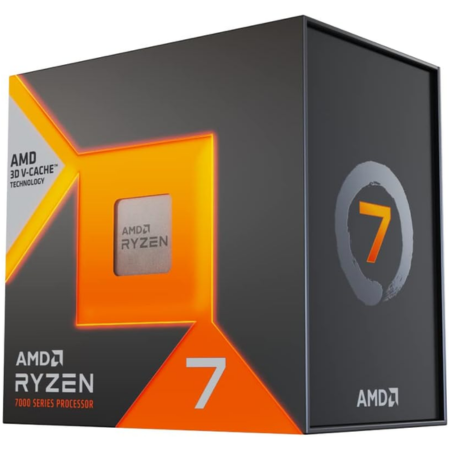
AMD Ryzen 7 7800X3D Overview
The Ryzen 7 7800X3D was one of the easiest gaming CPUs to recommend for a long time.
And from a pure performance standpoint, it’s still excellent.
Also Read: Best Motherboards for the AMD Ryzen 7 7800X3D
The problem is no longer performance—it’s price.
With both the Ryzen 7 9800X3D and Ryzen 7 9850X3D now available, there’s much less reason to buy the older 7800X3D unless it is offered at a significant discount.
If you find a good deal on one, though, it can still make a lot of sense.
You’re getting eight cores, 16 threads, 3D V-Cache, excellent gaming performance, and access to the AM5 platform.
So, we wouldn’t automatically rule the 7800X3D out. We’d just make sure you’re comparing its current price against the 9800X3D before buying.
If the prices are close, get the 9800X3D.
AMD Ryzen 7 5700X3D
A strong AM4 upgrade—if you can find one at a reasonable price.
Tech Specs
- SOCKET: AM4
- ARCH.: Zen 3
- CORES: 8
- THREADS: 16
- BASE: 3.0 GHz
- BOOST: 4.1 GHz
- TDP: 105W
Pros & Cons
- 3D V-Cache boosts gaming performance
- Drop-in upgrade for many AM4 systems
- Lets you keep your DDR4 memory
- Limited availability
- No meaningful future CPU upgrade path
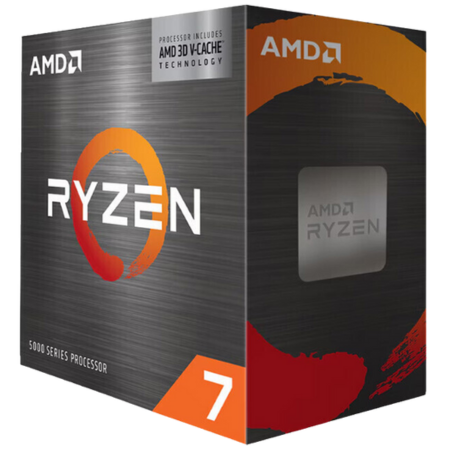
AMD Ryzen 7 5700X3D Overview
If you already own an AM4 gaming PC, the Ryzen 7 5700X3D can still be an excellent way to extend the life of your system.
The key phrase there is if you already own an AM4 system.
We would not recommend building a new gaming PC around the 5700X3D in 2026. AM5 gives you DDR5 support, newer CPUs, and a significantly better upgrade path.
But upgrading is different.
If you already have a compatible B450, B550, X470, or X570 motherboard and DDR4 memory, installing a 5700X3D can provide a substantial CPU upgrade without requiring you to replace the rest of your platform.
The problem is availability.
The 5700X3D is no longer a mainstream current-production option, so Amazon inventory can consist of third-party, imported, or renewed listings. That means pricing varies substantially.
If the price gets too close to the cost of moving to AM5, we’d skip it and put the money toward a platform upgrade instead.
But if you find one at a reasonable price and you want to squeeze a few more years out of an existing AM4 system, the 5700X3D remains one of the best upgrades available for the platform.
Budget-Oriented AM4 Gaming CPUs
If you’re building an extremely budget-oriented gaming PC, AM4 can still make sense.
Right now, the following processors are worth considering if keeping the overall cost of your build as low as possible is the priority:
The Ryzen 5 5500 works best for ultra-budget builds where every dollar saved on the CPU can be put toward getting a better graphics card.
The Ryzen 5 5600X and Ryzen 7 5700X are better options if their prices aren’t much higher.
The advantage these processors have is that AM4 motherboards and DDR4 memory can still be very inexpensive. That can lower the total platform cost enough to make room in your budget for a faster graphics card.
However, we would only go this route when your budget absolutely requires it.
If you can afford an AM5 CPU, B650/B850 motherboard, and DDR5 memory without making a major sacrifice on your graphics card, AM5 is the much better long-term platform.
Also Read: Budget CPU Tier List: Top Options Under $200
What is the best AMD CPU for gaming right now?
Right now, the AMD Ryzen 7 9850X3D is our pick for the best AMD gaming CPU.
It takes everything that made the 9800X3D such a strong gaming processor and adds a higher 5.6 GHz boost clock.
However, the Ryzen 7 9800X3D is still the processor we’d compare it against before buying. If the 9800X3D is significantly cheaper, it provides nearly the same kind of high-end gaming experience while freeing up more of your budget for your GPU.
For a gaming PC that also needs serious multi-core productivity performance, the Ryzen 9 9950X3D is the better choice.
And for more budget-oriented gaming builds, we’d look at the Ryzen 5 9600X, Ryzen 5 7600X, or Ryzen 5 7600.
Frequently Asked Questions
What is the best AMD CPU for gaming in 2026?
The AMD Ryzen 7 9850X3D is currently our top AMD CPU for gaming. It offers eight Zen 5 cores, 16 threads, AMD’s 2nd-generation 3D V-Cache technology, and a maximum boost clock of 5.6 GHz.
However, the Ryzen 7 9800X3D remains an excellent alternative. If it is significantly cheaper than the 9850X3D, the 9800X3D will usually offer better value.
Is the Ryzen 7 9850X3D worth it over the 9800X3D?
It depends on the price difference.
The Ryzen 7 9850X3D boosts up to 5.6 GHz compared to 5.2 GHz for the 9800X3D, but both processors use Zen 5 cores, have eight cores and 16 threads, feature 3D V-Cache, and carry a 120W TDP.
If their prices are close, we’d choose the 9850X3D. If the 9800X3D is significantly cheaper, we’d save the money and go with the older processor.
Do you need an X3D CPU for gaming?
No. AMD’s X3D processors are excellent gaming CPUs, but they aren’t necessary for a good gaming PC.
Processors such as the Ryzen 5 9600X and Ryzen 5 7600X are more than capable of powering high-end gaming systems.
In fact, on a limited budget, choosing a less expensive CPU and putting the savings toward a faster graphics card can provide better overall gaming performance.
Is AM5 worth it over AM4 in 2026?
For a new gaming PC, yes.
AM5 supports newer Ryzen processors, DDR5 memory, and newer platform features, and AMD has committed to supporting the socket through 2029.
AM4 still makes sense for extremely budget-oriented systems or for users who already own an AM4 motherboard and want a drop-in CPU upgrade.
But if you’re starting from scratch, we’d choose AM5 whenever the budget allows.
Is the Ryzen 7 7800X3D still worth buying?
The Ryzen 7 7800X3D is still an excellent gaming CPU, but its value depends almost entirely on price.
With both the Ryzen 7 9800X3D and Ryzen 7 9850X3D now available, we’d only choose the 7800X3D if it were meaningfully cheaper than the 9800X3D.
If their prices are close, the newer 9800X3D is the better buy.
What AMD CPU should I get for 4K gaming?
You don’t necessarily need an expensive CPU for 4K gaming because higher resolutions generally place more of the workload on your graphics card.
A Ryzen 5 9600X or Ryzen 5 7600X can therefore make a lot of sense in a 4K gaming PC if choosing one allows you to spend more money on your GPU.
For a no-compromise build with a top-tier graphics card and a high-refresh-rate monitor, however, the Ryzen 7 9850X3D or 9800X3D would be better options.
What is the best AMD CPU for gaming and productivity?
The Ryzen 9 9950X3D is our preferred AMD CPU for a system that needs both high-end gaming and heavy productivity performance.
Its 16 cores and 32 threads give it significantly more multi-threaded processing power than AMD’s Ryzen 7 X3D processors while still providing excellent gaming performance.
AMD also offers the Ryzen 9 9950X3D2 Dual Edition for extremely demanding workstation workloads, but its price and 200W TDP make it unnecessary for most gaming and content-creation PCs.
