
The best PC cases for gaming PCs in 2026.
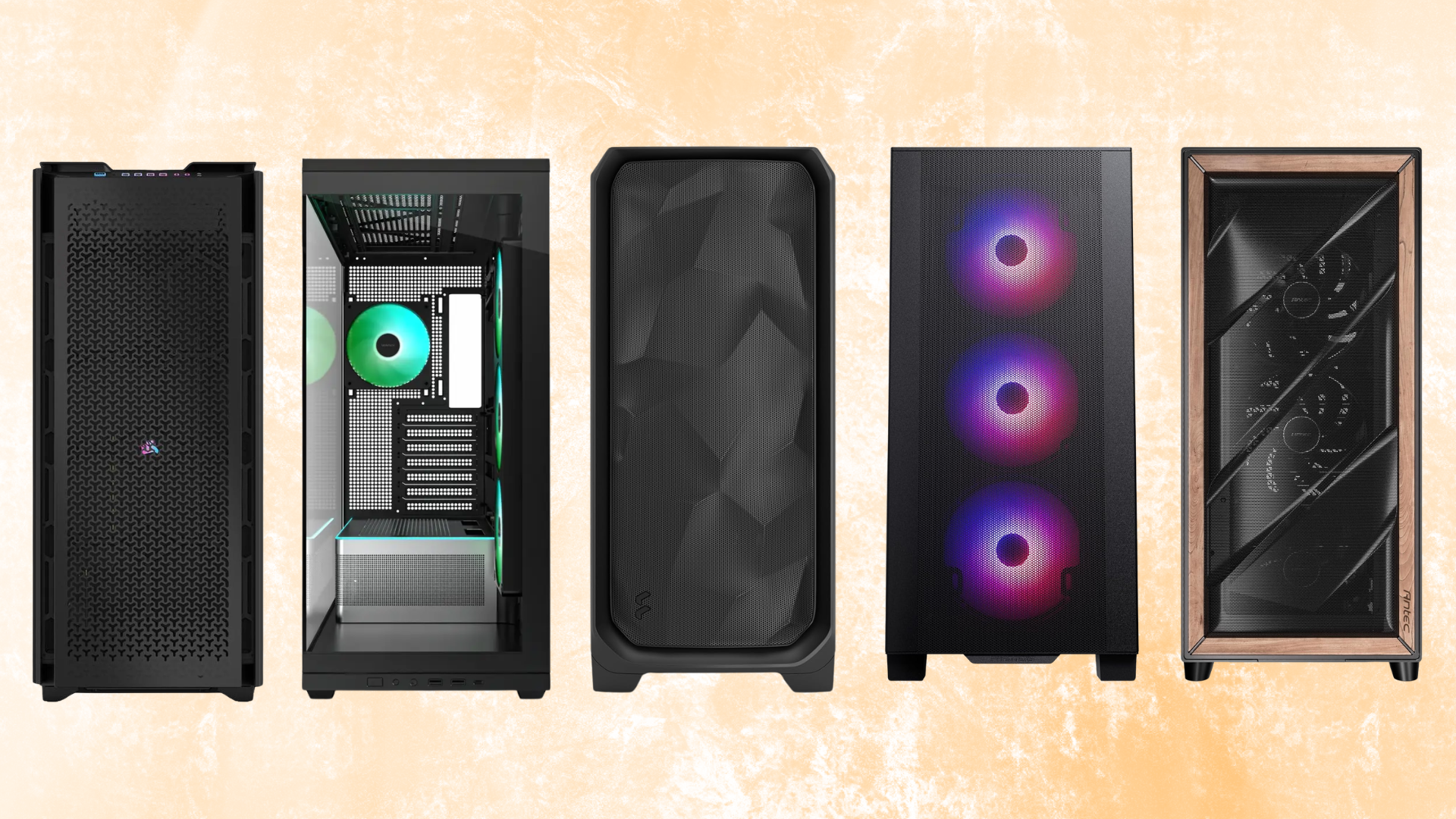
There has never been a better selection of PC cases available than there is right now.
Modern cases have improved considerably in airflow, cable management, radiator support, GPU clearance, and general ease of assembly. Many newer chassis also support rear-connector motherboards, include large PWM fans, and provide enough room for today’s enormous graphics cards without requiring you to move to a massive full-tower enclosure.
That also means you probably don’t need to spend a fortune on your case.
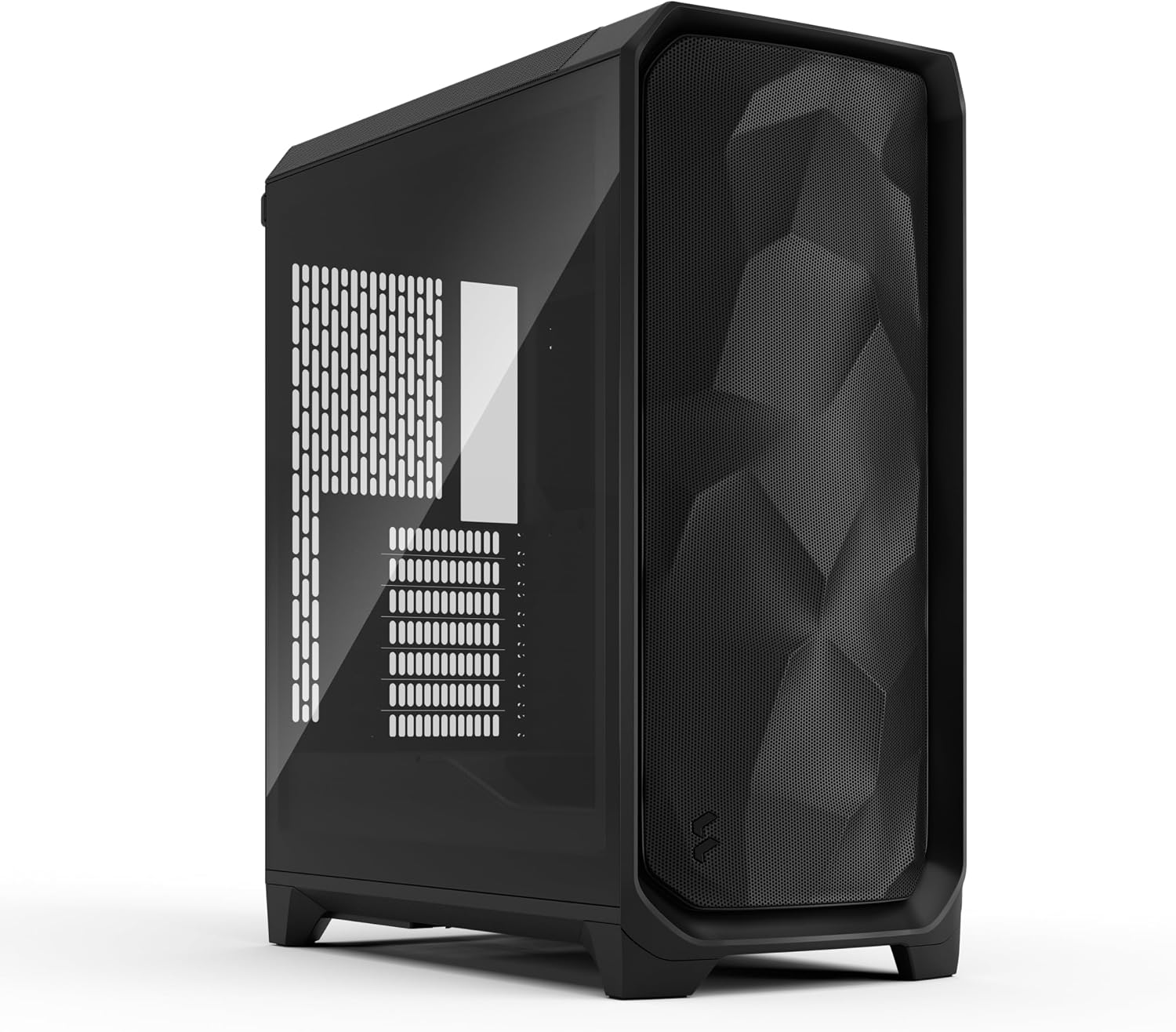
For most high-end gaming PCs, we’d start with Fractal Design’s Meshify 3.
The Meshify 3 combines excellent cooling potential with three included 140mm Momentum fans, a relatively compact mid-tower footprint, support for E-ATX motherboards up to 277mm wide, and enough room for graphics cards up to 349mm long.
Its GPU clearance isn’t as generous as some of the larger cases below, so you’ll still want to check your graphics card’s exact dimensions before buying it.
But as a complete package, the Meshify 3 offers the combination of airflow, acoustics, build quality, features, and size that we’d want from an all-around case.
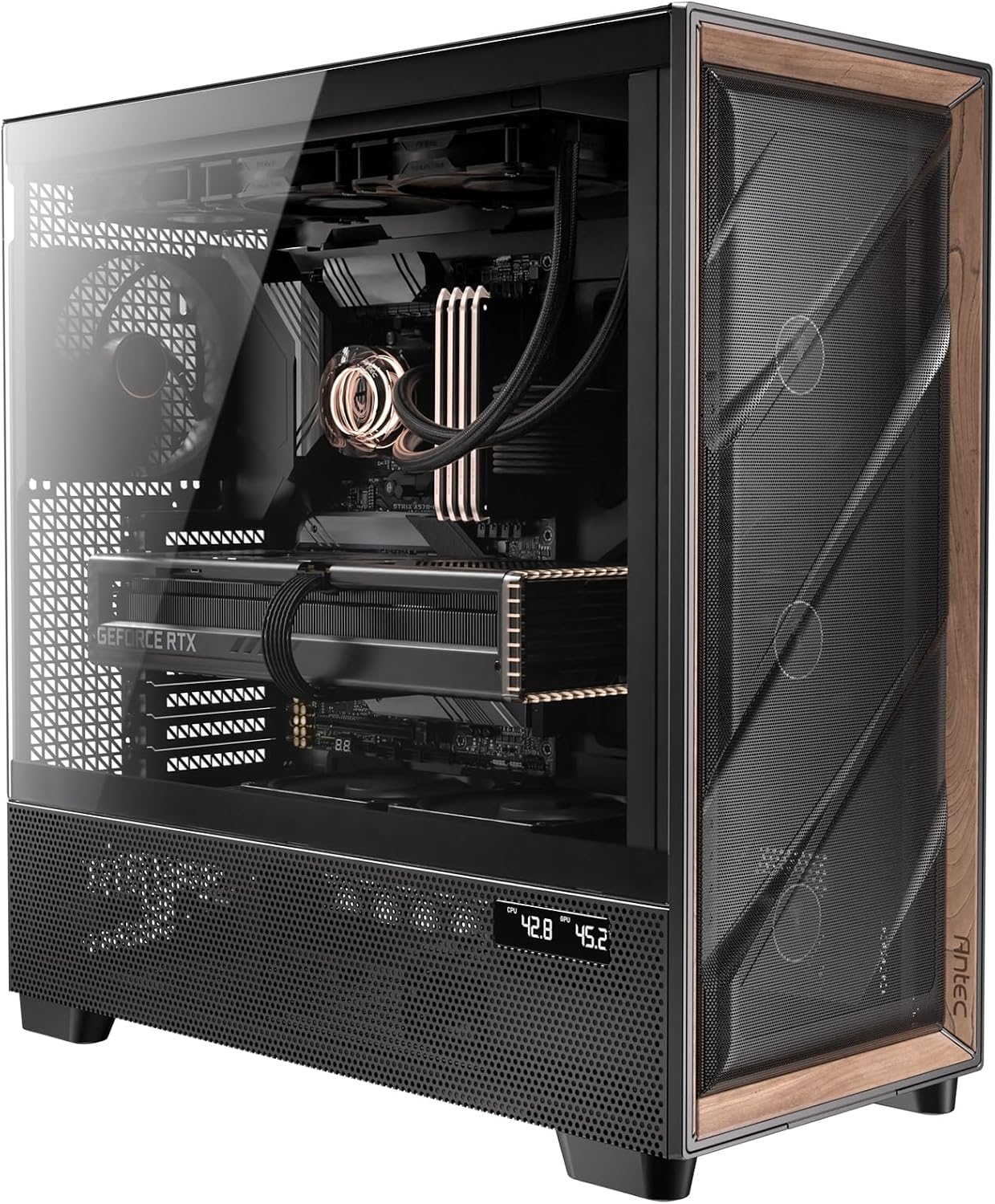
If maximum cooling performance is the priority, the Antec FLUX Pro is our preferred alternative.
It comes with six PWM fans, supports GPUs up to 455mm long, has 190mm of CPU cooler clearance, and can accommodate enormous 420mm radiators.
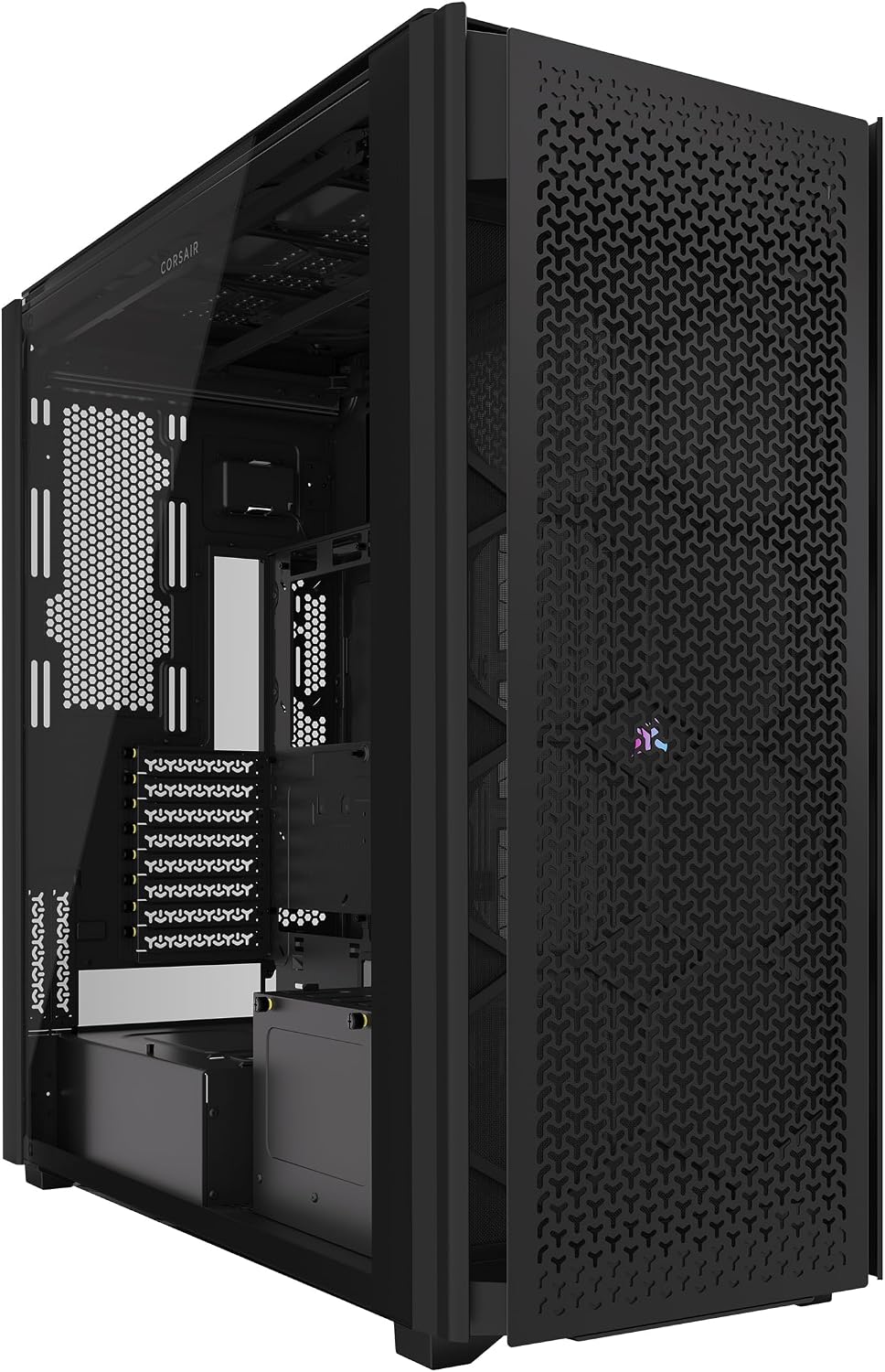
For builders who want an absolutely gigantic chassis for a custom cooling loop or extreme workstation, Corsair’s 9000D RGB AIRFLOW takes things much further.
At the other end of the size spectrum, Cooler Master’s NR200P V3 is our favorite compact Mini-ITX option, while the Lian Li A3-mATX gives you considerably more hardware flexibility without taking up the space of a traditional ATX tower.
And if you’re trying to maximize the amount of your budget that goes toward your graphics card and processor, the Phanteks XT Pro Ultra and Montech TG3 provide excellent alternatives for considerably less money.
Also Read: Which PC Case Size is Best for Your Next Build?
Watch: What to Look for in A PC Case
Watch our Beginner’s Guide to Choosing a Case below, or on our YouTube channel.
Fractal Design Meshify 3
The best PC case overall.
Tech Specs
- FORM: E-ATX / ATX / mATX / Mini-ITX
- GPU CLEARANCE: Up to 349mm
- CPU COOLER: Up to 173mm
- RADIATOR: Up to 360mm front / 280mm top
- INCLUDED FANS: 3x 140mm Momentum
- FRONT I/O: 20Gbps USB-C + 2x USB-A
Pros & Cons
- Excellent all-around cooling performance
- Three high-quality 140mm fans included
- Excellent build quality and cable management
- Modern 20Gbps USB-C front connection
- 349mm GPU clearance is less generous than some competitors
Fractal Design Meshify 3 Overview
If we were building a high-end gaming PC today and wanted one case that did just about everything well, we’d start with Fractal Design’s Meshify 3.
The Meshify line has always been focused heavily on airflow, but the third-generation version is much more than another mesh-fronted mid-tower.
Fractal redesigned the chassis with improved airflow routing and includes three of its 140mm Momentum fans.
Those large fans give the Meshify 3 a strong cooling configuration without requiring you to immediately purchase additional case fans.
That matters more than it might seem.
A cheaper case that requires another $30-$60 worth of fans before it provides the cooling performance you want isn’t necessarily cheaper in the end.
The Meshify 3 also gives you enough room for the hardware you’d expect to install in a high-end gaming system.
It supports standard ATX, Micro-ATX, Mini-ITX, and E-ATX motherboards up to 277mm wide.
CPU tower coolers can be up to 173mm tall, which is enough clearance for the vast majority of large dual-tower air coolers.
Liquid-cooling support is solid as well.
You can install up to a 360mm radiator in the front or a 280mm radiator at the top.
We would have liked to see support for a 360mm top-mounted radiator, especially considering how common 360mm AIOs have become in enthusiast systems.
However, a front-mounted 360mm radiator or large 280mm top-mounted unit still gives you plenty of cooling options.
The specification we’d pay the most attention to is GPU clearance.
The standard Meshify 3 supports graphics cards up to 349mm long.
That’s enough room for a lot of modern high-end graphics cards, but there are extremely large cards that can exceed that figure.
If you’re putting together an RTX 5090-class build or using another particularly large GPU, check the exact length of your card before ordering the case.
Fractal also equipped the Meshify 3 with modern front-panel connectivity.
You get a 20Gbps USB Type-C connection, two USB Type-A ports, and a combination headset jack.
The overall design is more understated than many modern showcase cases as well.
You still get a tempered-glass side panel on the version we’ve linked to, but the aggressively ventilated front panel puts performance ahead of the enormous amounts of glass found on many dual-chamber cases.
Ultimately, there are individual cases that provide more GPU space, more radiator support, or more included fans.
But the Meshify 3 doesn’t have to win every individual category.
What makes it our favorite overall option is how well it balances cooling performance, acoustics, build quality, dimensions, included fans, ease of assembly, and appearance.
For the majority of high-end gaming builds, that’s exactly what we’d want.
Antec FLUX Pro
The best PC case for airflow.
Tech Specs
- FORM: E-ATX / ATX / mATX / Mini-ITX
- GPU CLEARANCE: Up to 455mm
- CPU COOLER: Up to 190mm
- RADIATOR: Up to 420mm front or top
- INCLUDED FANS: 6x PWM
- FRONT I/O: USB-C + 2x USB-A
Pros & Cons
- Outstanding airflow and thermal potential
- Six PWM fans included
- Huge GPU and air-cooler clearance
- Supports 420mm radiators
- Much larger than most builders actually need
Antec FLUX Pro Overview
If cooling performance matters more to you than keeping your system compact, the Antec FLUX Pro is one of the first cases we’d look at.
Antec has built the FLUX Pro almost entirely around moving large amounts of air through high-end hardware.
And unlike some premium airflow cases, you don’t need to fill all of its empty fan positions before it performs well.
Six PWM fans are included from the factory.
You get three 140mm intake fans at the front, two reverse-blade 120mm fans positioned over the PSU shroud to feed cool air toward the graphics card, and another 140mm exhaust fan at the rear.
That is an unusually complete stock cooling configuration.
It’s especially useful now that high-end graphics cards can dump enormous amounts of heat into the case.
The FLUX Pro also provides significantly more interior room than the Meshify 3.
Graphics cards up to 455mm long are supported, so GPU length is unlikely to be a problem.
CPU cooler clearance is equally generous at 190mm.
That gives you enough room for virtually any mainstream tower-style CPU cooler.
Liquid cooling is where things become even more extreme.
Both the front and top positions can accept radiators up to 420mm.
You can’t necessarily install a 420mm radiator in both locations simultaneously—your exact configuration and radiator dimensions matter—but the case gives custom-loop builders significantly more flexibility than a conventional mid-tower.
There is even additional radiator support around the PSU shroud, bottom, and rear depending on the configuration.
Also Read: The Best PC Case Fans Right Now
One of the more unusual design features is Antec’s iShift PSU mounting system, which allows the power supply to be rotated 90 degrees.
The idea is to make the PSU connections easier to access while improving cable routing.
You also get a small temperature display built into the front I/O area.
None of those extras would matter if the case didn’t cool well, though.
The primary reason we’re recommending the FLUX Pro is simple: it is designed from the beginning as an airflow-oriented enclosure, provides excellent GPU cooling potential, and already includes enough fans to take advantage of that design.
The obvious downside is size.
This is a full-tower enclosure measuring roughly 530mm deep and 545mm tall.
If you’re building a normal Ryzen 7/Core Ultra 7 gaming system with one graphics card, an air cooler, and a couple of SSDs, you absolutely do not need this much case.
But if you’re running particularly hot hardware, want extensive liquid-cooling support, or simply value thermal performance above compactness, the FLUX Pro is an excellent choice.
Corsair 9000D RGB AIRFLOW
The best full-tower PC case.
Tech Specs
- FORM: SSI-EEB / E-ATX / ATX / mATX / Mini-ITX
- GPU CLEARANCE: Up to 580mm
- CPU COOLER: Up to 180mm
- RADIATOR: Up to 480mm front & top
- FAN SUPPORT: Up to 18x 120mm
- INCLUDED FANS: None
Pros & Cons
- Enormous amount of interior space
- Extreme custom-loop cooling support
- Up to 580mm of GPU clearance
- Outstanding expansion and storage potential
- Extremely expensive, enormous, and includes no fans
Corsair 9000D RGB AIRFLOW Overview
The Corsair 9000D RGB AIRFLOW isn’t a case most people should buy.
That’s also exactly why it belongs here.
If you’re specifically shopping for a full-tower chassis, there’s a good chance you aren’t looking for the most sensible or compact option.
You probably want room.
A lot of room.
And the 9000D provides it.
Corsair officially classifies the 9000D as a super-tower, and its 698mm x 307mm x 698mm dimensions make even many traditional full towers look small.
The benefit of all of that space is an absurd amount of hardware and cooling compatibility.
The chassis supports graphics cards up to 580mm long and motherboards ranging from Mini-ITX all the way through E-ATX and SSI-EEB.
You can install up to 18 120mm fans.
Radiator support is equally extreme.
The front and roof can each accommodate radiators up to 480mm, while additional radiator positions are available on the side and rear.
For a conventional AIO-cooled gaming PC, that’s massive overkill.
For an elaborate custom liquid-cooling loop, though, the ability to install several large radiators gives you options that simply aren’t available in a typical mid-tower.
Corsair’s InfiniRail mounting system also makes the fan and radiator positions more flexible.
Instead of being restricted entirely to predetermined mounting holes, the rails can be repositioned to better match your particular cooling layout.
The front I/O panel is another area where Corsair takes advantage of the case’s enormous size.
You get four USB Type-A ports and two USB Type-C ports.
There is a major catch.
The 9000D doesn’t include case fans.
That’s not particularly surprising for a chassis aimed at custom-loop enthusiasts who are likely to choose their own fan configuration anyway.
But when you’re buying a case this expensive, it’s still worth pointing out.
Filling even a portion of its 18 available 120mm positions with premium fans can add a significant amount to the total cost.
The case itself also weighs more than 37kg before you install any hardware.
Once you add a large power supply, graphics card, motherboard, radiators, reservoir, pump, coolant, and other components, moving the finished computer is going to be a project.
Also Read: The Best Full Tower PC Cases
So no, we wouldn’t buy a 9000D for a typical gaming PC.
A normal mid-tower will cost far less, take up significantly less room, and cool a standard gaming configuration perfectly well.
But if you’re specifically looking for an enormous chassis that gives you the freedom to build an extreme custom-cooled gaming PC or workstation, the 9000D is exactly the kind of case you should be considering.
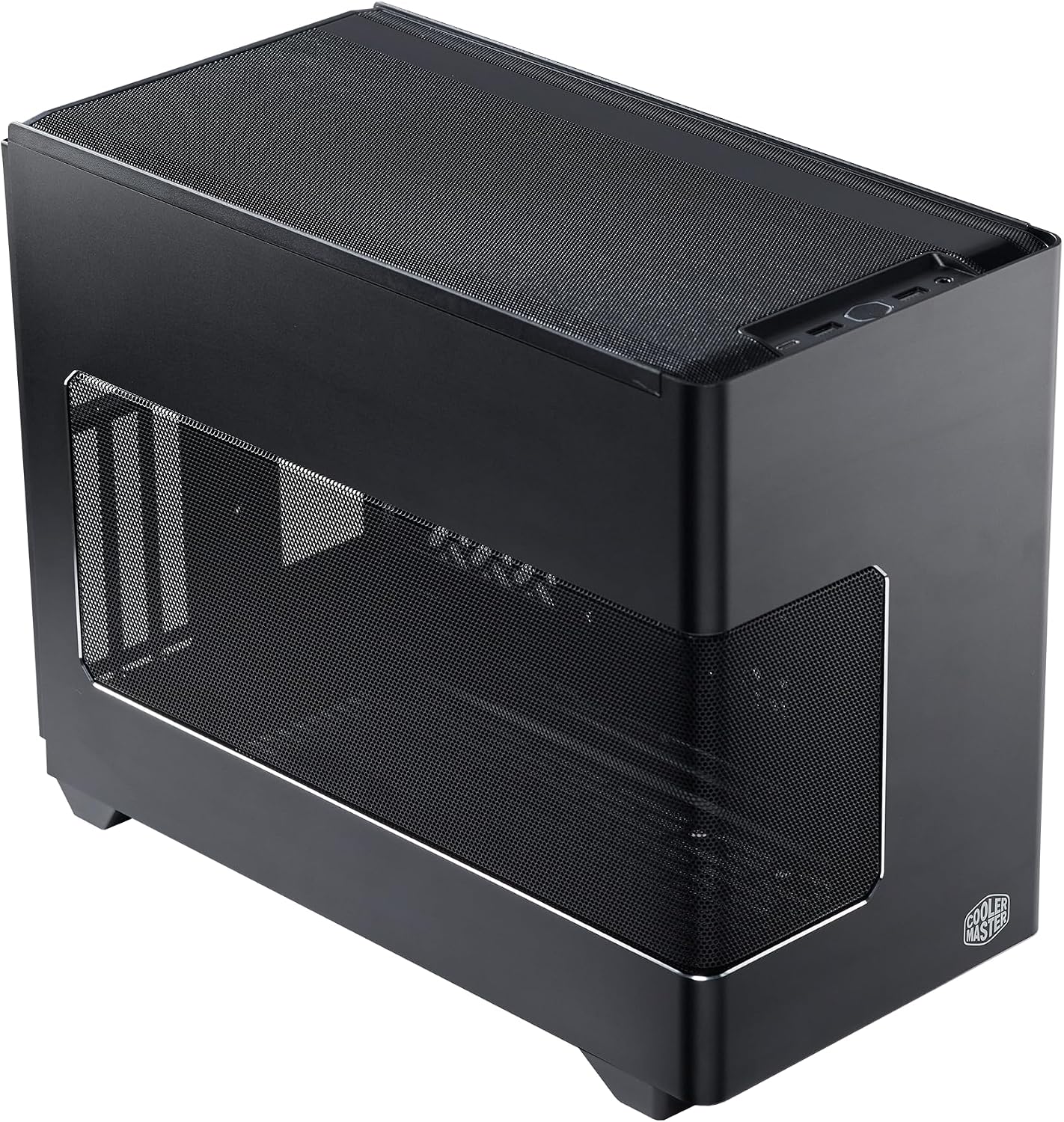
Cooler Master NR200P V3
The best Mini-ITX case.
Tech Specs
- FORM: Mini-ITX
- VOLUME: 18.62L
- GPU CLEARANCE: Up to 361.5mm / 3.8-slot
- CPU COOLER: Up to 70mm
- RADIATOR: Up to 280mm top
- PSU: SFX / SFX-L
Pros & Cons
- Excellent GPU support for an 18.6L case
- Supports 240mm and 280mm AIOs
- PCIe 5.0 riser cable included
- Tool-free removable panels
- 70mm CPU air-cooler limit heavily favors liquid cooling
Cooler Master NR200P V3 Overview
Cooler Master’s original NR200 became popular because it made building a powerful Mini-ITX PC much less frustrating than it traditionally had been.
The NR200P V3 takes that idea and updates it for modern high-end hardware.
Despite occupying only about 18.6 liters, the V3 can accommodate graphics cards up to 361.5mm long, 160mm tall, and 78.5mm thick.
That’s approximately 3.8 expansion slots.
Those dimensions make the NR200P V3 significantly more practical for a high-end gaming system than many ultra-compact Mini-ITX cases that force you to choose from a narrow selection of graphics cards.
Cooler Master also includes a PCIe 5.0 x16 riser cable.
The graphics card installs vertically, which is a big part of how Cooler Master manages to fit so much GPU into such a small enclosure.
CPU cooling is where you’ll need to plan the build more carefully.
Air-cooler clearance is only 70mm.
There are excellent low-profile air coolers available, but if you’re using a particularly power-hungry processor, we’d generally pair the NR200P V3 with an AIO.
Fortunately, the top of the case supports both 240mm and 280mm radiators.
A good 280mm AIO combined with the case’s extensive mesh ventilation gives you significantly more CPU-cooling potential than you might expect from an enclosure this compact.
The case requires an SFX or SFX-L power supply as well.
That’s normal for this class of case, but it means you can’t simply carry over a standard ATX PSU from an existing build.
You should factor the cost of an SFX power supply into the total cost of switching to Mini-ITX.
There is also less storage expansion than you’d get with a conventional tower.
Again, that’s an expected compromise rather than a major flaw.
With modern motherboards offering multiple M.2 slots, many gaming PCs don’t need a large stack of 2.5-inch and 3.5-inch drives anyway.
Also Read: Three Powerful Mini-ITX Gaming PC Builds
The NR200P V3 isn’t the smallest Mini-ITX enclosure you can buy.
If your goal is to make your computer as tiny as physically possible, there are more aggressive SFF cases.
But shrinking a case further generally makes compatibility and cooling more difficult.
That’s why we like the NR200P V3.
It is small enough to give you a genuinely compact gaming PC, while remaining large enough to accommodate the kind of graphics card and AIO cooler we’d actually want in a high-end system.
Lian Li A3-mATX
The best Micro-ATX PC case.
Tech Specs
- FORM: Micro-ATX / Mini-ITX
- VOLUME: 26.3L
- GPU CLEARANCE: Up to 415mm
- CPU COOLER: Up to 165mm
- RADIATOR: Up to 360mm
- PSU: ATX / SFX / SFX-L
Pros & Cons
- Compact 26.3-liter design
- Excellent GPU compatibility
- Supports standard ATX power supplies
- Up to 360mm AIO support
- Component clearances change considerably with different PSU and cooling layouts
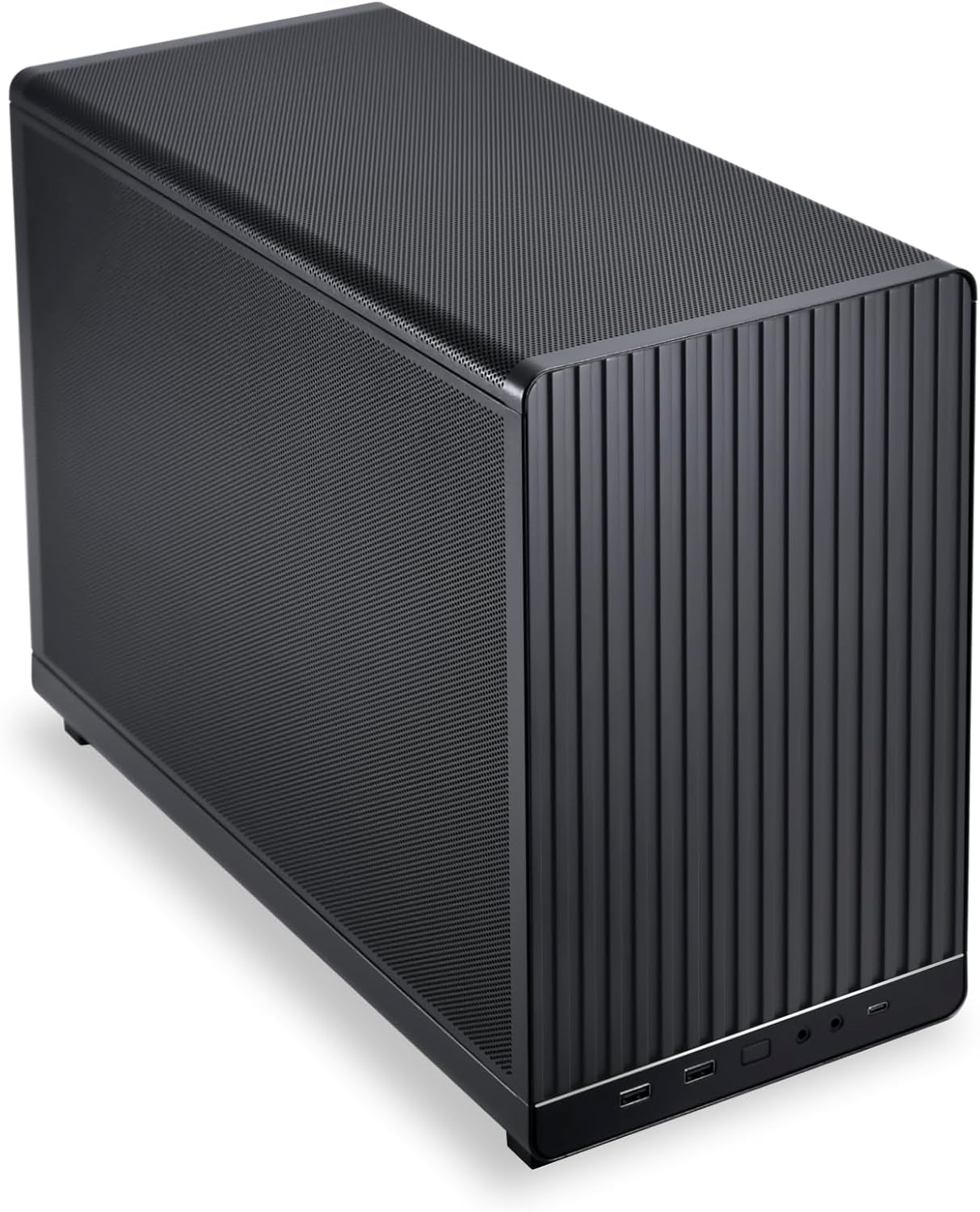
Lian Li A3-mATX Overview
Micro-ATX occupies an interesting position in the PC-building market.
It can give you most of the functionality a gaming PC actually needs while allowing the final system to be considerably smaller than a traditional ATX tower.
The Lian Li A3-mATX takes that idea further than most.
At just 26.3 liters, it’s much closer in size to a large Mini-ITX case than a conventional mid-tower.
But unlike an ITX enclosure, you don’t need an expensive Mini-ITX motherboard.
You can install a standard Micro-ATX board instead.
That alone can save a meaningful amount of money.
You also get four expansion slots rather than the limitations normally associated with Mini-ITX.
The amount of hardware Lian Li manages to fit into the A3 is impressive.
Depending on your exact configuration, graphics cards up to 415mm long and four slots thick are supported.
CPU air coolers can be up to 165mm tall, so you’re not automatically restricted to low-profile cooling.
A 360mm AIO can also fit.
And unlike many compact cases, the A3 can use a standard ATX power supply in addition to SFX and SFX-L models.
There is a catch to all of this flexibility.
Not every maximum specification can necessarily be used simultaneously.
The PSU can be mounted in several different positions, and the size and location of the power supply can affect GPU and radiator compatibility.
Installing bottom fans can also reduce the maximum graphics-card thickness.
That’s why we’d spend a little more time planning an A3 build than we would with a large conventional tower.
Don’t simply look at the 415mm maximum GPU specification and assume every 415mm graphics card works with every possible PSU and cooling arrangement.
Check the compatibility diagrams for the specific layout you’re planning.
When everything is configured correctly, though, the result can be excellent.
You can build a machine with a full-size high-end GPU, Micro-ATX motherboard, large CPU cooler or 360mm AIO, and conventional ATX power supply while still ending up with a system substantially smaller than most ATX gaming PCs.
That makes the A3 especially appealing to builders who want something compact but aren’t willing to accept all of the compromises and additional costs of Mini-ITX.
For that use case, it’s one of our favorite cases available.
Phanteks XT Pro Ultra
The best-value PC case.
Tech Specs
- FORM: E-ATX / ATX / mATX / Mini-ITX
- GPU CLEARANCE: Up to 415mm
- CPU COOLER: Up to 184mm
- RADIATOR: Up to 360mm top
- INCLUDED FANS: 4x 140mm D-RGB
- BACK-CONNECT: Supported
Pros & Cons
- Four 140mm D-RGB fans included
- Excellent clearance for high-end hardware
- 360mm top radiator support
- Supports rear-connector motherboards
- Front I/O is fairly limited
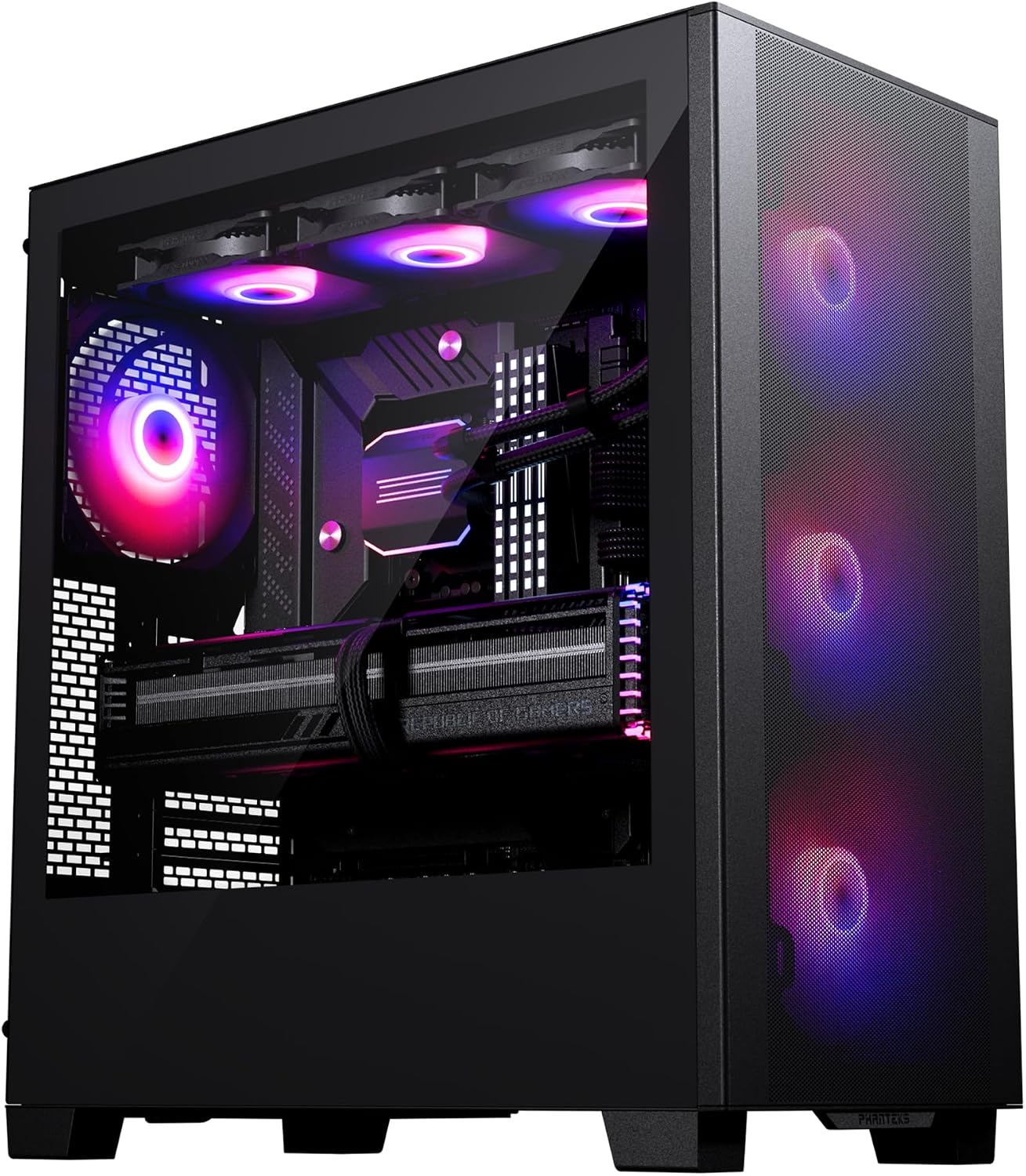
Phanteks XT Pro Ultra Overview
You don’t need a premium case to build a premium gaming PC.
That’s the argument behind Phanteks’ XT Pro Ultra.
Instead of putting a large portion of your budget into the enclosure, the XT Pro Ultra gives you the cooling and hardware compatibility you need while leaving more money available for your graphics card and processor.
And the specifications aren’t what we’d normally associate with an inexpensive case.
Four 140mm D-RGB fans are included.
That gives you a strong stock cooling setup without requiring an immediate fan upgrade.
The mesh front panel lets those fans pull in plenty of outside air, while additional fan positions are available throughout the case.
In total, you can install up to ten 120mm fans.
There is plenty of room for high-end components as well.
Graphics cards up to 415mm long are supported, and CPU cooler clearance is a generous 184mm.
You can install E-ATX motherboards up to 280mm wide in addition to ATX, Micro-ATX, and Mini-ITX boards.
For liquid cooling, there is dedicated space for a 360mm radiator at the top.
That’s particularly useful because we generally prefer installing an AIO at the top when possible rather than placing it in front of the graphics card’s primary air intake.
Another modern addition is support for rear-connector motherboards.
ASUS BTF, MSI Project Zero, and Gigabyte Project Stealth boards relocate many of the motherboard’s power and I/O connections to the rear.
With a compatible case, that allows you to hide a significant portion of the cabling behind the motherboard tray.
You absolutely don’t need a back-connect motherboard to use the XT Pro Ultra.
It works perfectly well with a normal ATX motherboard.
But compatibility with both layouts makes the chassis more flexible if you decide to move to a rear-connector platform later.
There are areas where Phanteks clearly saved money.
The front I/O is basic, with only one USB Type-A port alongside the USB-C connection.
You also don’t get the same premium finishing touches that you’ll find on much more expensive cases.
But that’s the point.
We’d rather have a straightforward enclosure with good airflow, four useful fans, plenty of graphics-card clearance, and modern motherboard compatibility than spend extra money on cosmetic features that don’t improve the computer.
For a gaming build where maximizing price-to-performance is the goal, the XT Pro Ultra is one of the strongest case options available.
Montech TG3
The best budget PC case.
Tech Specs
- FORM: ATX / mATX / Mini-ITX
- GPU CLEARANCE: Up to 430mm
- CPU COOLER: Up to 180mm
- RADIATOR: Up to 360mm top
- INCLUDED COOLING: 360mm unibody intake + 120mm rear
- BACK-CONNECT: Supported
Pros & Cons
- Excellent hardware compatibility for a budget case
- ARGB cooling included
- 430mm GPU clearance
- USB-C and rear-connector motherboard support
- Less cable-management space than more expensive cases
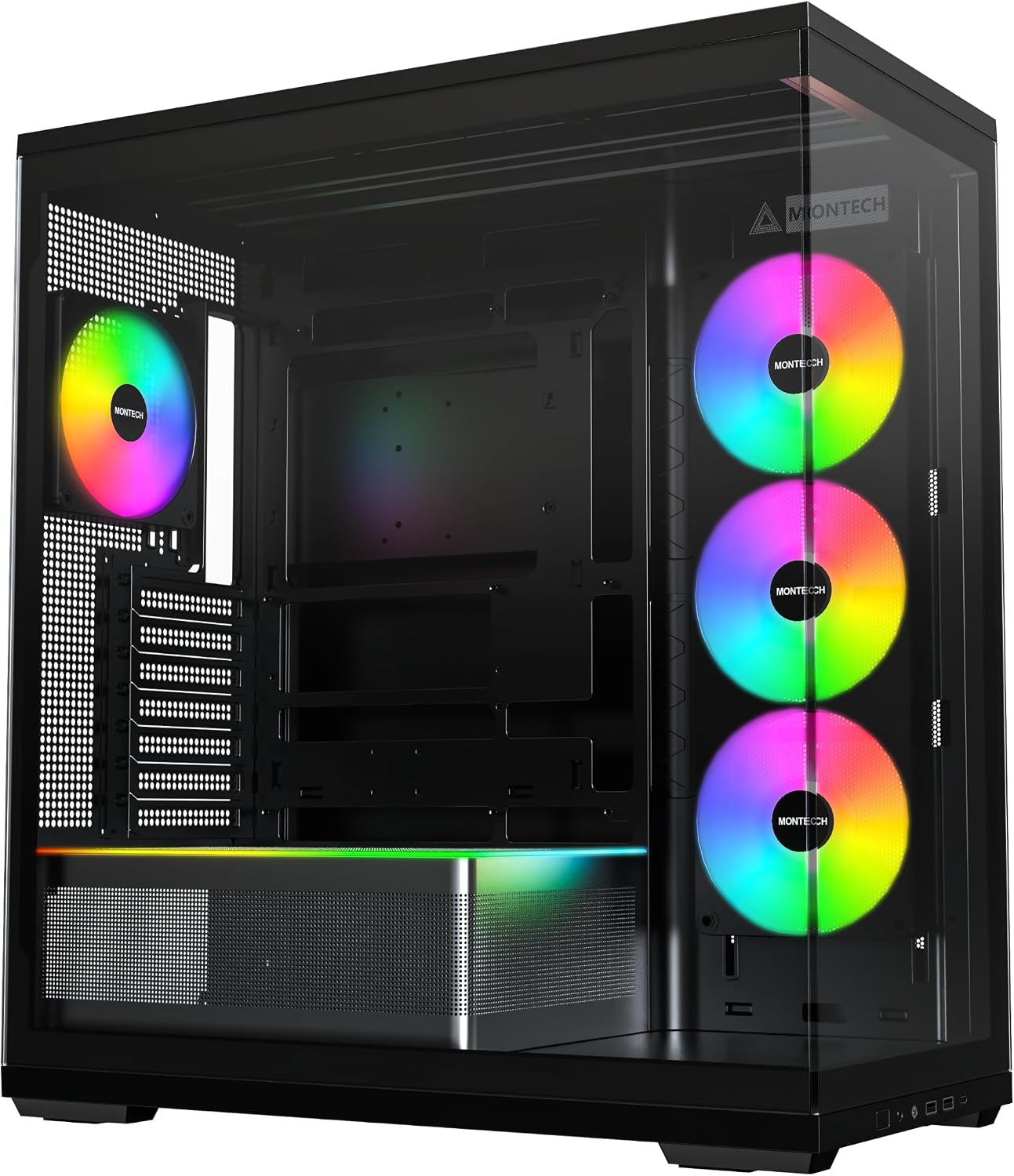
Montech TG3 Overview
Cases are one of the easiest places to overspend when putting together a budget gaming PC.
A $150 chassis might be nicer to build in than a $60 model.
But if spending an additional $90 on the case forces you to step down to a slower graphics card, you’ve probably made the wrong trade.
That’s why inexpensive cases like Montech’s TG3 are useful.
Despite targeting the budget end of the market, the TG3 provides an unusual amount of hardware compatibility.
It supports ATX, Micro-ATX, and Mini-ITX motherboards, including compatible rear-connector designs.
Graphics cards up to 430mm long fit inside, while CPU tower coolers can be up to 180mm tall.
Those are very generous clearances for an inexpensive chassis.
There’s also room for a 360mm radiator at the top.
So unlike some older budget cases, buying the TG3 doesn’t automatically prevent you from installing large high-end hardware later.
Cooling isn’t an afterthought, either.
Montech includes its GF360 U REV unibody intake assembly along with a 120mm rear exhaust fan.
The 360mm unit effectively gives you a three-fan intake configuration while reducing the number of individual fan cables that need to be routed.
The chassis supports up to nine fans in total if you want to add more cooling later.
Visually, the TG3 follows the modern showcase-case trend.
You get large tempered-glass panels rather than the traditional mesh-front tower appearance of something like the Meshify 3.
The side-mounted intake allows the case to provide airflow without placing a conventional intake directly behind the front glass.
There’s even USB Type-C connectivity on the front I/O.
That sounds like a minor detail, but USB-C is still frequently one of the first things manufacturers remove when trying to hit a low price.
The TG3 isn’t going to have the material quality, acoustic refinement, or cable-management experience of the more expensive cases in this guide.
That’s an acceptable compromise.
A budget case doesn’t need to feel luxurious.
It needs to safely house the components you want, provide enough airflow to cool them properly, and avoid wasting money that could have gone toward hardware that actually improves gaming performance.
The TG3 accomplishes those goals surprisingly well.
If you’re assembling a lower-cost gaming PC, we’d much rather start here and direct the remaining budget toward a faster GPU.
Which PC case should you choose?
For most gaming PCs, we’d choose the Fractal Design Meshify 3.
It provides excellent cooling potential, three high-quality 140mm fans, good cable management, strong build quality, and a reasonable mid-tower footprint.
The one specification we’d check carefully is GPU length. With 349mm of graphics-card clearance, the standard Meshify 3 isn’t as forgiving of unusually long GPUs as some of the other cases on this list.
If cooling performance and hardware clearance are more important than keeping your system compact, we’d move up to the Antec FLUX Pro.
Its six included PWM fans, 455mm GPU clearance, 190mm CPU cooler support, and compatibility with 420mm radiators make it ideal for extremely powerful hardware.
The Corsair 9000D RGB AIRFLOW takes that philosophy to its logical extreme.
It’s enormous, expensive, and completely unnecessary for a normal gaming PC.
But if you’re building a complicated custom liquid-cooling loop or workstation and want as few space restrictions as possible, there aren’t many cases that give you more room to work with.
For compact builds, we’d choose between the Cooler Master NR200P V3 and Lian Li A3-mATX.
The NR200P V3 provides a genuine small-form-factor Mini-ITX system while still allowing a very large graphics card and 280mm AIO.
The A3-mATX is larger, but it lets you use a Micro-ATX motherboard and even a standard ATX power supply, which can make the complete system significantly less expensive.
If value is the main priority, the Phanteks XT Pro Ultra is the case we’d look at first.
Getting four 140mm D-RGB fans, 415mm of GPU clearance, 360mm radiator support, and rear-connector motherboard support in an inexpensive chassis makes it extremely difficult to beat for the money.
And if you’re building on the tightest budget possible, the Montech TG3 allows you to spend even less on the enclosure without giving up the basic hardware compatibility we’d want from a modern gaming PC.
Frequently Asked Questions
What is the best PC case in 2026?
For most gaming PCs, our top choice is the Fractal Design Meshify 3.
It offers an excellent combination of cooling performance, build quality, included fans, cable management, modern front I/O, and overall size.
However, the best case depends heavily on your specific build.
If maximum airflow is more important, we’d choose the Antec FLUX Pro.
For a Mini-ITX system, we’d prefer the Cooler Master NR200P V3, while the Lian Li A3-mATX is our favorite compact Micro-ATX option.
Budget-oriented builders should consider the Phanteks XT Pro Ultra or Montech TG3.
What size PC case should you buy?
For most gaming PCs, an ATX mid-tower is the easiest choice.
Mid-towers provide enough room for full-size graphics cards, large CPU coolers, ATX motherboards, multiple fans, and large AIO liquid coolers without taking up the enormous amount of space required by a full tower.
Micro-ATX cases are useful if you want a smaller system without paying the premium associated with Mini-ITX motherboards and power supplies.
Mini-ITX makes the most sense when minimizing the physical size of your PC is a priority.
Full towers are primarily useful for extreme hardware configurations, large amounts of storage, custom liquid cooling, or workstation builds.
Also Read: PC Case Sizes Explained
Does your PC case affect gaming performance?
Not directly.
Changing from one properly cooled case to another won’t suddenly give your graphics card more rendering performance.
However, a poorly ventilated case can allow internal temperatures to become high enough that your CPU or GPU reduces its clock speeds.
That can hurt performance.
A well-designed case also allows your cooling fans to operate at lower speeds while maintaining good temperatures, which can make your computer substantially quieter.
So while the case isn’t a performance component in the same sense as your CPU or GPU, airflow and cooling still matter.
Do you need a full-tower case for a high-end gaming PC?
No.
Even extremely powerful gaming PCs can usually fit into a normal ATX mid-tower.
Modern mid-towers can accommodate very large graphics cards, 360mm AIO coolers, high-wattage ATX power supplies, and several storage drives.
Full towers become useful when you need unusually large amounts of expansion space, several radiators for a custom cooling loop, extensive storage, an oversized workstation motherboard, or simply want as much room as possible to build inside.
For a typical single-GPU gaming PC, a full tower is usually unnecessary.
How do you know if your graphics card will fit in your case?
Check the graphics card’s physical length, height, and thickness against the case manufacturer’s clearance specifications.
Length receives the most attention, but extremely large modern graphics cards can also cause problems because of their height or thickness.
You should also leave enough room for the GPU power connector and its cable.
Don’t assume that a case rated for a 350mm graphics card automatically fits every GPU shorter than 350mm.
Front-mounted radiators, fans, drive cages, vertical GPU brackets, and other components can reduce the available space.
Always check compatibility using the exact configuration you plan to build.
How many case fans do you need?
For most gaming PCs, we’d want at least two intake fans and one exhaust fan.
That gives you a basic front-to-back or bottom-to-top airflow path.
High-end systems with power-hungry graphics cards may benefit from additional intake and exhaust fans.
But adding more fans doesn’t automatically improve temperatures.
Fan position, case ventilation, fan quality, component layout, and fan speed all matter.
Once you have a good airflow path established, adding additional fans often produces diminishing returns.
Is a mesh PC case better than a glass case?
Not automatically, but mesh panels make good airflow easier to achieve.
A mesh front panel allows intake fans to pull outside air directly through the front of the case.
A solid glass panel can restrict that airflow unless the case uses large side or bottom intake vents instead.
That’s why many panoramic and dual-chamber glass cases move the primary intake fans to the side of the motherboard.
There are excellent mesh cases and excellent glass-heavy cases.
We’d evaluate the entire airflow layout rather than judging a chassis solely by whether its front panel is glass or mesh.
Should you get an ATX or Micro-ATX case?
If you’re using an ATX motherboard, you’ll obviously need an ATX-compatible case.
If you’re using a Micro-ATX motherboard, either size can work.
Putting a Micro-ATX motherboard inside an ATX case gives you more internal room and often provides more fan, radiator, and storage positions.
Using a dedicated Micro-ATX case reduces the overall size of the computer.
For most gaming PCs, there is very little performance difference between ATX and Micro-ATX motherboards.
The main considerations are expansion slots, motherboard features, appearance, and the size you want the finished system to be.
Is Mini-ITX worth it?
It can be if you specifically want a small computer.
Modern Mini-ITX systems can contain extremely powerful processors and graphics cards.
However, building a small PC usually costs more.
Mini-ITX motherboards frequently carry a premium, and many small cases require an SFX power supply.
Cooling can also be more complicated, and you’ll have fewer PCIe expansion slots and storage connections.
If compact size isn’t important to you, Micro-ATX or ATX generally provides better value and an easier building experience.
What is a back-connect motherboard?
A back-connect or rear-connector motherboard moves many of the motherboard’s power and I/O connectors to its rear side.
The goal is to hide cables behind the motherboard tray instead of routing them through visible openings around the board.
ASUS refers to its implementation as BTF, MSI uses Project Zero, and Gigabyte has Project Stealth products.
These motherboards require a compatible case because the motherboard tray needs cutouts in the correct locations.
Cases such as the Phanteks XT Pro Ultra, Montech TG3, and several newer Lian Li designs support rear-connector boards.
A normal motherboard still works in these cases as well.
Do you need a 360mm AIO?
Not necessarily.
Many excellent gaming processors can be cooled with a large air cooler or a smaller 240mm or 280mm liquid cooler.
A 360mm AIO becomes more attractive when cooling a particularly power-hungry processor, when you want lower fan speeds under sustained workloads, or when you simply prefer the appearance of a large liquid cooler.
If you plan to use one, check the case’s radiator support carefully.
A case may support a 360mm radiator only in a particular position.
The radiator and fan thickness can also interfere with memory, motherboard heatsinks, graphics cards, or other components.
Is air cooling or liquid cooling better for a PC case?
Both can work extremely well.
A large tower air cooler is simple, reliable, and can provide excellent cooling for many gaming processors.
An AIO liquid cooler moves the radiator to the edge of the chassis and can provide more cooling surface area, particularly with 280mm, 360mm, and 420mm models.
The best choice depends on your CPU, noise goals, appearance preferences, and case layout.
If you’re using air cooling, pay attention to CPU cooler height clearance.
If you’re using an AIO, check radiator position, radiator length, and total radiator-plus-fan thickness.
Should you use positive or negative air pressure?
We generally prefer slightly positive case pressure.
Positive pressure means the intake fans are moving somewhat more air into the case than the exhaust fans are removing.
This encourages air to enter through filtered intake locations rather than being pulled through every unfiltered gap in the chassis.
That can help reduce dust buildup.
You don’t need to calculate airflow perfectly.
A common configuration with three filtered intake fans and one or two exhaust fans will generally work well.
Where should you install your case fans?
In a traditional tower, front and bottom fans should generally be configured as intake fans.
Rear and top fans should generally exhaust warm air.
This creates a logical airflow path through the case, bringing cool air toward the graphics card and CPU and removing hot air toward the rear and top.
Dual-chamber and panoramic cases often use side-mounted intake fans instead of conventional front intake fans.
The same basic principle applies: bring cool air toward your heat-producing components and provide an unobstructed path for warm air to leave the enclosure.
How much should you spend on a PC case?
For most gaming PCs, you don’t need to spend an enormous amount.
Once you have a case with good airflow, enough component clearance, sensible cable management, and the fan or radiator support your build requires, spending more doesn’t directly improve gaming performance.
That’s why inexpensive models such as the Phanteks XT Pro Ultra and Montech TG3 can make so much sense.
If saving $50-$100 on your case lets you purchase a faster graphics card, we’d usually rather put that money toward the GPU.
Premium cases become worthwhile when you specifically value higher-end materials, quieter operation, advanced cooling options, more modularity, better cable management, or a particular aesthetic.
How often should you clean your PC case?
It depends on how dusty your environment is, whether you have pets, where the computer sits, and how much air your fans move.
Checking your filters every few months is a good starting point.
A PC sitting directly on carpet or in a home with pets may need more frequent cleaning.
Keeping the case slightly positively pressured and using filtered intake fans can help slow dust accumulation.
You should also avoid placing the computer where its intake vents are blocked.
A high-airflow case can’t cool properly if its front or bottom intake is pressed directly against a wall, carpet, or other obstruction.
