
These are the best CPU coolers for keeping your processor running cool.
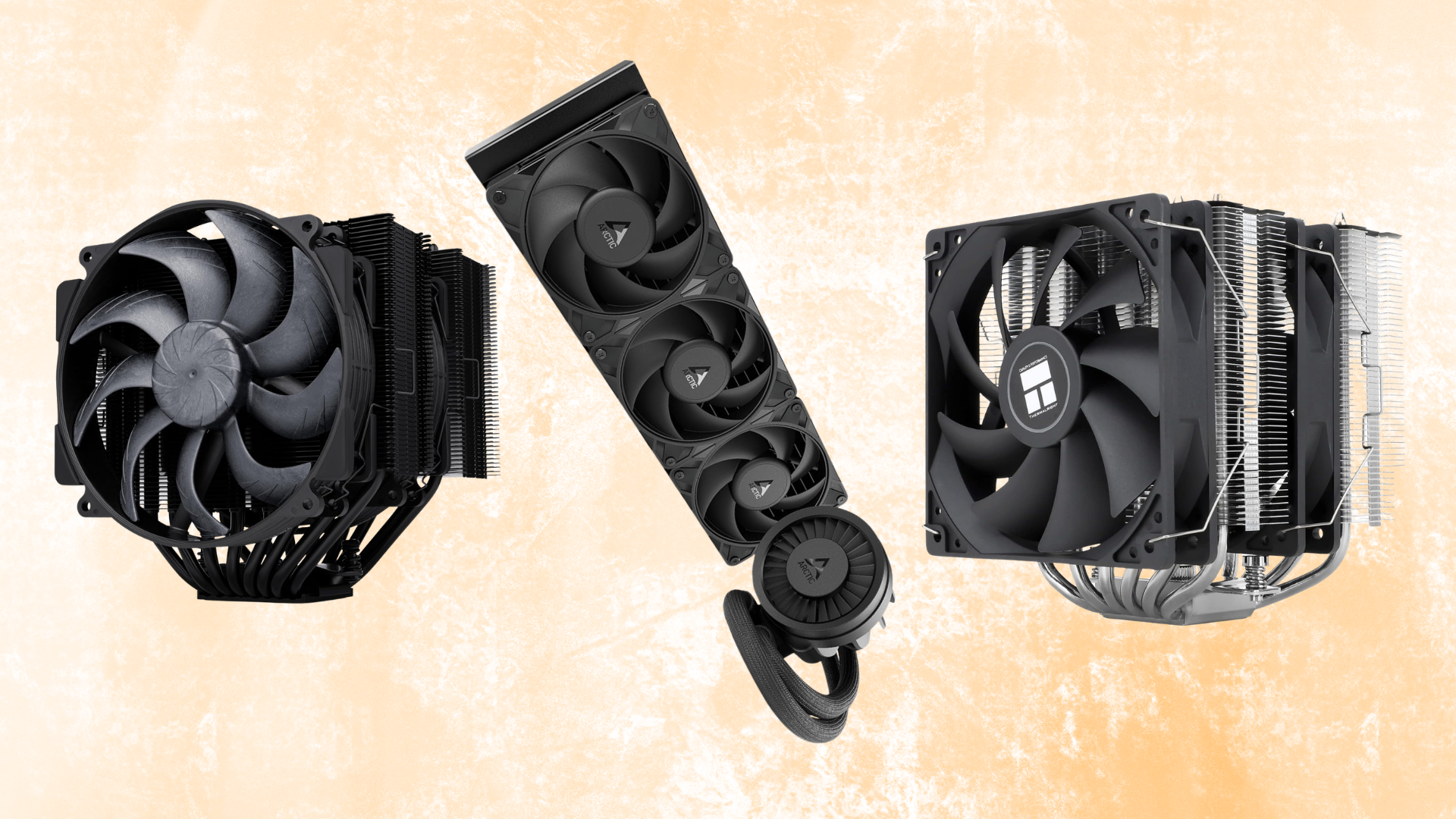
Need a new CPU cooler? In this guide, we’ve highlighted six of the best CPU coolers currently available across a range of price points, form factors, and cooling requirements.
For most gaming PCs, an affordable dual-tower air cooler will provide more than enough cooling. However, higher-end processors, heavily overclocked systems, and workstations that regularly run demanding all-core workloads may benefit from a premium air cooler or a larger all-in-one liquid cooler.
We’ve included options for both types of builds. Whether you want a high-end air cooler, a powerful 360mm AIO, a quieter liquid cooler, or a budget-friendly upgrade over a stock heatsink, one of the options below should work for you.
Also Read: Liquid Cooling vs. Air Cooling: Which CPU Cooler Is Right for You?
But, if you’re not sure what kind of cooler you need, we’d first recommend watching the video below.
Watch: What to Look for in a Cooler
Watch our Beginner’s Guide to Choosing a Cooler below, or on our YouTube channel.
Our Picks for the Best CPU Coolers
The following CPU coolers represent the best options for the most common types of builds. The Noctua NH-D15 G2 is our preferred premium air cooler, while ARCTIC’s Liquid Freezer III Pro 360 is our top overall AIO.
If you don’t need extreme cooling, the Thermalright Peerless Assassin 120 SE and ARCTIC Freezer 36 deliver excellent performance without adding much to the overall cost of your build.
Noctua NH-D15 G2
The best premium air CPU cooler.
Cooler Specs
- TYPE: Dual-tower air
- FANS: 2x 140mm
- HEIGHT: 168mm
- SOCKETS: Intel/AMD
- WARRANTY: 6 years
Pros & Cons
- Excellent cooling performance
- Runs quietly under typical loads
- Outstanding build quality
- Includes two premium 140mm fans
- Significantly more expensive than value coolers
- Large size creates clearance concerns
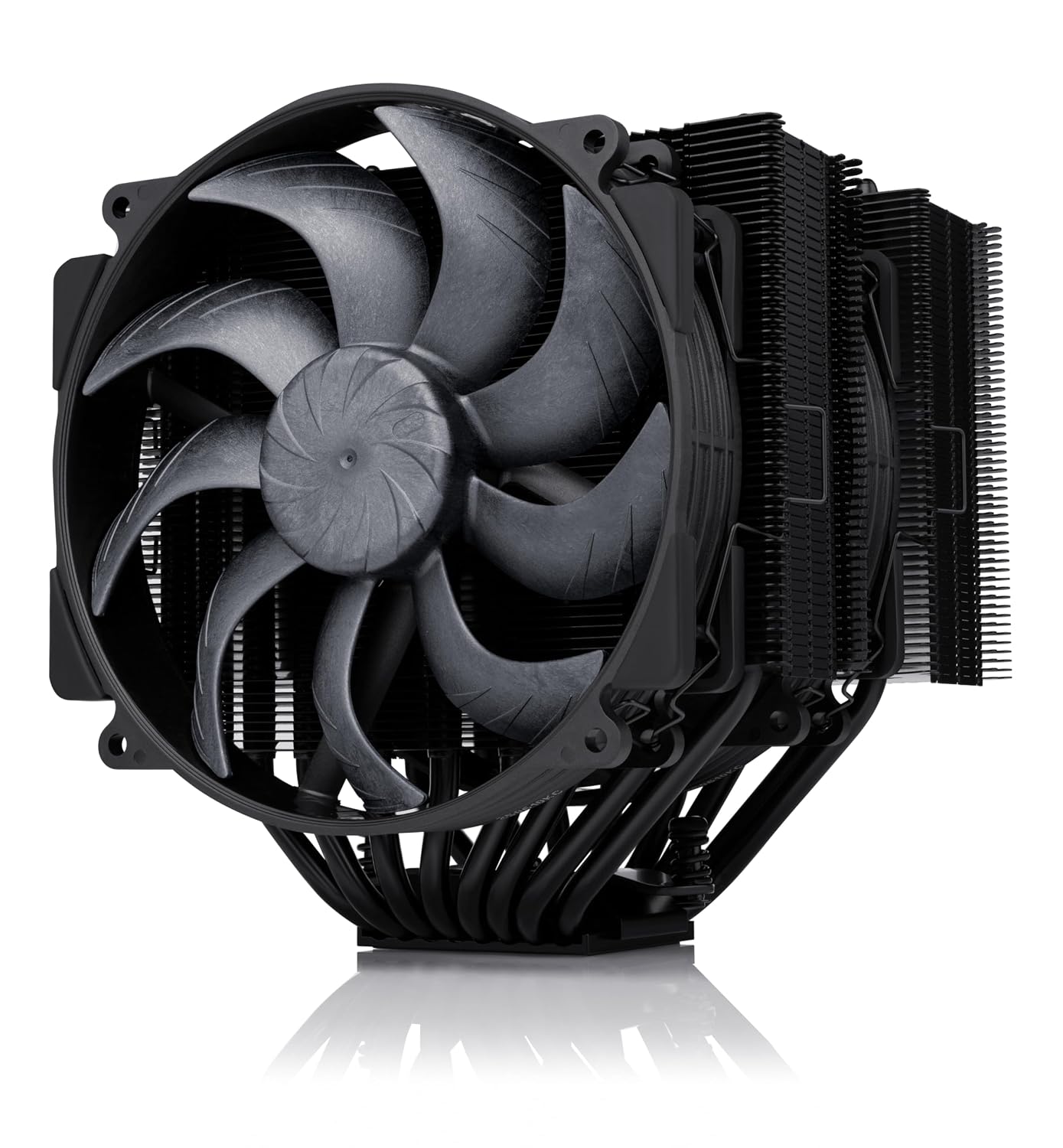
Noctua NH-D15 G2 Overview
Noctua’s original NH-D15 spent years as one of the most highly regarded air coolers on the market. The second-generation NH-D15 G2 improves on that design with a revised heatsink, eight heatpipes, and two newer NF-A14x25r G2 140mm fans.
The result is an air cooler capable of handling demanding gaming processors and high-end workstation CPUs without requiring a pump, radiator, or liquid-filled tubing. It is particularly appealing if you want high-end cooling performance but would rather avoid the additional failure points associated with an AIO.
Noise control is another one of the NH-D15 G2’s strengths. The included fans provide strong airflow without becoming excessively loud, and Noctua includes low-noise adapters for users who want to prioritize acoustics over maximum cooling performance.
The cooler supports current AMD and Intel platforms, including AM5, AM4, LGA1851, and LGA1700. It is also backed by a six-year warranty and comes with Noctua’s NT-H2 thermal compound.
Its biggest drawback is price. The NH-D15 G2 costs far more than options such as the Thermalright Peerless Assassin 120 SE, despite the fact that most gaming processors will run perfectly well with the cheaper cooler.
It is also enormous. At 168mm tall, it will not fit in every case, and its front fan may need to be raised to clear taller memory modules. Raising the fan increases the total height even further, so check both your case’s CPU cooler clearance and the height of your RAM before purchasing it.
Overall, the NH-D15 G2 is best suited to builders who want premium cooling, low noise levels, long-term reliability, and an air cooler that can be carried forward into future systems.
ARCTIC Liquid Freezer III Pro 360
The best overall AIO CPU cooler.
Cooler Specs
- TYPE: 360mm AIO
- FANS: 3x 120mm
- RADIATOR: 398 x 120 x 38mm
- SOCKETS: AM4/AM5/LGA1700/LGA1851
- WARRANTY: 6 years
Pros & Cons
- Top-tier cooling performance
- Excellent price-to-performance ratio
- Includes a small VRM cooling fan
- Available with or without RGB
- Thick radiator requires extra clearance
- Installation is more involved on Intel systems
ARCTIC Liquid Freezer III Pro 360 Overview
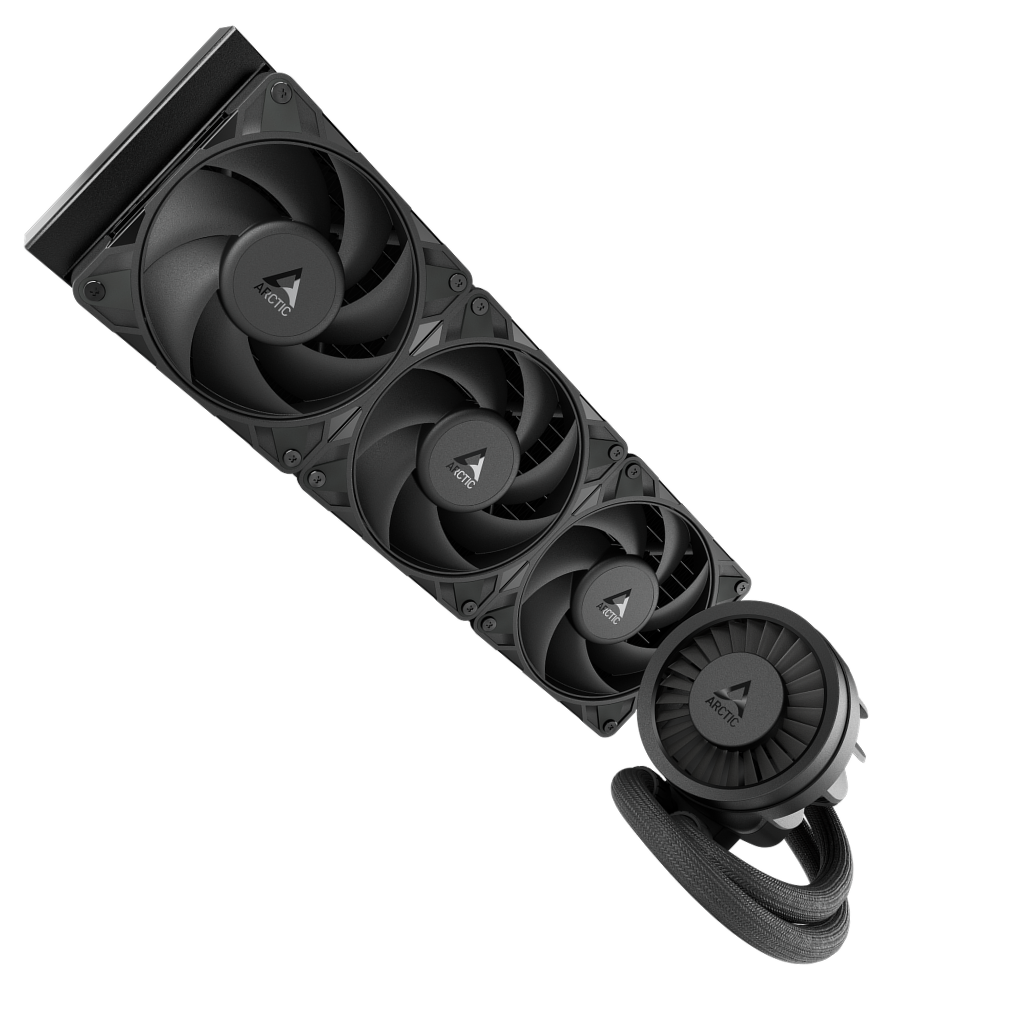
The ARCTIC Liquid Freezer III Pro 360 is our pick for the best overall AIO CPU cooler. It combines excellent thermal performance with a price that is often lower than competing 360mm liquid coolers.
The Pro version uses three high-speed P12 Pro 120mm fans that can reach up to 3,000 RPM. You probably won’t want to run them at full speed during normal use, but the additional fan-speed range gives the cooler plenty of headroom when dealing with demanding processors and sustained all-core workloads.
ARCTIC also uses a 38mm-thick radiator. That is thicker than the radiators included with many competing AIOs and gives the Liquid Freezer III Pro additional cooling surface area. However, the combination of the thick radiator and standard 25mm fans means you need approximately 63mm of total clearance wherever the cooler is mounted.
Another unique feature is the small fan built into the pump housing. This fan directs air over the components surrounding the CPU socket, helping cool the motherboard’s voltage-regulation hardware and nearby components that would normally receive airflow from a traditional CPU fan.
On Intel LGA1700 and LGA1851 systems, the cooler uses a replacement contact frame. The design can improve CPU contact and cooling, but it also makes installation more involved than it is with most AIOs. Take your time, keep the motherboard flat, and follow ARCTIC’s instructions carefully.
The Liquid Freezer III Pro 360 is overkill for many gaming PCs. A Ryzen 5, Core i5, Ryzen 7 X3D, or similarly efficient processor generally doesn’t require this much cooling for gaming. However, it is a great option for a Ryzen 9, Core Ultra 9, heavily tuned processor, or workstation that will regularly run demanding multithreaded applications.
If your case can accommodate its thicker radiator, the Liquid Freezer III Pro 360 offers some of the best cooling performance available without requiring the price of a premium custom loop.
Thermalright Peerless Assassin 120 SE
The best value air CPU cooler.

Cooler Specs
- TYPE: Dual-tower air
- FANS: 2x 120mm
- HEIGHT: 155mm
- SOCKETS: Intel/AMD
- HEATPIPES: 6
Pros & Cons
- Outstanding performance for its price
- Includes two 120mm PWM fans
- Shorter than many premium dual-tower coolers
- Available in multiple colors and RGB variants
- Not as refined as premium Noctua coolers
- May interfere with taller memory modules
Thermalright Peerless Assassin 120 SE Overview
The Thermalright Peerless Assassin 120 SE has remained one of the easiest CPU coolers to recommend because it provides high-end air-cooling performance at a budget-friendly price.
Its design consists of two heatsink towers, six copper heatpipes, and two 120mm PWM fans. That gives it significantly more cooling capacity than the small single-tower heatsinks typically included with entry-level processors.
Despite costing much less than premium coolers, the Peerless Assassin can handle most modern gaming CPUs. It is an especially good match for processors such as AMD’s Ryzen 5 and Ryzen 7 chips, including the company’s efficient X3D gaming processors.
It can also cool higher-wattage CPUs, although temperatures and fan noise will increase during sustained all-core workloads. Builders using a flagship processor for rendering, encoding, or other heavy production work may still benefit from the NH-D15 G2 or a large AIO.
The Peerless Assassin stands 155mm tall, making it more case-friendly than many premium dual-tower coolers. However, it is still a bulky heatsink and can extend over the memory slots. The front fan may need to be raised if you use RAM with tall heat spreaders.
Thermalright offers the cooler in several configurations, including black, white, and ARGB versions. Availability and pricing can vary between the different models, so check each configuration before purchasing.
For most gaming builds, there is little reason to spend significantly more unless you want lower noise levels, premium construction, additional thermal headroom, or the cleaner appearance of an AIO.
Noctua NL-LC1-36
The best quiet AIO CPU cooler.
Cooler Specs
- TYPE: 360mm AIO
- FANS: 3x 120mm
- RADIATOR: 400 x 120 x 30mm
- SOCKETS: AM4/AM5/LGA1700/LGA1851
- WARRANTY: 6 years
Pros & Cons
- Exceptionally quiet pump and fans
- Excellent thermal performance
- Premium mounting hardware and accessories
- Slimmer radiator than the ARCTIC AIO
- Extremely expensive
- Brown-and-beige design will not suit every build
Noctua NL-LC1-36 Overview
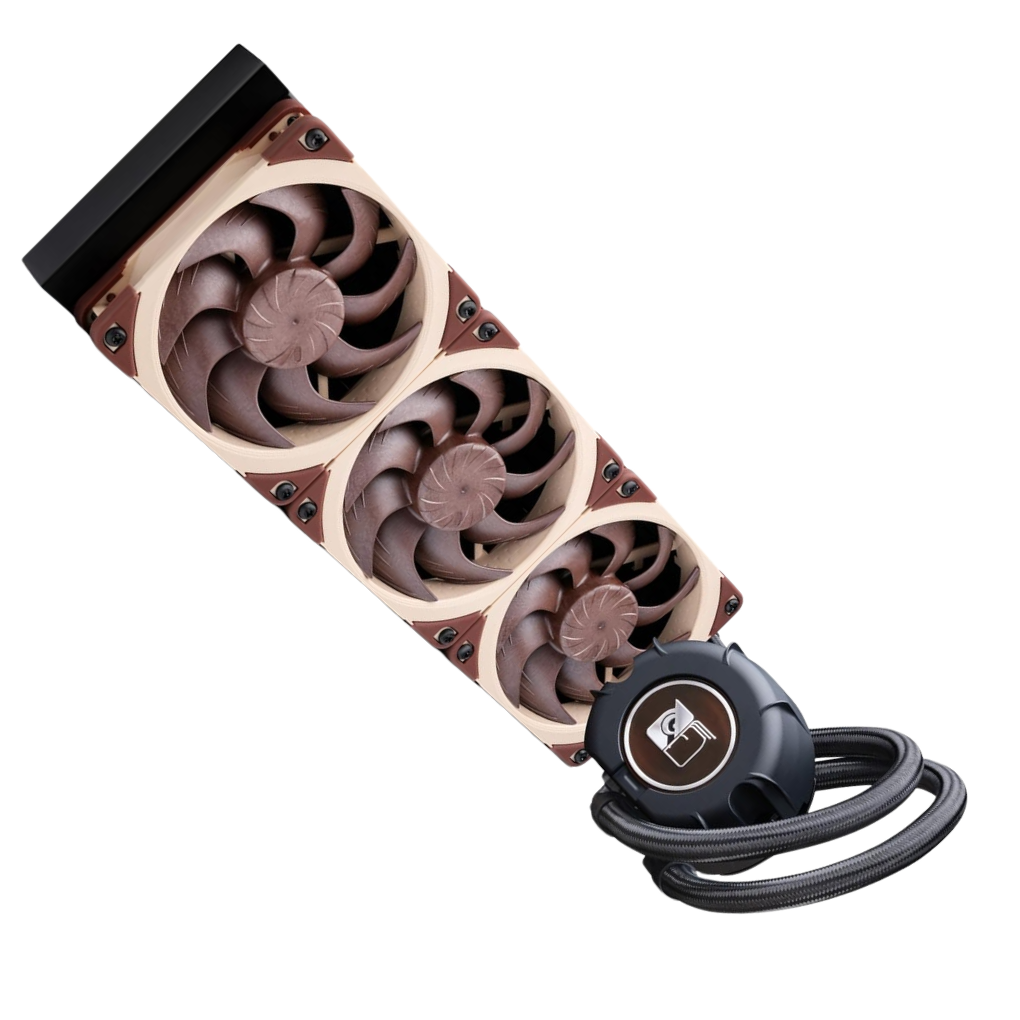
Noctua entered the all-in-one liquid cooling market in 2026 with its NL-LC1 lineup. The NL-LC1-36 is the 360mm version and is designed for builders who want high-end liquid cooling without the pump and fan noise associated with many performance-focused AIOs.
The cooler is built around Asetek’s Emma V2 liquid-cooling platform, but Noctua has added a specialized three-layer pump-noise absorber. This design helps isolate pump vibration and reduce the higher-pitched noise that can make some AIOs irritating even when their radiator fans are running slowly.
Cooling is handled by three NF-A12x25 G2 120mm fans. These are premium fans designed to provide strong static pressure while maintaining good acoustics, making them well suited to pushing air through a radiator.
The NL-LC1-36 uses a 30mm-thick radiator. It is not as thick as the ARCTIC Liquid Freezer III Pro’s 38mm radiator, making the Noctua somewhat easier to fit inside cases with limited space above the motherboard.
Noctua also includes its SecuFirm2+ mounting hardware, NT-H2 thermal paste, low-noise adapters, and the accessories needed to install the cooler on current AMD and Intel platforms. The pump includes several operating profiles, allowing you to prioritize quieter operation or maximum cooling.
The obvious problem is price. The NL-LC1-36 costs dramatically more than the Liquid Freezer III Pro 360. You are paying a large premium for Noctua’s fans, mounting system, accessories, warranty, and emphasis on reducing pump noise.
For most builders, the ARCTIC cooler represents the better value. However, the NL-LC1-36 is worth considering if you are putting together a premium gaming PC or workstation and want one of the quietest high-performance AIOs available.
ARCTIC Freezer 36
The best budget air CPU cooler.
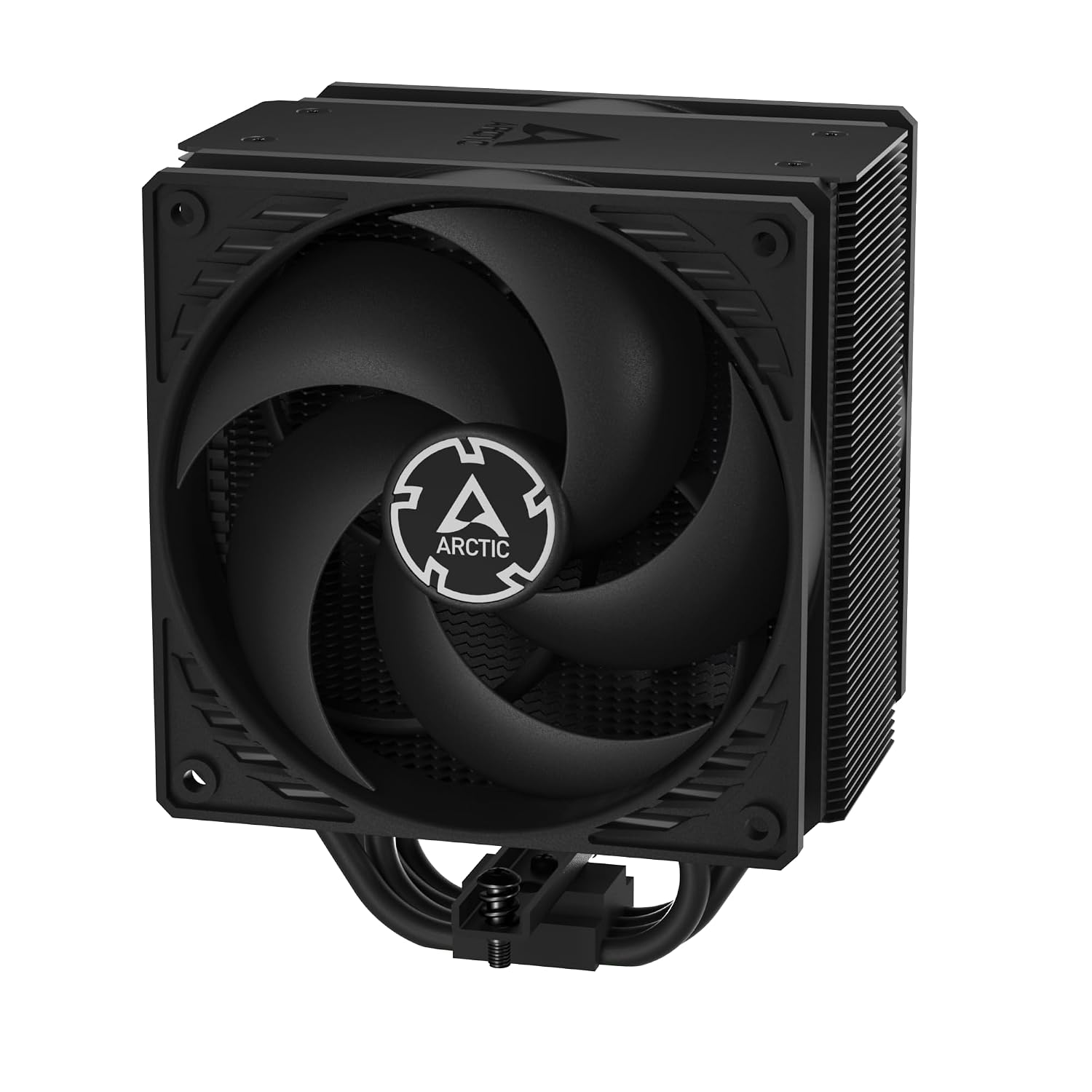
Cooler Specs
- TYPE: Single-tower air
- FANS: 2x 120mm
- HEIGHT: 159mm
- SOCKETS: AM4/AM5/LGA1700/LGA1851
- WARRANTY: 6 years
Pros & Cons
- Strong performance for an inexpensive cooler
- Includes two pressure-optimized fans
- Less bulky than a dual-tower cooler
- Backed by a six-year warranty
- Not intended for heavily overclocked flagship CPUs
- Intel installation requires replacing the stock frame
ARCTIC Freezer 36 Overview
If you need an affordable upgrade over a stock CPU cooler but don’t want the size of a dual-tower heatsink, the ARCTIC Freezer 36 is an excellent option.
The Freezer 36 uses a single heatsink tower, four copper heatpipes, and two 120mm fans installed in a push-pull configuration. While it doesn’t have as much cooling surface area as the Peerless Assassin, it is less bulky and is less likely to cover all of your memory slots.
Its cooling performance is more than adequate for mainstream gaming processors. It would pair well with a Ryzen 5, Core i5, Ryzen 7, or Core Ultra 5, provided you aren’t planning to push unusually high power limits or aggressive overclocks.
The included fans attach to the heatsink with ARCTIC’s snap-on mounting system rather than traditional wire clips. This makes them easy to remove when installing memory, cleaning the heatsink, or working around other components.
AMD installation is straightforward, as the cooler attaches to brackets installed around the existing backplate. Installation on Intel LGA1700 and LGA1851 motherboards is more involved because ARCTIC uses its own contact frame in place of Intel’s standard socket-loading mechanism.
The cooler stands 159mm tall, so you will still need a mid-tower case with adequate CPU-cooler clearance. However, its narrow single-tower design generally creates fewer RAM-clearance problems than the larger dual-tower options in this guide.
ARCTIC offers several versions of the Freezer 36, including black, white, and A-RGB configurations. The standard black model is usually the best value, but the RGB versions may be worth the small premium if appearance matters to you.
Overall, the Freezer 36 is a good fit for a budget or mid-range gaming PC where you want better temperatures and lower noise levels than a stock cooler can provide.
Cooler Master MasterLiquid 240 Core II
The best budget AIO CPU cooler.
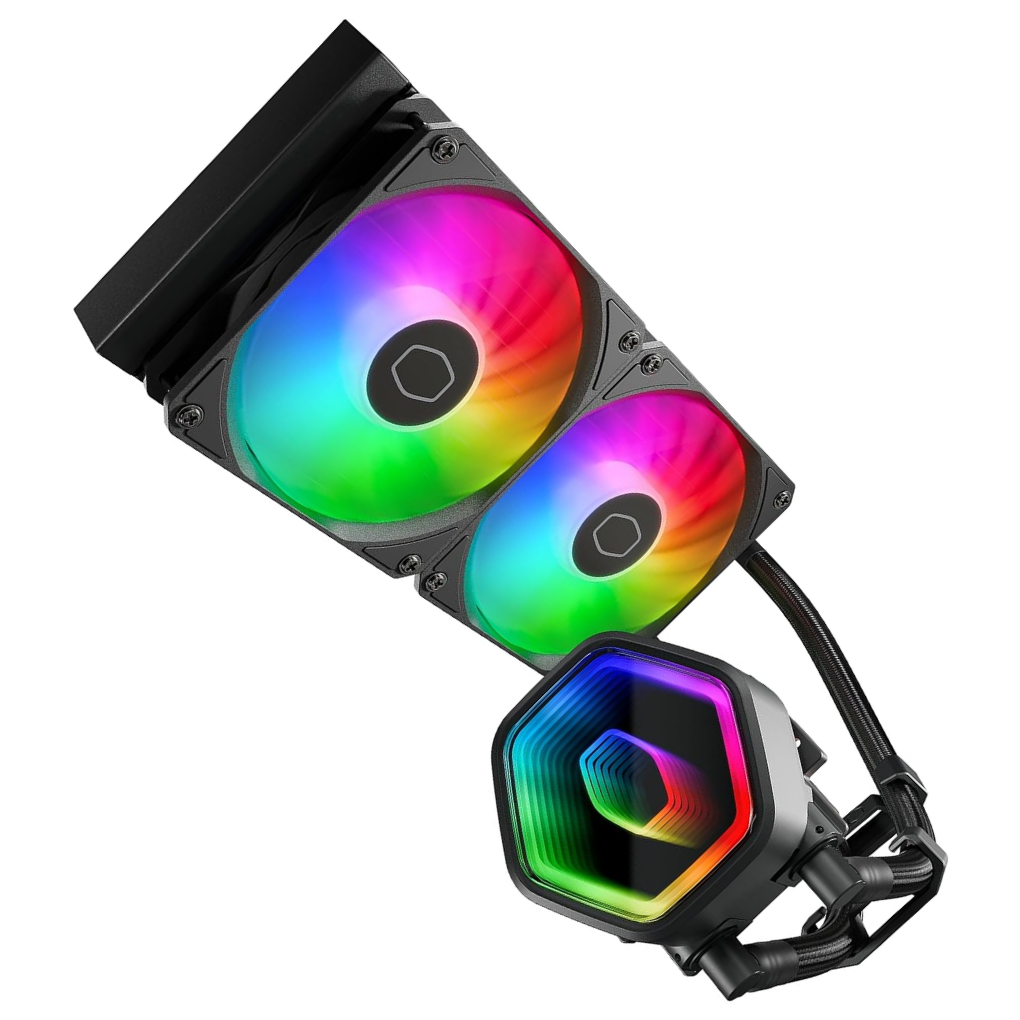
Cooler Specs
- TYPE: 240mm AIO
- FANS: 2x 120mm
- RADIATOR: 277 x 119.2 x 27.2mm
- SOCKETS: Intel/AMD
- LIGHTING: Addressable RGB
Pros & Cons
- Affordable for a 240mm AIO
- Fits in more cases than a 360mm radiator
- Includes two addressable RGB fans
- Clean infinity-mirror pump design
- Does not match high-end 360mm AIO performance
- A good air cooler may offer better value
Cooler Master MasterLiquid 240 Core II Overview
The Cooler Master MasterLiquid 240 Core II is a solid option for builders who want the appearance and clearance advantages of an AIO without spending well over $100.
It uses a standard 240mm radiator paired with two 120mm addressable RGB fans. A 240mm radiator will fit in far more cases than the larger 360mm and 420mm coolers on the market, and it is often easier to install at the top of a standard mid-tower chassis.
The pump housing features an infinity-mirror design with addressable RGB lighting. Cooler Master also includes redesigned fans that can be connected together, reducing the amount of cable clutter compared to AIOs that require separate fan and lighting cables for every component.
Cooling performance is suitable for mainstream and upper-mid-range gaming processors. It should have no problem handling a Ryzen 5, Ryzen 7, Core i5, or Core Ultra 5 under normal gaming workloads. It can also be used with more powerful CPUs, although a 360mm AIO will provide more thermal headroom during sustained rendering and other heavy multithreaded workloads.
As with most budget liquid coolers, the MasterLiquid 240 Core II competes against some very capable air coolers. The Peerless Assassin 120 SE can deliver excellent cooling without a pump and may cost less.
However, the Cooler Master has advantages for certain builds. It leaves the area surrounding the CPU socket more open, avoids conflicts with tall memory modules, and provides the cleaner appearance that many builders prefer.
If you want an inexpensive 240mm liquid cooler with modern socket compatibility and addressable RGB lighting, the MasterLiquid 240 Core II is one of the better entry-level options currently available.
Which CPU Cooler Should You Buy?
For most gaming PCs, the Thermalright Peerless Assassin 120 SE is the best place to start. It costs far less than a premium cooler but still provides enough cooling for the majority of modern gaming processors.
The ARCTIC Freezer 36 is another strong budget option. Its single-tower design is less bulky than the Peerless Assassin, making it better suited to builds where memory clearance or accessibility around the CPU socket is a concern.
If you want the best air cooler and don’t mind paying more, the Noctua NH-D15 G2 offers excellent cooling, low noise levels, premium construction, and a long warranty. Just make sure your case and memory provide enough clearance for its large heatsink and front fan.
For high-end processors and demanding production workloads, the ARCTIC Liquid Freezer III Pro 360 offers the strongest overall combination of performance and value. However, its unusually thick radiator means you must check your case carefully before purchasing it.
The Noctua NL-LC1-36 is the premium alternative for builders who are particularly sensitive to pump and fan noise. It performs well and runs quietly, but its high price makes it difficult to recommend over the ARCTIC for most users.
Finally, the Cooler Master MasterLiquid 240 Core II is a good choice if you want an affordable liquid cooler, RGB lighting, and a radiator that will fit in a wider selection of cases.
Ultimately, you don’t need to purchase the most powerful cooler available. Choose a cooler that can comfortably handle your processor while fitting inside your case, clearing your memory, and staying within your overall build budget.
Frequently Asked Questions
If you’re not sure which CPU cooler is right for your build, the answers below cover the most important factors to consider before making your decision.
1. What Does a CPU Cooler Do?
A CPU cooler removes heat from your processor and transfers it into the surrounding air.
As your processor runs games and applications, it consumes power and generates heat. Without a cooler, the CPU would quickly reach its temperature limit, reduce its clock speed, and eventually shut the system down to protect itself.
Air coolers transfer heat from the processor into a metal heatsink through copper heatpipes. One or more fans then move air through the heatsink and carry that heat away.
AIO liquid coolers transfer heat from the processor into a liquid-filled loop. A pump moves the heated liquid to a radiator, where fans disperse the heat before the liquid returns to the CPU block.
Also Read: Safe CPU Temperatures: How Hot Should Your CPU Be?
2. Do All CPUs Come With a Cooler?
No. Some processors include a stock CPU cooler, while others require you to purchase one separately.
AMD commonly includes coolers with some of its lower-cost processors, but its higher-end Ryzen CPUs and X3D models may not include one. Intel also includes stock coolers with certain locked processors, while unlocked K-series CPUs typically require an aftermarket cooler.
Retail packaging and included accessories can change between models, so check the processor’s product listing before completing your build.
Even when a CPU includes a stock cooler, upgrading can provide lower temperatures and less noise. The included cooler may be adequate for basic use, but it will often need to spin at higher speeds during gaming or other demanding workloads.
3. How Much Should I Spend on a CPU Cooler?
The right amount depends on the processor you are cooling and how the computer will be used.
For an entry-level or mid-range gaming processor, an air cooler in the $25-$50 range is usually enough. Models such as the ARCTIC Freezer 36 and Thermalright Peerless Assassin 120 SE offer significantly better cooling than most stock heatsinks without consuming much of your build budget.
Premium air coolers generally cost between $80 and $150. They offer better construction, quieter fans, stronger warranties, and additional cooling headroom, but their price-to-performance ratio is usually lower.
AIO liquid coolers start at approximately $60 for basic 240mm models and can cost well over $250 for premium units with high-end fans, displays, and advanced pump designs.
Spending more on a cooler does not directly improve gaming performance unless your processor was previously overheating or reducing its clock speed. In many builds, that money would deliver a larger performance improvement if it were put toward a faster graphics card or processor.
4. Is Liquid Cooling Better Than Air Cooling?
Neither cooling method is automatically better for every build.
A large 360mm or 420mm AIO can provide more maximum cooling capacity than most air coolers. Liquid coolers also leave the area around the processor more open and avoid many of the memory-clearance problems associated with large heatsinks.
However, air coolers are simpler and generally more reliable over the long term. They do not contain a pump, and their only moving parts are easily replaceable fans. A quality air cooler can potentially be used across several builds as long as compatible mounting hardware remains available.
Air coolers also tend to offer better performance per dollar, especially in the lower and middle price ranges.
Choose an AIO if you need additional cooling capacity, prefer its appearance, or have clearance limitations around the CPU socket. Choose an air cooler if you prioritize simplicity, value, and long-term reliability.
Also Read: Liquid Cooling vs. Air Cooling
5. Will Any CPU Cooler Fit in My Computer?
No. You need to check socket support and physical clearance before purchasing a cooler.
First, confirm that the cooler includes mounting hardware for your motherboard’s CPU socket. Current AMD desktop systems primarily use AM5, while recent Intel motherboards use LGA1851 or LGA1700.
For an air cooler, compare its total height against the maximum CPU-cooler clearance listed by your case manufacturer. Remember that raising the front fan to clear taller memory can increase the cooler’s overall height.
You should also check RAM clearance, particularly with dual-tower coolers that extend over the memory slots.
For an AIO, confirm that your case supports the cooler’s radiator length. You must also account for radiator thickness, fan thickness, motherboard heatsinks, memory modules, and other components near the mounting location.
A case may technically support a 360mm radiator but still be incompatible with an unusually thick model such as the ARCTIC Liquid Freezer III Pro.
6. Do I Need a 360mm AIO for Gaming?
Most gaming PCs do not require a 360mm liquid cooler.
Gaming workloads rarely place every CPU core under maximum load for extended periods. As a result, a good air cooler or 240mm AIO can comfortably cool most mainstream gaming processors.
This is especially true for power-efficient processors such as AMD’s Ryzen X3D gaming CPUs. A larger cooler may reduce temperatures or noise, but it is unlikely to produce a meaningful improvement in frame rates.
A 360mm AIO makes more sense when cooling a high-wattage flagship processor, increasing processor power limits, overclocking, or regularly running demanding all-core applications such as rendering and video encoding.
It can also be a reasonable aesthetic choice for a high-end build, provided your case supports it and you are comfortable spending more.
7. How Long Does an AIO CPU Cooler Last?
A quality AIO cooler can commonly remain in service for several years, but its lifespan depends on the pump, fans, seals, operating temperature, and overall build quality.
The liquid inside a sealed AIO slowly permeates through the tubing over time. Pump wear can also eventually lead to increased noise, reduced performance, or complete failure.
Unlike a custom liquid-cooling loop, most AIOs are not designed to be opened, drained, or refilled by the user. A small number of models offer a refill port, but that is not standard across the category.
Monitor your processor temperatures and listen for new grinding, buzzing, or gurgling noises. A sudden temperature increase can indicate that the pump is failing or that coolant is no longer circulating properly.
Air coolers generally last longer because the heatsink itself has no moving parts. If a fan fails, it can normally be replaced without replacing the entire cooler.
8. How Often Should You Replace Thermal Paste?
You do not need to replace thermal paste according to a strict schedule.
Quality thermal paste can remain effective for years when the cooler is installed properly. Replacing it every few months is unnecessary and is unlikely to improve temperatures.
You should apply new thermal paste whenever you remove the cooler from the processor. Once the cooler has been lifted, the existing paste may no longer spread evenly enough to create consistent contact when it is reinstalled.
It may also be worth replacing the paste if processor temperatures have gradually increased and dust buildup, fan settings, room temperature, and background software have already been ruled out.
When installing a new cooler, use the thermal paste included by the manufacturer unless you already have a quality compound available.
9. Which CPU Sockets Should a Cooler Support in 2026?
For a new AMD gaming PC, look for AM5 compatibility. AM5 is used by AMD’s current mainstream desktop processors. AM4 compatibility is still useful when upgrading or maintaining an older Ryzen system.
For a current Intel build, look for LGA1851 support. Intel’s previous LGA1700 platform is also still widely used, so most current coolers support both sockets.
Some manufacturers list older sockets such as LGA1200 and LGA115x as well. This broader compatibility can be useful if you are moving the cooler from an older computer into a new build.
Do not assume that a cooler supports your socket simply because the mounting holes look similar. Check the manufacturer’s official compatibility list and make sure the necessary brackets are included with the specific version being sold.
