

Agentic AI has completely changed what QA teams expect going into every development cycle. The best agentic QA testing tools don’t just run tests; they write them, fix them, and adapt when your UI shifts overnight. That’s the problem so many teams face: flaky tests pile up, test suites go stale, and non-technical QA engineers are stuck waiting on SDETs to script everything from scratch.
After reviewing platform capabilities, enterprise case studies, and feedback from customers across the top options in this space, this guide breaks down which tools are actually delivering results.
The vetting process for this list
Every tool on this list was assessed using publicly available information pulled from review platforms, official product pages, verified case studies, and feedback sources. Only platforms with a clear, documented track record in QA testing made the cut.
→ See the full research breakdown
- BrowserStack – Best for enterprise cross-browser and mobile application testing
- Functionize – Best for enterprise QA testing and automated test automation
- Checksum – Best for automated end-to-end testing and continuous test maintenance
- Diffblue – Best for enterprise Java and Kotlin unit testing automation
- Testsigma – Best for enterprise QA test automation across web, mobile, and desktop
Why Agentic QA Testing Tools Are Worth the Investment
Picking the wrong tool here doesn’t just slow your team down. It quietly erodes confidence in your entire automation pipeline. Test suites that break every time a UI element shifts, or false positives that make engineers ignore red builds, aren’t just inconveniences. They’re real risks that let defects slip into production. The right agentic QA testing tool holds up when application interfaces change frequently, keeps flaky test rates low, and lets non-technical team members contribute meaningful test coverage. That combination directly improves your test coverage percentage across UI, API, and unit layers, cuts mean time to detect regressions, and keeps the false positive rate in AI-generated results low enough that your team still trusts what it sees.
Agentic QA Testing Tools Comparison Table
Note: All data in this table is sourced from review platforms and the official websites of the listed companies.
| Company Name | Years Operating | Team Size | Headquartered In |
| BrowserStack | Since 2011 | 1,819 | Mumbai, India |
| Functionize | Since 2014 | 157 | Walnut Creek, CA |
| Checksum | Since 2022 | 18 | San Francisco, CA |
| Diffblue | Since 2016 | 54 | Oxford, UK |
| Testsigma | Since 2019 | 196 | San Francisco, CA |
BrowserStack – Best for Enterprise Cross-Browser and Mobile Application Testing
What Is BrowserStack’s Main Business?
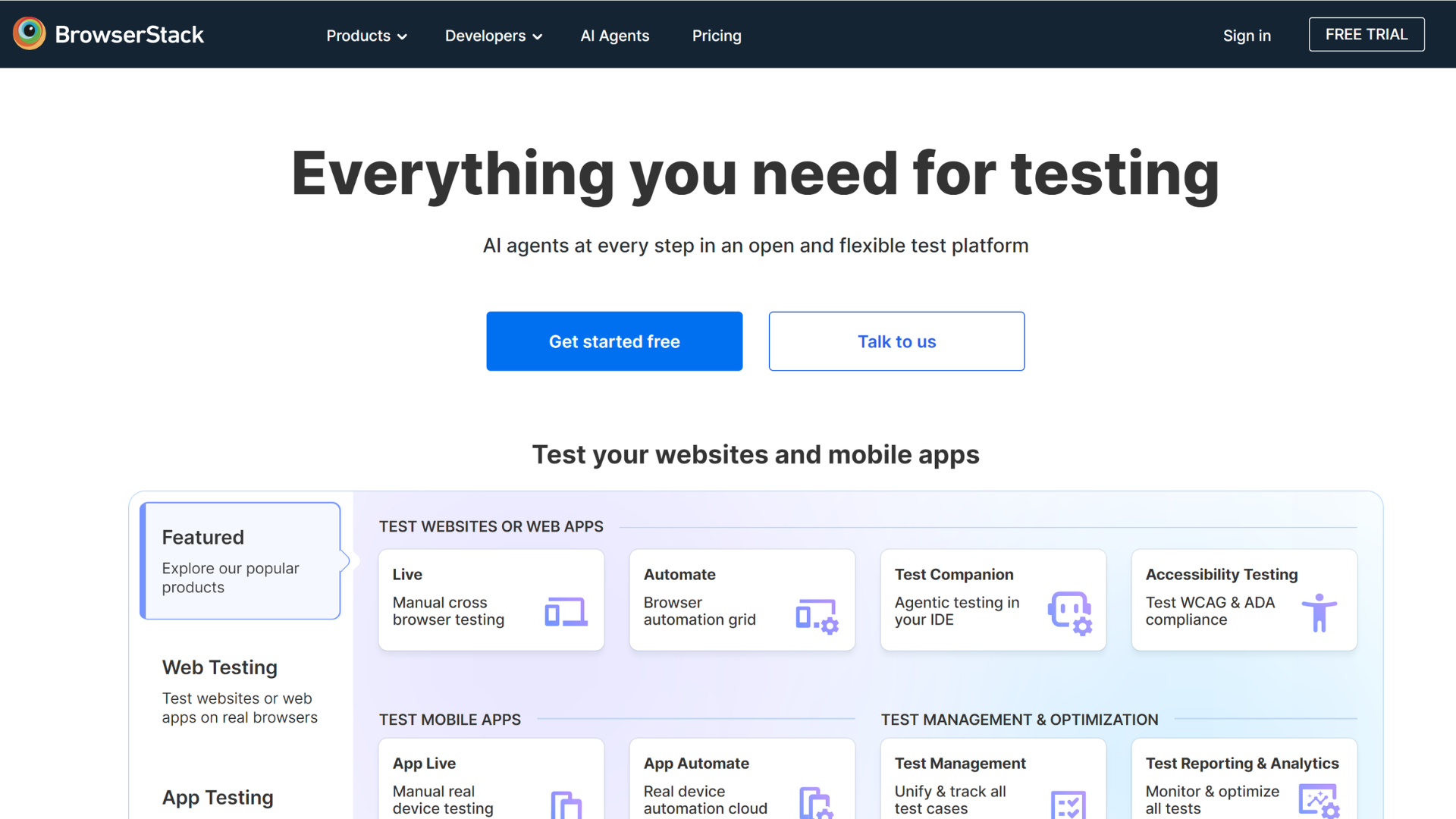
BrowserStack runs a cloud testing platform that lets teams test websites and mobile apps across real devices, browsers, and operating systems, all without maintaining physical device labs. Their product suite covers Automate and App Automate for scripted test execution using Selenium, Playwright, and Katalon, and Live and App Live for manual exploratory testing on real hardware. Percy handles visual regression, catching UI drift before it reaches users. With 21 global data centers and over seven million developers on the platform, the scale here is genuinely hard to match.
What’s BrowserStack’s Edge in Agentic QA Testing Tools?
BrowserStack addresses a problem that almost every distributed QA team runs into: reliable, reproducible test execution across hundreds of device and browser combinations without the overhead of managing your own device farm. That kind of infrastructure depth means teams spend less time debugging environment-specific failures and more time writing tests that actually matter.
The Review Roundup:
BrowserStack earned Forbes Cloud 100 recognition in both 2024 and 2025, and picked up TrustRadius Top Rated status for the third year running in 2025. Enterprise teams at companies like Amazon, Microsoft, and NVIDIA keep coming back for the session reliability and the breadth of real device coverage. That consistent recognition across two years signals something more than just marketing momentum.
Functionize – Best for Enterprise QA Testing and Automated Test Automation
What Is Functionize’s Main Business?
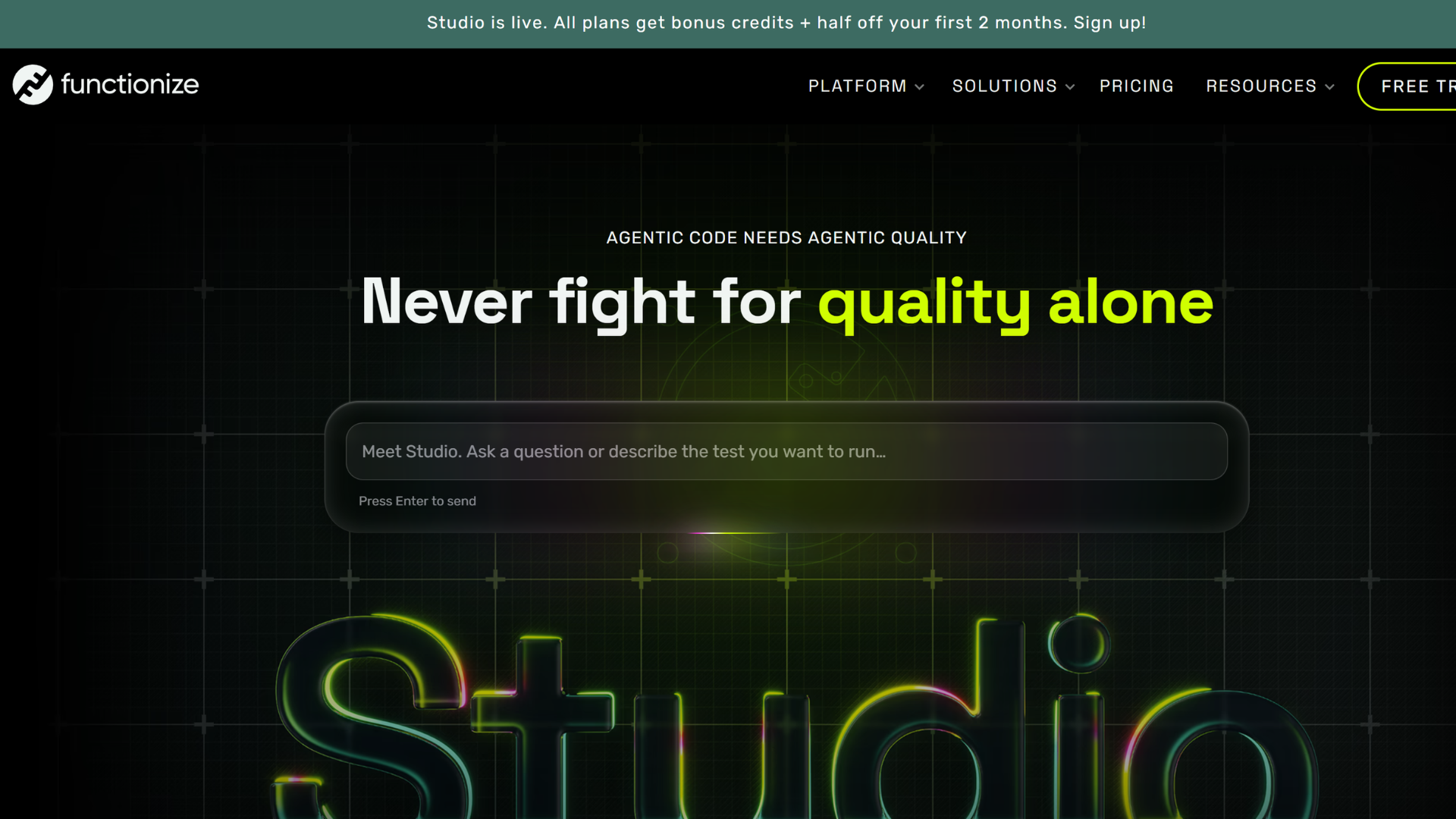
Functionize is an AI-native testing platform built around specialized agents that automate complex user workflows and adapt in real time when applications change. Their platform is the kind of environment where teams working on agentic QA testing tools can actually see the agent layer doing real work: self-healing tests, 99.97% element recognition accuracy, and test creation that non-technical QA engineers can own. McAfee cut testing times from hours to minutes using the platform. GE Healthcare reduced 40 hours of testing work down to 4 hours, a 90% labor savings that’s hard to argue with.
What’s Functionize’s Edge in Agentic QA Testing Tools?
Functionize directly targets the maintenance spiral that kills automation programs, where tests break faster than engineers can fix them, by combining self-healing agents with an element recognition engine that stays accurate even as UIs shift. That 80% reduction in maintenance overhead is the kind of outcome that makes QA managers actually trust their automation pipelines again.
The Review Roundup:
Forrester named Functionize a Strong Performer in their Q4 2025 Wave Report on Autonomous Testing Platforms, which carries real weight in a crowded category. The enterprise case study results are what stand out most, though. The GE Healthcare and McAfee numbers aren’t vague claims about gains. They’re specific, measurable, and the kind of proof points that matter when you’re pitching an AI testing investment to leadership.
Checksum – Best for Automated End-to-End Testing and Continuous Test Maintenance
What Is Checksum’s Main Business?
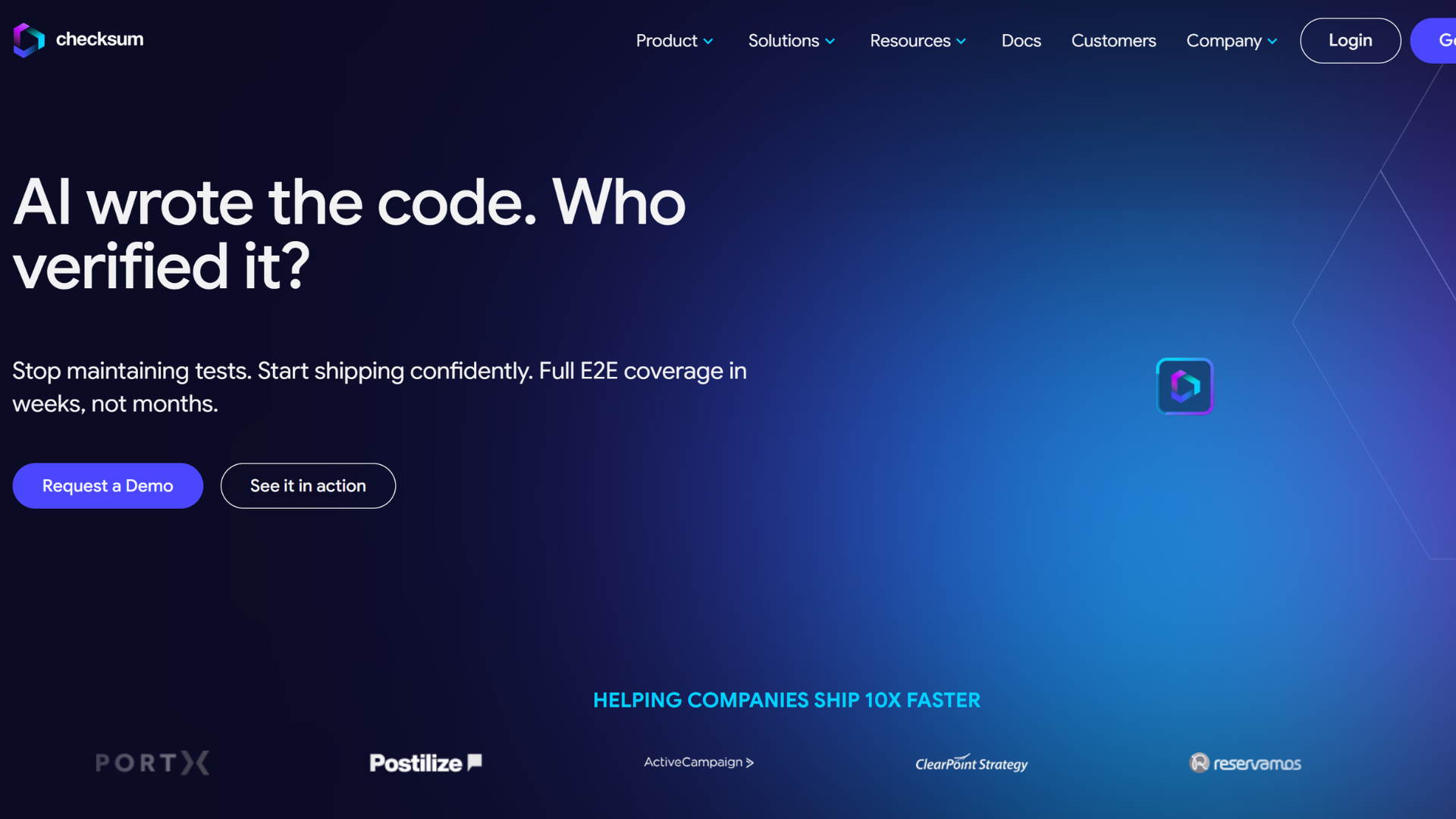
Checksum generates and maintains automated end-to-end tests by watching real user sessions, then turning those patterns into production-ready Playwright tests that live directly in your repository. Three specialized agents do the heavy lifting: the End-to-End Agent produces self-healing Playwright tests, the CI Agent generates 50 to 200 tests per pull request automatically, and the API Agent scales coverage across thousands of endpoints. About 70% of test failures resolve without any human involvement, which is the number that tends to get the most attention from QA leads evaluating the platform.
What’s Checksum’s Edge in Agentic QA Testing Tools?
Checksum solves the vendor lock-in problem that plagues a lot of AI testing tools by delivering real code in your own repository, not proprietary test formats that disappear if you switch platforms. For teams that want autonomous test generation without giving up ownership of their test suite, that output model is a genuinely different approach compared to most competitors on this list.
The Review Roundup:
Client results are specific enough to be credible. Clearpoint Strategy reports saving $500K annually with six production bugs caught every week. Postilize saw 30% faster engineering cycles and 70% fewer bugs. The results-as-a-service model keeps Checksum’s incentives aligned with actual client outcomes, which is probably why the numbers look this concrete.
Diffblue – Best for Enterprise Java and Kotlin Unit Testing Automation
What Is Diffblue’s Main Business?
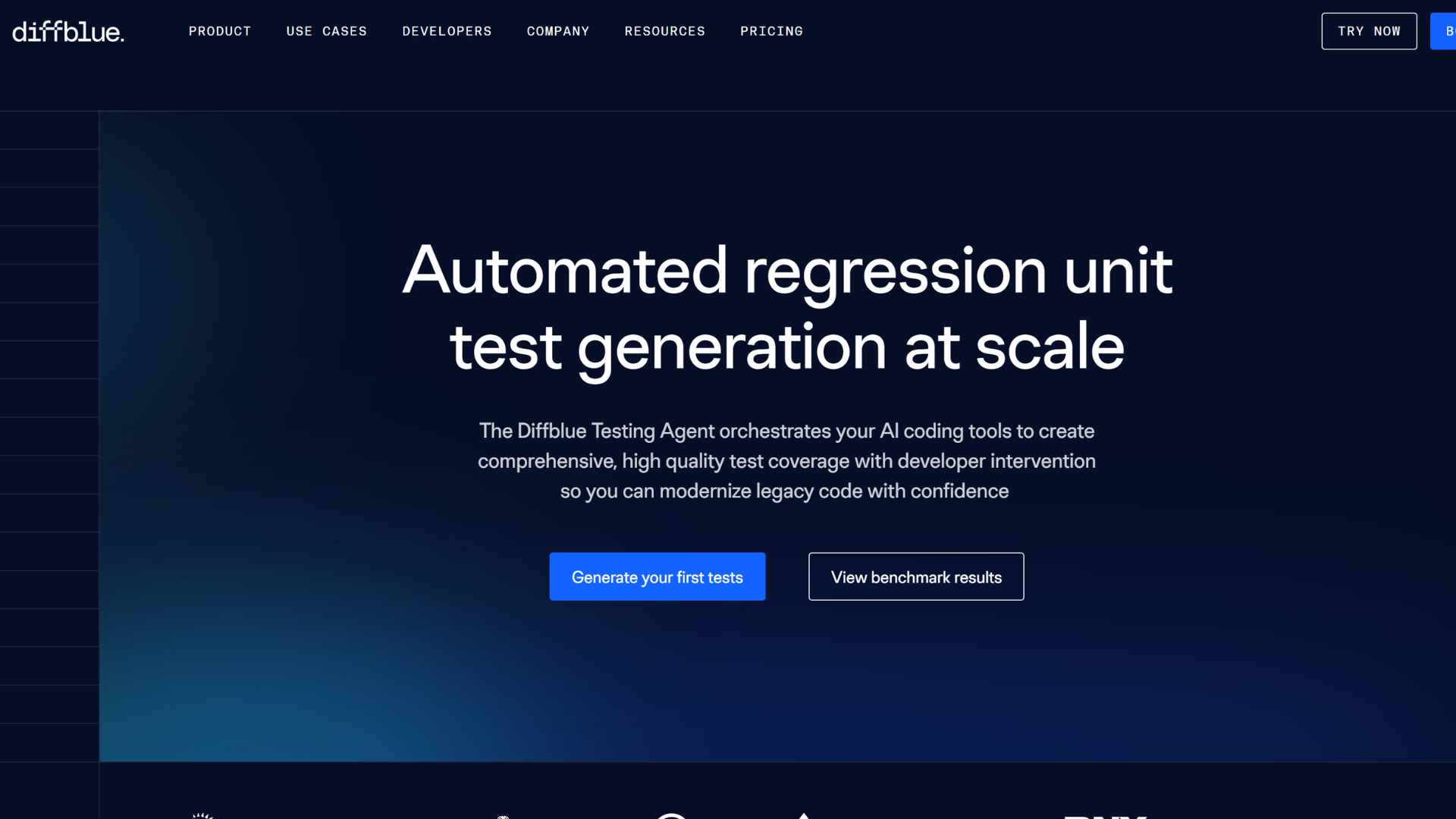
Diffblue started as a University of Oxford spinout and built its reputation on one specific problem: autonomous unit test generation for Java and Kotlin at enterprise scale. Diffblue Cover generates reliable unit tests without human authoring, while the newer Diffblue Testing Agent takes that further by creating entire test suites 250 times faster than a human developer could. The platform uses reinforcement learning, not LLM prompt generation, which is a meaningful technical distinction when you care about test correctness rather than test volume. Clients include Citi, Cisco, AstraZeneca, ING, and BNY Mellon (think heavily regulated, high-stakes environments where wrong tests are worse than no tests).
What’s Diffblue’s Edge in Agentic QA Testing Tools?
Diffblue targets the specific pain of Java-heavy enterprise teams that have massive legacy codebases and almost no unit test coverage, a combination that makes cloud migration and modernization extremely risky. Their outcome-based pricing charges only per verified line of coverage added, which means teams aren’t paying for tests that don’t actually work.
The Review Roundup:
Diffblue doesn’t publicize broad G2 or Trustpilot ratings, but the client roster speaks with enough authority to fill that gap. Enterprises in finance, pharma, and technology don’t run production systems on tools they haven’t stress-tested internally. That kind of adoption in regulated industries is a strong signal on its own.
Testsigma – Best for Enterprise QA Test Automation Across Web, Mobile, and Desktop
What Is Testsigma’s Main Business?
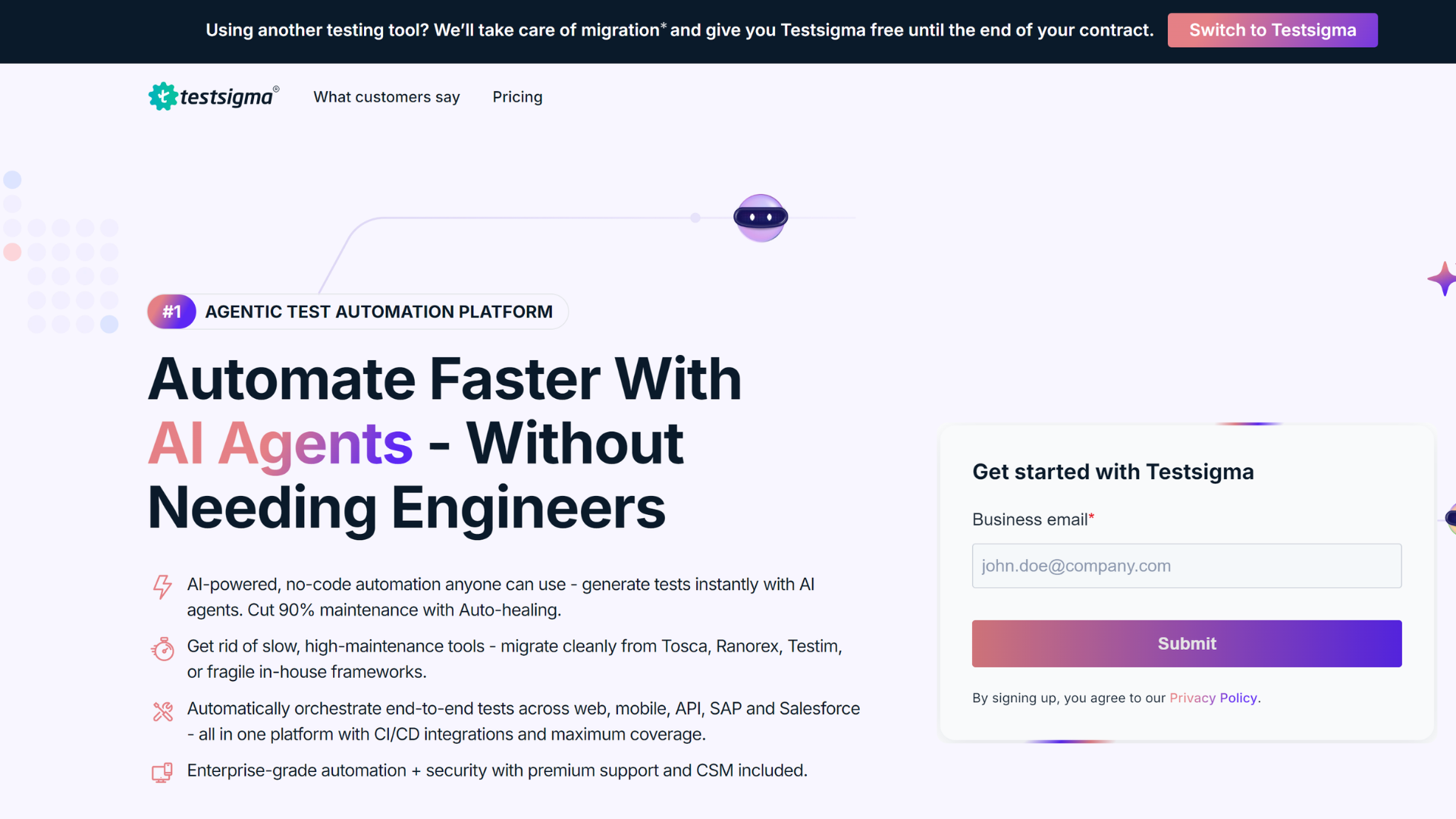
Testsigma runs an agentic test automation platform where the main differentiator is Atto, an AI coworker that handles the full test lifecycle autonomously: planning, design, development, execution, maintenance, and ongoing adjustments. Testsigma Copilot lets testers write steps in plain English, which the platform converts into executable automated tests. Self-healing locators then keep those tests running even when UI elements shift, which directly cuts the maintenance burden that burns out most QA teams. Coverage spans web, mobile, desktop, API, and enterprise applications, with built-in visual testing and accessibility testing rounding out the feature set.
What’s Testsigma’s Edge in Agentic QA Testing Tools?
Testsigma addresses the gap between what non-technical QA engineers can realistically author and what the team actually needs to cover, by making plain English test authoring a production-grade capability rather than a demo-only feature. Enterprises like Nestlé, KFC, DHL, Samsung, and Cisco running on this platform suggest the natural language approach holds up at scale.
The Review Roundup:
Testsigma holds a 4.5 out of 5 on G2 as of Fall 2025 and sits in the Leader quadrant there. They’re also recognized in the Gartner Magic Quadrant for Software Test Automation, which isn’t a placement most tools in this category can claim. Users consistently highlight the self-healing capabilities and natural language authoring as the features that actually change their day-to-day workflow.
The Process Behind This Ranking
Putting this list together required a structured approach across multiple research phases. The goal was to surface tools that deliver real, documented results in agentic QA testing, not just platforms with good marketing copy. Here’s how the research was conducted.
What Information Must Be Collected
The starting point was building a broad longlist by pulling candidates from testing-focused directories, developer community discussions, software review aggregators like G2 and TrustRadius, and analyst reports covering autonomous testing platforms. Case studies published directly by vendors were collected alongside third-party coverage from technical publications. Platforms that appeared repeatedly across multiple independent sources were prioritized for deeper review, since consistent mention across unrelated channels is a stronger signal than a single high-profile placement.
Filtering Candidates for Initial Review
Once the longlist was assembled, each candidate was screened to remove platforms that lacked verifiable third-party validation. Tools relying entirely on self-reported claims with no corroborating reviews, client references, or analyst coverage were set aside. Review patterns were analyzed for consistency, looking at whether feedback across platforms told a coherent story or showed unusual spikes suggesting low-signal data. Platforms with a meaningful pattern of documented enterprise adoption cleared this stage more reliably than those with only startup-stage proof points.
Confirming Accuracy Through Research
Each shortlisted tool was then evaluated by cross-referencing what the vendor claimed on their website against what users actually reported in verified reviews and public case studies. Where a vendor claimed a specific metric, like a percentage improvement in maintenance time or a reduction in test authoring hours, the research looked for corroborating client evidence before treating that claim as credible. Discrepancies between vendor messaging and user-reported experiences were flagged and weighed carefully in the final assessment.
Industry Standing Check
Broader industry standing was assessed by looking at award recognition, inclusion in analyst reports like the Gartner Magic Quadrant or Forrester Wave, and mentions in well-regarded software development and QA publications. A tool earning recognition from multiple independent bodies carries more weight than strong performance on a single platform. Enterprise client rosters were also considered here, since adoption by major organizations in demanding sectors signals that a platform has passed procurement and security scrutiny that smaller teams don’t always apply.
Real-World Agentic QA Testing Tools Evidence
The final check focused on real-world proof specific to agentic QA testing. Each company’s site was reviewed for dedicated capability pages, and case studies were evaluated for specificity, named clients, and quantified outcomes rather than vague claims about gains. Platforms that could point to concrete, measurable results in autonomous test generation, self-healing test execution, or CI/CD pipeline integration were given stronger consideration. The combination of dedicated product depth and verifiable client results was the clearest signal that a tool belongs on a list like this one.
Choosing the Right Agentic QA Testing Tools: A Quick Guide
Picking an agentic QA testing tool is less about finding the flashiest AI demo and more about matching capabilities to where your team actually spends time. The right fit depends on your tech stack, team composition, and how much test maintenance pain you’re currently absorbing. A few factors worth working through before you decide:
- Industry/Domain Experience: Look for tools with documented results in your specific application type, whether that’s Java enterprise backends, mobile apps, or complex SaaS UIs. General-purpose claims matter less than evidence the tool has worked in your kind of environment.
- Features and Services: Check whether the platform covers the layers you need, UI, API, and unit testing, or whether it specializes in one. A CI Agent that generates tests per pull request is very different from a platform that requires manual test authoring up front.
- Pricing Structure: Agentic testing tools range from bootstrapped results-based models to enterprise contracts. Outcome-based pricing (paying per verified line of coverage) matches vendor incentives with your outcomes. Flat-seat licensing may or may not make sense depending on your team size.
- Results Measurement: Ask how the platform measures success. Defect escape rate to production, CI/CD pipeline pass rate, and test maintenance hours saved per development cycle are concrete metrics worth tracking. Vague claims about gains aren’t.
- Industry Knowledge and Compliance: If you operate in healthcare, finance, or another regulated sector, confirm the platform supports validated testing environments and follows ISO 25010, IEEE 829, or ISTQB standards where those apply to your release process.
Wrapping Up
Agentic QA testing is no longer a future-facing concept. Teams are using these tools right now to cut test maintenance, push coverage higher across UI and API layers, and let non-technical engineers actually contribute. The right pick depends on your stack, your team’s technical depth, and how much autonomy you want the agent layer to have. As autonomous test generation matures, the gap between teams using these tools and those still scripting manually will only grow wider.
