
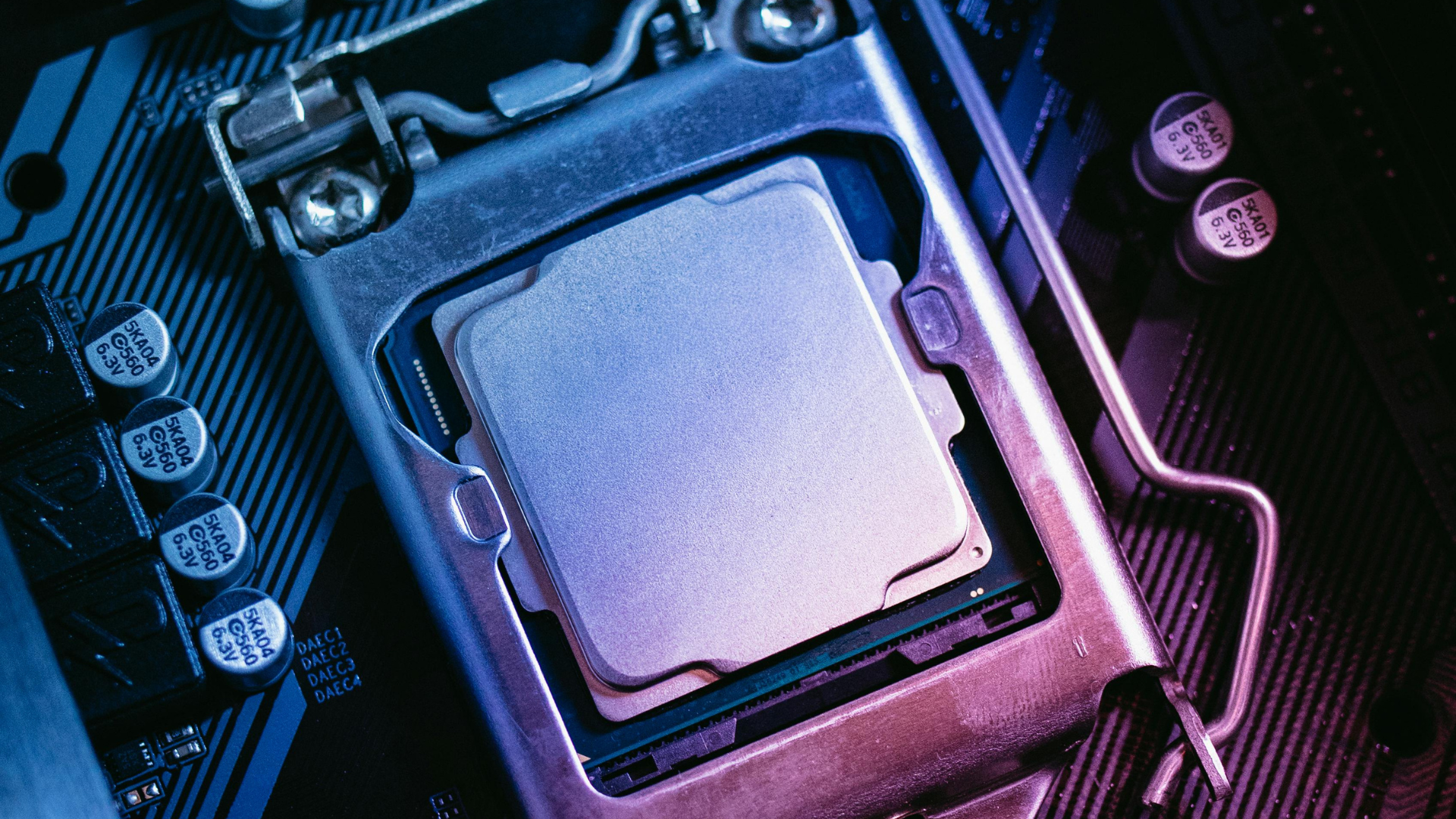
Yes, a modern six-core, twelve-thread CPU is enough for most 1440p gaming systems. It can support strong 60–144Hz performance when paired with an appropriate graphics card, and it often provides better value than an eight-core processor that forces a GPU downgrade.
The important qualifier is “modern.” Core count alone does not describe per-core performance, cache, memory support, clock behavior, or architecture. A current six-core and an older six-core can deliver very different results.
Why Generation Matters More Than Core Count Alone
A CPU core from one architecture does not perform the same amount of work per clock as a core from another. Newer processors may also have larger or faster cache, improved branch prediction, better memory controllers, and higher sustained clocks.
That is why “six cores” is not a performance tier. Compare complete CPU models in the same games. An older eight-core can lose to a new six-core, while a modern cache-focused eight-core can lead both.
Our guide on how CPU cache affects gaming explains one of the reasons similarly clocked processors can behave differently.
How 1440p Shifts More Work to the GPU
At 1440p, the graphics card renders more pixels than it does at 1080p. With the same game and graphics settings, that increases GPU workload and often reduces the performance difference between CPUs.
This helps a capable six-core stay relevant. If the GPU produces 90 FPS at the selected settings and the CPU can prepare 150 FPS, a faster CPU will not meaningfully change the result. A stronger GPU or lower graphics settings would be needed first.
Resolution does not eliminate CPU work. Game simulation, physics, draw calls, audio, networking, and input processing continue regardless of pixel count.
144Hz and 240Hz Change the Requirement
| 1440p Target | Is a Modern Six-Core Enough? | Main Caveat |
|---|---|---|
| 60–90 FPS | Almost always | GPU performance will normally matter more |
| 120–165 FPS | Usually | CPU-heavy games may benefit from a faster model |
| 240 FPS competitive | Sometimes | High-end CPU performance and 1% lows become important |
| Streaming plus gaming | Often with GPU encoding | Heavy CPU encoding or production work favors more cores |
Very high refresh rates shorten the time available to prepare each frame. A six-core can still perform well, but the fastest gaming CPUs offer more headroom in CPU-sensitive titles.
Game Engines Use CPUs Differently
Some games distribute work across many threads. Others rely heavily on one main thread and use additional cores for smaller tasks. A game can show low total CPU usage while one critical core is fully occupied.
Large simulations, strategy games, MMOs, competitive shooters, and crowded open worlds can be CPU sensitive. Graphically intensive single-player games at high settings are more commonly GPU limited.
Check benchmarks for your actual games rather than asking whether “games use eight cores” as a single category.
Average FPS Versus 1% Lows
A six-core may deliver a strong average while producing lower 1% lows during heavy scenes or background activity. That can feel like brief stutter even though the headline FPS looks good.
More cores can help when thread contention is the issue, but a faster architecture, larger cache, quicker memory, or cleaner software environment can also improve consistency. Compare the entire platform.
Our article on how CPUs affect gaming FPS explains why the bottleneck changes with settings and GPU load.
Streaming and Background Applications
A six-core handles voice chat, browsers, game launchers, and monitoring tools well. Streaming is also practical when a modern GPU’s hardware encoder performs the compression.
CPU encoding, virtual machines, software compilation, rendering, and heavy video editing can use more cores. If these workloads run while you game, an eight-, twelve-, or sixteen-core processor can reduce contention.
Do not leave unnecessary applications and overlays running simply because the CPU has many threads. Software discipline improves every system.
When Eight or More Cores Help
- You target 165–240Hz in CPU-heavy games.
- You stream with CPU encoding.
- You edit, render, compile, or run virtual machines frequently.
- You use a flagship GPU and want maximum CPU headroom.
- You keep many demanding applications open while gaming.
- The eight-core option has better gaming architecture or cache, not merely two extra cores.
Compare current options in our best CPUs for gaming guide. Do not buy extra cores without checking whether the specific processor is actually faster in your workload.
Will a Six-Core Bottleneck a High-End GPU?
It can, but not in every game or setting. A modern six-core paired with a high-end GPU at 1440p Ultra may remain GPU limited. The same system at low settings and 240Hz may become CPU limited.
“Bottleneck calculators” that produce one percentage ignore these changes. Use game benchmarks, GPU utilization, per-core CPU behavior, and frame-time data. Pairing an older CPU with a new GPU requires more caution than pairing a current six-core with the same card.
Signs It Is Time to Upgrade
- The GPU remains well below full utilization in the games that feel slow.
- One or more CPU cores stay saturated during poor frame times.
- Lowering resolution and graphics settings does not raise FPS.
- 1% lows remain below your acceptable target.
- Background tasks cause stutter despite sufficient RAM.
- A faster GPU provides little improvement in CPU-heavy scenes.
Before replacing the processor, verify temperatures, memory configuration, drivers, and background software. A single-channel RAM kit or thermal throttling can make a good CPU look inadequate.
Frequently Asked Questions
Are six cores enough for 144Hz gaming?
A modern six-core is enough for many 144Hz systems. CPU-heavy games and a goal of maintaining 144 FPS at all times may benefit from a faster gaming CPU.
Do games use eight CPU cores?
Some games can use work across eight or more cores, but utilization does not guarantee a proportional FPS gain. The main thread, architecture, cache, clocks, and GPU limit still matter.
Will six cores bottleneck a high-end GPU?
Possibly at very high frame rates or in CPU-heavy games. At 1440p High/Ultra, the GPU may remain the limit. Test the exact pairing and workload.
Should I buy six faster cores or eight slower cores?
For gaming, the faster six-core may win. For heavy multitasking and productivity, the eight-core may be better. Compare benchmarks rather than core count alone, and follow our guide on how to choose a CPU.
Bottom Line
A modern six-core CPU is enough for most 1440p gaming builds, particularly at 60–144Hz. It offers strong value and leaves more budget for the graphics card that usually has the larger effect at this resolution.
Move to a faster eight-core or premium gaming processor when you target 240Hz, use a flagship GPU, play CPU-heavy games, or combine gaming with sustained production work. Judge the complete CPU model—not the number six printed on the spec sheet.
