
These are the best new budget graphics cards currently available.

If you’re looking for an affordable graphics card for a new build or an upgrade to an existing system, this guide highlights the best new GPUs currently available for approximately $100-$400.
The budget GPU market has changed significantly, and cards such as the RTX 5060 and RX 9060 XT 8GB can no longer reliably be found below $300. That leaves Intel’s Arc B570, NVIDIA’s RTX 5050, and a handful of older entry-level cards as the primary options for shoppers who need to remain under that mark.
If you need help determining which GPU is appropriate for your system, check out our graphics card buyer’s guide. You may also want to read our guides on how much VRAM you need and the differences between 1080P, 1440P, and 4K gaming.
Note: Graphics card prices are especially volatile right now. The cards below are ranked using their normal current price ranges, but you should check the final Amazon price before purchasing. If you have less than $200 to spend, the used market will generally provide substantially more gaming performance than a new entry-level card.
Watch: What to Look for in A Graphics Card
Watch our Beginner’s Guide to Choosing A Graphics Card below, or on our YouTube channel.
Filter for the Right Graphics Card
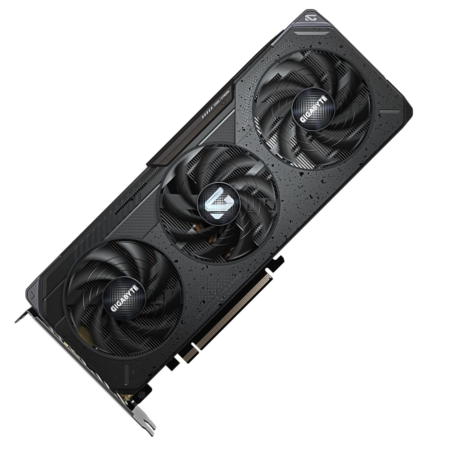
GIGABYTE RX 9060 XT Gaming OC
The best raw gaming performance for around $400
Tech Specs
- Game Clock: 2780MHz
- Boost Clock: 3320MHz
- VRAM: 8GB GDDR6
- Length: 281mm
- PSU: 450-watt
Pros & Cons
- Best raw performance on this list
- Excellent high-refresh 1080P performance
- Capable of handling 1440P gaming
- Now costs well over $300
- 8GB of VRAM may limit some 1440P games
GIGABYTE RX 9060 XT Gaming OC Overview
If you can stretch your budget beyond $300, the GIGABYTE RX 9060 XT Gaming OC offers the best raw gaming performance of the cards in this guide. It is an especially good fit for high-refresh-rate 1080P gaming, although it also has enough power to run most games at 1440P.
GIGABYTE pushes the card’s game clock to 2780MHz and its boost clock to 3320MHz. Its triple-fan WINDFORCE cooler should also keep temperatures under control without requiring an oversized power supply.
The card’s biggest limitation is its 8GB of VRAM. That is still sufficient for most 1080P gaming, but some demanding games may require lower texture settings at 1440P. AMD’s FSR 4 upscaling can help in supported games, but it cannot completely eliminate VRAM-related limitations.
Ultimately, if you want the highest frame rates possible and can spend closer to $400, this is the strongest option on the list.
ASRock Arc B580 Challenger OC
The best combination of performance and VRAM near $300

Tech Specs
- GPU Clock: 2740MHz
- VRAM: 12GB GDDR6
- Memory Bus: 192-bit
- Length: 249mm
- PSU: 650-watt
Pros & Cons
- 12GB of VRAM
- Strong 1080P and entry-level 1440P performance
- XeSS upscaling and AV1 encoding
- Usually costs slightly more than $300
- Resizable BAR is required for optimal performance
ASRock Arc B580 Challenger OC Overview
At just over $300, ASRock’s Arc B580 Challenger OC is one of the best overall values in the current GPU market. Its 12GB of GDDR6 VRAM gives it considerably more memory headroom than similarly priced 8GB cards, making it a viable option for both 1080P and 1440P gaming.
ASRock equips this card with a 2740MHz engine clock, a compact 249mm dual-fan cooler, and a standard 8-pin power connector. It also supports Intel’s XeSS upscaling technology and hardware AV1 encoding, which is useful for streaming and video production.
The main caveat is that Intel Arc cards perform best in systems with Resizable BAR enabled. Before buying, verify that your motherboard and processor support the feature.
Provided that your system supports Resizable BAR, the B580 is an excellent choice for gamers who want more VRAM without moving into a significantly higher price tier.
ASRock Arc B570 Challenger OC
The best overall graphics card under $300

Tech Specs
- GPU Clock: 2600MHz
- VRAM: 10GB GDDR6
- Memory Bus: 160-bit
- Length: 249mm
- PSU: 600-watt
Pros & Cons
- Good 1080P gaming performance
- 10GB of VRAM
- Excellent price-to-performance ratio
- Slower than the B580
- Resizable BAR is required for optimal performance
ASRock Arc B570 Challenger OC Overview
The ASRock Arc B570 Challenger OC is our top overall recommendation for shoppers who cannot spend more than $300. It delivers good 1080P performance and includes 10GB of VRAM, giving it more memory than NVIDIA and AMD typically provide in this price range.
The B570 uses a 160-bit memory interface and ASRock runs this model at 2600MHz. Its 249mm, two-slot design should also fit inside most standard mid-tower and micro-ATX cases.
While it is noticeably slower than the B580, the price difference can make the B570 the better choice for a strict budget build. Just make sure your system supports Resizable BAR, as Arc performance can suffer significantly when that feature is disabled.
For approximately $250-$275, it is difficult to find another new graphics card that offers this combination of gaming performance and VRAM.
PNY RTX 5050 Dual Fan
The best NVIDIA graphics card under $300

Tech Specs
- Base Clock: 2317MHz
- Boost Clock: 2572MHz
- VRAM: 8GB GDDR6
- Length: 200mm
- PSU: 550-watt
Pros & Cons
- DLSS 4 and Multi Frame Generation
- Compact dual-fan design
- Consistent driver and game support
- Only 8GB of VRAM
- Lower value if priced significantly above the B570
PNY RTX 5050 Dual Fan Overview
If you want NVIDIA’s software and feature set without spending well over $300, the PNY RTX 5050 Dual Fan is the most sensible current option.
The RTX 5050 comes with 8GB of GDDR6 VRAM and supports DLSS 4, ray reconstruction, and Multi Frame Generation. These features can produce a significant performance boost in supported games, although frame generation is most useful when the card is already producing a reasonable native frame rate.
PNY’s model measures only 200mm long, making it a good option for compact gaming PCs. It also has a relatively modest 130-watt maximum board power, although PNY recommends pairing it with at least a 550-watt power supply.
The Arc B570’s 10GB of VRAM makes it the more compelling raw value, but the RTX 5050 offers broader game-to-game consistency and NVIDIA’s more mature upscaling ecosystem. It is therefore the better choice for shoppers who specifically want an NVIDIA GPU.
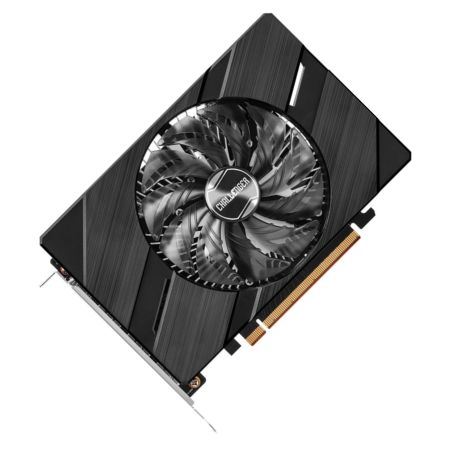
ASRock Arc A380 Challenger ITX
The best new graphics card under $200
Tech Specs
- GPU Clock: 2250MHz
- VRAM: 6GB GDDR6
- Memory Bus: 96-bit
- Length: 190mm
- PSU: 500-watt
Pros & Cons
- Affordable new GPU
- Compact ITX-friendly design
- Hardware AV1 encoding
- Limited AAA gaming performance
- Only 6GB of VRAM
- Used GPUs offer better performance
ASRock Arc A380 Challenger ITX Overview
The ASRock Arc A380 Challenger ITX is one of the few new graphics cards under $200 that is worth considering. It is best suited for esports games, older titles, lightweight games, and systems that need basic GPU acceleration or AV1 encoding.
Its compact 190mm design allows it to fit in a wide range of small cases, while its 6GB of GDDR6 memory is at least more usable than the 4GB included on cards such as the RX 6500 XT.
However, the A380 is substantially slower than the B570 and should not be viewed as an ideal option for demanding modern AAA games. As with other Intel Arc GPUs, Resizable BAR should be enabled for the best possible performance.
If you need a new card with a warranty and cannot spend more than approximately $150, the A380 is a reasonable choice. Otherwise, you will generally get more gaming performance by shopping for a used graphics card.
Which Budget GPU Should You Get?
For most shoppers with less than $300 to spend, the Arc B570 is the best overall value. It delivers good 1080P performance and provides 10GB of VRAM, which is more than most competing cards offer in this price range.
If you can spend slightly more, the Arc B580 provides more performance and 12GB of VRAM. The PNY RTX 5050 is the better sub-$300 option for anyone who specifically wants NVIDIA’s DLSS and ray-tracing ecosystem.
For the highest performance in this guide, consider the RX 9060 XT 8GB, but only if you are comfortable spending closer to $400. Shoppers below $200 should generally look at used GPUs before settling for the entry-level Arc A380.
Regardless of which card you choose, make sure your power supply can safely support it. Our guide to the best power supplies for gaming PCs contains suitable options across a range of wattages and budgets.
Budget Graphics Card FAQ
What is the best budget graphics card right now?
For less than $300, the Intel Arc B570 is currently one of the best values. It offers good 1080P performance and 10GB of VRAM. If you can spend slightly more than $300, the Arc B580 provides better performance and 12GB of VRAM.
Is 8GB of VRAM enough for gaming?
Eight gigabytes of VRAM is still sufficient for most games at 1080P, especially if you are willing to lower texture quality in particularly demanding titles. However, 10GB or 12GB provides more headroom for high-resolution textures and 1440P gaming.
Are Intel Arc graphics cards good for gaming?
Intel’s B570 and B580 are good budget gaming options, particularly in newer DirectX 12 and Vulkan games. However, they should be installed in a system that supports Resizable BAR. Performance and consistency in older games can also vary, so keeping Intel’s graphics drivers updated is important.
Do Intel Arc graphics cards require Resizable BAR?
An Arc graphics card will operate without Resizable BAR, but gaming performance can be significantly lower. We strongly recommend verifying that your processor and motherboard support Resizable BAR before purchasing an Intel Arc GPU.
Should I buy a new or used graphics card for under $200?
A used graphics card will usually offer substantially more gaming performance below $200. A new card such as the Arc A380 makes sense if you prioritize a warranty, low power consumption, AV1 encoding, or a compact design.
Can a budget graphics card handle 1440P gaming?
The RX 9060 XT and Arc B580 can handle many games at 1440P, although settings may need to be reduced in demanding titles. The B570, RTX 5050, and A380 are better suited to 1080P gaming.
How large of a power supply do I need for a budget GPU?
Most budget graphics cards can run on a quality 500-650-watt power supply. The exact requirement depends on the GPU, processor, and other components in your system, so check the card manufacturer’s recommendation before buying.
Is the RTX 5050 better than the Arc B570?
The RTX 5050 offers NVIDIA’s DLSS 4 technology, broader driver consistency, and better support in some older games. The Arc B570 includes 10GB of VRAM and will often provide better value when the two cards are similarly priced. The better choice depends on whether you prioritize NVIDIA’s features or the B570’s additional VRAM.
