
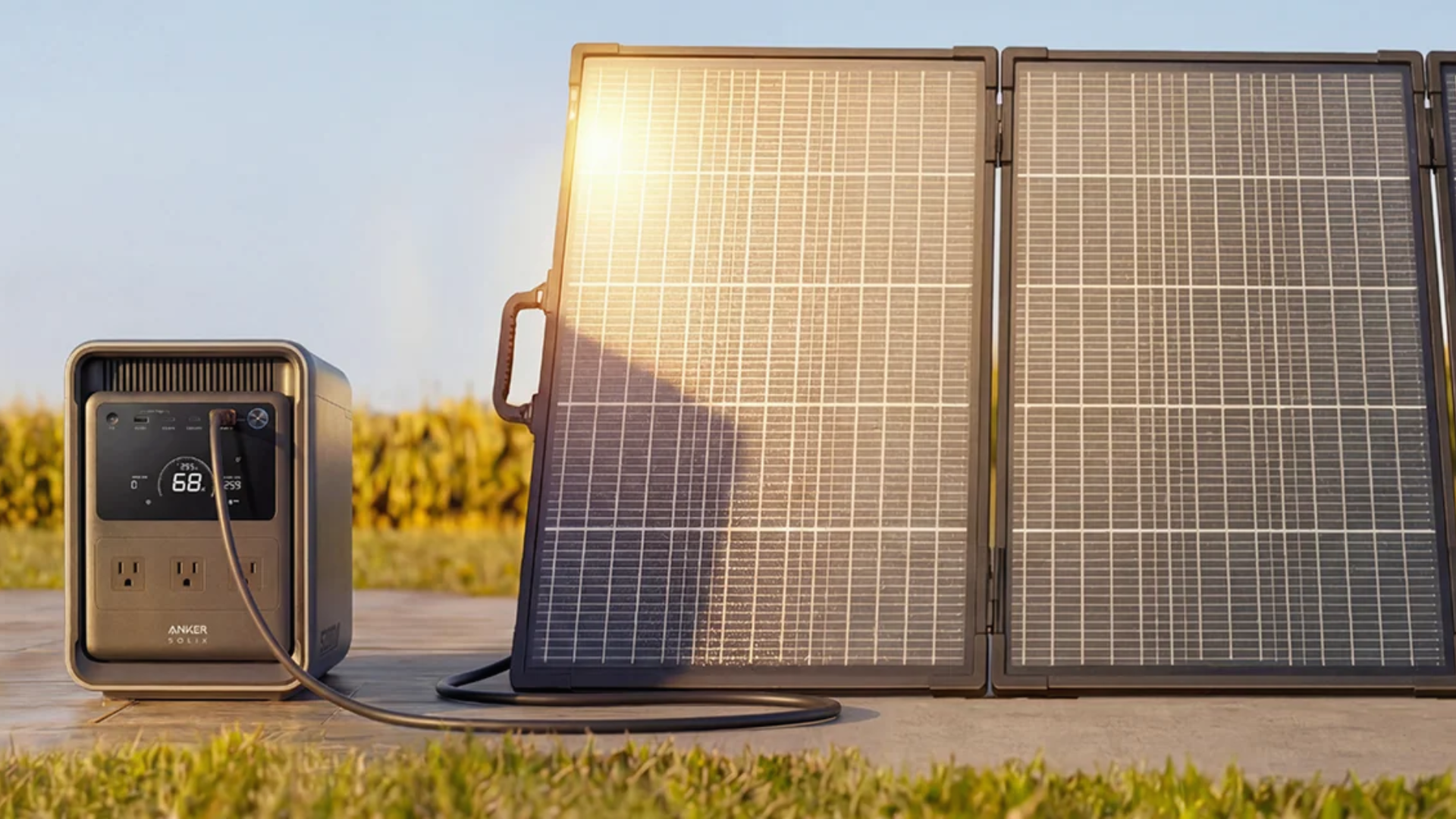
The Anker Solix S2000 vs Jackery comparison becomes clearer once the exact Jackery model is identified. This article compares the Anker SOLIX S2000 with the Jackery HomePower 2000 Plus v2, two 2kWh-class LFP power stations. The S2000 prioritizes efficient essential backup and lower weight, while the Jackery provides higher continuous output and expandable capacity.
The HomePower 2000 Plus v2 should not be confused with the Explorer 2000 v2. The Explorer is a separate 2,042Wh model with 2,200W output and no expansion-battery support, so its specifications and pricing should not be applied to this comparison.
Anker SOLIX S2000 vs Jackery: Quick Verdict
- Efficient standby and refrigerator backup: Anker SOLIX S2000
- Higher continuous output: Jackery HomePower 2000 Plus v2
- Lower weight and compact placement: Anker SOLIX S2000
- Higher solar input: Jackery HomePower 2000 Plus v2
- UPS performance: Both list a 10 ms switchover time
- Battery cycle ratings: The S2000 is rated for 6,000 cycles to 80% capacity and 10,000 cycles to 60%; the Jackery is rated for 6,000 cycles to 70% or higher
- Expansion: The Jackery expands from 2kWh to 12kWh, while the S2000 has a fixed 2,010Wh capacity
Anker SOLIX S2000 vs. Jackery HomePower 2000 Plus v2: Specifications
The following table compares the manufacturer-rated specifications of two approximately 2kWh portable power stations. Confirm regional specifications and accessory compatibility before ordering, as product configurations may change.
Advertised capacity is not the same as usable AC energy. Actual runtime and charging performance depend on conversion losses, standby consumption, connected loads, temperature, battery condition, and charging conditions.
| Comparison factor | Anker SOLIX S2000 | Jackery HomePower 2000 Plus v2 |
|---|---|---|
| Battery capacity | 2,010Wh | 2,048Wh |
| Battery type | LFP | LFP |
| Continuous AC output | 1,500W | 2,400W |
| Peak output | 3,000W | 4,800W |
| Weight | 35.7 lb | 41.45 lb |
| AC charging | About 1.2 hours to 80% and 1.7 hours to full in UltraFast Mode | About 1.5 hours to full in Emergency Charging Mode |
| Maximum solar input | 400W | 800W |
| Active idle power | 6W | Not specified in the cited official comparison |
| UPS switchover | 10 ms | 10 ms |
| Cycle rating | 6,000 cycles to 80%; 10,000 cycles to 60% | 6,000 cycles to 70%+ |
| Expansion | Not supported | Expandable from 2kWh to 12kWh |
| 12V DC output | Not included | Included |
| Warranty | 5 years | 3 years plus 2 additional years for eligible official-site purchases |
UltraFast Mode on the S2000 must be enabled through the Anker app. Its default 1,150W AC setting takes approximately 2.3 hours for a full charge. The Jackery’s stated 1.5-hour result requires Emergency Charging Mode. Actual charging time varies with battery level, temperature, input conditions, and operating settings.
5 Key Specifications to Compare in a 2,000Wh Power Station
A large battery is useful only when its output and ports match your equipment. When comparing the Anker Solix S2000 with a Jackery power station, focus on these five specifications to evaluate runtime, appliance compatibility, durability, and real-world AC performance.
- Watt-Hours Determine Runtime: Watt-hours measure stored energy. A 100W device could theoretically run for 20 hours on 2,000Wh, but inverter and battery losses reduce actual runtime. A 500W appliance may operate for approximately three to three-and-a-half hours through AC power, depending on efficiency and whether it cycles on and off.
- Continuous Output Determines Appliance Compatibility: Continuous wattage indicates how much load the inverter can support over time. Add the running wattage of all connected devices and maintain a safety margin below the maximum rating. This specification is especially important for heating elements, microwave ovens, pumps, and multiple appliances operating simultaneously.
- Surge Output Handles Startup Demands: Refrigerators, freezers, pumps, and power tools may briefly draw significantly more electricity when their motors start. Surge wattage measures the inverter’s short-term capacity for handling these peaks. A power station may have sufficient continuous output but still shut down if it cannot manage a compressor’s startup demand.
- LiFePO4 Chemistry Supports Long-Term Use: Both models use LFP batteries, but their cycle ratings use different capacity-retention thresholds. The S2000 is rated for 6,000 cycles to 80% capacity and 10,000 cycles to 60%. Jackery rates the HomePower 2000 Plus v2 for 6,000 cycles to 70% or higher. These figures should be compared together with their stated retention levels.
- Inverter Efficiency Affects Usable AC Capacity: Advertised battery capacity does not equal the energy delivered to an AC appliance. The inverter consumes some electricity, and efficiency varies with the load. Low-power AC devices can be surprisingly inefficient because the inverter remains active even when the connected equipment uses very little power.
What Advantages Do Anker SOLIX S2000 and Jackery Offer?
The Anker SOLIX S2000 and Jackery HomePower 2000 Plus v2 provide similar base capacities but emphasize different features. Anker focuses on efficient operation, portability, and essential-device backup, while Jackery combines higher output with faster charging and expandable storage.
Anker SOLIX S2000: Efficient and Compact Backup Power
The Anker SOLIX S2000 is designed for users who want approximately 2kWh of storage in a relatively compact, easy-to-position unit. Its key advantages include:
- Efficient standby operation: Its 6W active idle consumption helps preserve energy when powering intermittent loads such as refrigerators, routers, and office equipment.
- Portable 2kWh design: At 35.7 lb, it is easier to move between a home, vehicle, campsite, or tailgate than many power stations in the same capacity class.
- Long-cycle LFP battery: The battery is rated for 6,000 cycles to 80% capacity and 10,000 cycles to 60%, supporting frequent backup and outdoor use.
- Essential-device support: Its 1,500W rated output, 3,000W peak output, 10 ms UPS switchover, and app controls suit compatible refrigerators, computers, networking equipment, lights, and campsite devices.
- Extended refrigerator backup: Anker reports up to 35 hours of runtime for a 700 L refrigerator under specified laboratory conditions. Actual runtime varies with the refrigerator model, ambient temperature, door openings, and additional connected loads.
- UltraFast AC charging: When UltraFast Mode is enabled in the Anker app, the S2000 reaches approximately 80% in 1.2 hours and a full charge in 1.7 hours under Anker laboratory conditions.
Jackery HomePower 2000 Plus v2: High Output and Expandable Capacity
The Jackery HomePower 2000 Plus v2 combines a 2,048Wh base battery with greater output and system expandability. Its notable features include:
- Higher appliance output: Its 2,400W rated output and 4,800W peak output provide headroom for operating several household devices or appliances with higher startup demand.
- Expandable energy storage: The 2,048Wh base capacity can be expanded to approximately 12kWh using compatible Battery Pack 2000 Plus v2 units. The HomePower 2000 Plus v2 is not compatible with expansion batteries intended for other Jackery product lines.
- Faster energy replenishment: Jackery lists approximately 1.5 hours for AC charging in Emergency Charging Mode and about 3.2 hours of solar charging with an 800W input under its stated test conditions.
- Flexible device connections: Four AC outputs, USB-A, 30W and 140W USB-C ports, and a 12V DC output support household appliances, laptops, mobile electronics, and compatible DC equipment.
Which Power Station Is Best for Your Use Case?
The right choice depends on where the power station will be used, which devices must operate together, and whether portability, output, standby efficiency, or expansion matters most. The following four scenarios provide a balanced comparison between the two models.
Weekend Camping and Tailgating
Camping and tailgating generally involve moderate loads such as lights, speakers, phones, laptops, fans, and portable cooling equipment. A suitable station should be easy to transport, compact enough for vehicle storage, and capable of powering several smaller devices simultaneously.
The Anker SOLIX S2000 is well matched to this scenario because it weighs 35.7 lb and provides 2,010Wh of capacity. Its 1,500W rated output supports many common campsite and tailgate devices, while AC, USB, solar, and vehicle recharging options provide flexibility away from home.
Home Power Outages
Household outages may require a refrigerator, router, lights, computers, CPAP equipment, and selected kitchen appliances to operate together. A backup station should provide sufficient continuous output, accommodate motor startup demand, and offer additional capacity if outages become longer.
The Jackery HomePower 2000 Plus v2 provides 2,400W rated output and 4,800W peak output for higher combined loads. Its support for compatible expansion batteries also allows users to increase stored energy when the base 2,048Wh capacity is insufficient for extended home backup.
RV and Van-Life Power
RV and van-life setups may include refrigeration, ventilation fans, laptops, cameras, lighting, and kitchen equipment. Useful features include higher AC output, solar charging, USB connections, a vehicle-style DC port, and enough capacity for overnight or multi-day stays.
The Jackery model combines 2,400W output with up to 800W solar input and a 12V car port. It also includes USB-C output of up to 140W for compatible laptops and electronics, while expansion support provides a path toward longer off-grid operation.
Remote Work and Home-Office Backup
A home-office backup setup may need to support a laptop, monitor, router, modem, external storage, and desk accessories. Low standby consumption, stable AC output, convenient connections, and fast power transfer are particularly relevant when equipment remains connected throughout the workday.
The Anker SOLIX S2000 is particularly suitable for a connected home-office setup because its 6W active idle consumption limits energy use while equipment waits for an outage. Both models list a 10 ms UPS switchover, but the S2000’s compact 35.7 lb design and front-and-rear outlet arrangement can make permanent placement beside or beneath a desk more practical.
How to Choose Between Anker SOLIX S2000 and Jackery
Instead of choosing by brand alone, compare each power station with your equipment, usage patterns, budget, and future power needs. The following points can help you make a practical decision.
- Check Your Devices’ Running and Startup Wattage: Read the label or manual for every important device. Add their running wattage and identify startup requirements for compressors, pumps, and power tools. If the combined load approaches the inverter limit, choose the higher-output model or connect fewer appliances at the same time.
- Estimate Runtime Using Usable Capacity: Multiply each device’s wattage by the number of hours you expect to use it. Then account for inverter losses and cycling appliances, such as refrigerators and freezers, which do not run continuously. This estimate will help you determine whether the available battery capacity meets your needs.
- Compare Current Prices and Cost per Watt-Hour: Portable power station prices can change frequently. Divide the purchase price by the rated watt-hours, then consider the expected cycle life. A less expensive station with a longer service life may provide better long-term value, especially for frequent users.
- Review the Warranty, Accessories, Return Policy, and Expansion Options: Check which accessories are included and whether solar cables or panels must be purchased separately. Review how warranty service works in the United States and whether the unit supports expansion. If your power requirements may increase, an expandable system could justify a higher purchase price.
- Choose a Smaller or Larger Power Station When Necessary: A 2,000Wh station may be excessive for phones, cameras, and occasional laptop charging. However, it may be insufficient for whole-home heating, electric cooking, or multi-day RV use. Choose a smaller unit for portability or a larger expandable system for sustained, high-demand loads.
Conclusion
In the Anker SOLIX S2000 vs Jackery comparison, the S2000 is better suited to users who prioritize lower weight, low active idle consumption, refrigerator runtime, and compact backup for office or household essentials. The HomePower 2000 Plus v2 is more appropriate when higher continuous output, an 800W solar input limit, a 12V DC output, or future capacity expansion matters more.
The two models therefore serve different operating patterns rather than producing one universal winner. Confirm that the Jackery listing is for the HomePower 2000 Plus v2 rather than the Explorer 2000 v2, and compare current prices, included accessories, charging modes, and warranty terms before ordering.
FAQs
Can the Anker SOLIX S2000 or Jackery 2000 v2 run a refrigerator?
Yes, either can usually run a typical refrigerator if its startup surge stays within the inverter’s limits. The S2000’s 1,500W continuous output may be sufficient, but check the compressor rating. The HomePower 2000 Plus v2 offers more surge and continuous headroom. Runtime depends on the refrigerator’s duty cycle and temperature.
How long will a 2,000Wh power station run a CPAP?
A 2,000Wh station can run a CPAP for several nights, but the exact result depends on pressure, humidifier use, heated tubing, and whether AC or DC power is used. At approximately 40W for eight hours, one night requires about 320Wh before conversion losses. Direct DC operation may extend runtime.
Which charges faster, Anker SOLIX S2000 or Jackery?
The Jackery HomePower 2000 Plus v2 lists a full AC charge in approximately 1.5 hours, compared with about 1.7 hours for the S2000 in UltraFast Mode. The Jackery also accepts up to 800W of solar input, while the S2000 supports up to 400W. Actual charging performance depends on the selected mode, battery level, temperature, panels, and available input power.
Can the Anker SOLIX S2000 battery be expanded?
No, the Anker SOLIX S2000 is a fixed-capacity power station and does not support the same add-on battery expansion offered by the Jackery HomePower 2000 Plus v2. If your energy needs may grow, choose an expandable system from the beginning rather than assuming a second station can be linked later.
