
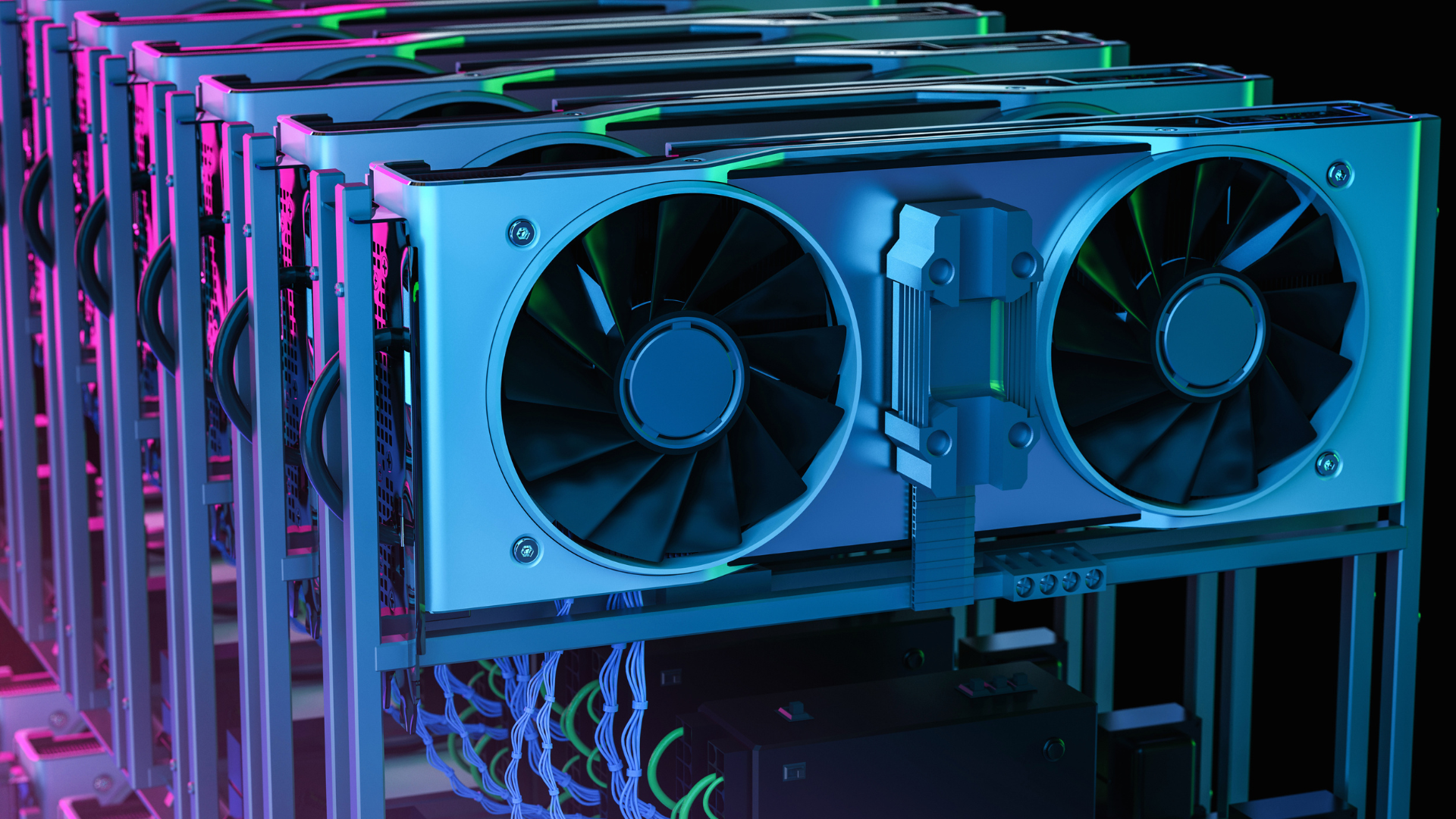
The Nvidia RTX 5090 launched at $1,999 in January 2025. As of July 2026 it lists for $4,329 on Amazon, with some board-partner configurations exceeding $5,000, and 2026 marks the first year in roughly three decades that Nvidia has not launched a new consumer GPU architecture.
What follows covers a practical way around the shortage, why this is a memory problem rather than a chip problem, what Nvidia’s paper launches signal about availability, and which card tiers are hit hardest.
High-Performance GPU Rentals as a Way Around the Current Shortage
Nobody planning a build list in 2026 should assume a graphics card will be on the shelf when they are ready to buy it. Renting instead of buying has become one of the more practical workarounds: services built around high-performance GPU rentals let a build proceed on on-demand access to current hardware, billed by the second at the listed hourly rate rather than a full hourly block, rather than waiting out a shortage with no clear end date.
That changes the planning question from when a card can be bought to whether it needs to be owned at all.
Why This Shortage Is a Memory Problem, Not a Chip Problem
Every graphics card ships with several gigabytes of high-speed memory soldered directly to the board. Nvidia’s RTX 50 series uses GDDR7, AMD’s Radeon RX 9000 series uses GDDR6, and both are made by the same three companies that also supply AI data center accelerators: Samsung, SK Hynix, and Micron, who together control 90 to 95 percent of global DRAM output.
The AI accelerators competing for that same capacity use a more demanding memory type called HBM, which stacks multiple dies vertically and consumes roughly four times the wafer area per gigabyte compared to standard DRAM. IDC projects AI data centers will absorb roughly 70% of the world’s memory output in 2026, up from 20 to 30% in 2022, leaving gaming GPUs fighting over what is left.
That squeeze is now a legal question. On June 25, 2026, seventeen plaintiffs filed a federal antitrust lawsuit against Samsung, SK Hynix, and Micron, alleging the three coordinated to restrict DRAM supply and inflate prices by roughly 700% over four years. The allegations are unproven, but Samsung and SK Hynix both pled guilty to criminal DRAM price-fixing charges over the same market in the early 2000s.
How Paper Launches Are Changing What Availability Actually Means
On July 9, 2026, Nvidia released something PC gamers had not asked for: a set of 14 free collectible trading cards tracing GeForce history back to 1995, distributed at gaming events including gamescom and QuakeCon as part of a Summer of RTX promotion. The internet’s verdict: fourteen cards, zero silicon.
No new consumer GPU generation is coming from Nvidia in 2026, the first year in roughly three decades without one. Add-in-card partner allocation for the RTX 50 series has been cut by 20 to 40 percent, and the planned RTX 50 Super refresh has been delayed indefinitely, with one Taiwanese outlet reporting CES 2027 as the earliest realistic window. AMD’s own next generation has reportedly slipped to late 2027 or 2028.
Tracking Which Tiers of Card Are Hit Hardest This Time
The flagship tier is the most visibly damaged. The RTX 5090’s climb from a $1,999 launch price to $4,329 and climbing is the headline number, but not the whole story.
| Tier | Memory content | Exposure to the shortage |
|---|---|---|
| Flagship (RTX 5090 class) | Highest VRAM per card | Hit hardest, largest dollar and percentage increase |
| Mid-range | Moderate VRAM per card | Smaller dollar increase, still a real percentage move |
| Budget | Lowest VRAM per card | Comparatively insulated, never competed with AI accelerators for supply |
Deciding Whether to Wait Out the Crisis or Work Around It
This is not TechGuide’s first time covering a graphics card shortage. Its own coverage of the 2021 shortage pointed readers toward stock trackers, the used market, and prebuilt systems while that pandemic-driven crunch worked itself out over roughly two years. That shortage resolved because demand cooled and supply caught up.
This one is different in kind, not degree. The 2021 shortage was a demand spike hitting a fixed supply chain. This one is structural: memory manufacturers are choosing where to send limited wafer capacity, and gaming GPUs are losing that fight to AI data centers on purpose, not by accident.
Tech Times has tracked the pricing and legal fallout from that shift, including the antitrust case now in federal court. Waiting this one out is a worse bet than in 2021: there is no clear catalyst that resolves it the way pandemic demand eventually cooled. Anyone who needs a current-generation card now, without needing to own it permanently, is better served renting the hours than waiting for a shelf that does not restock the way it used to.
