
The best DDR5 and DDR4 memory kits for gaming PCs.
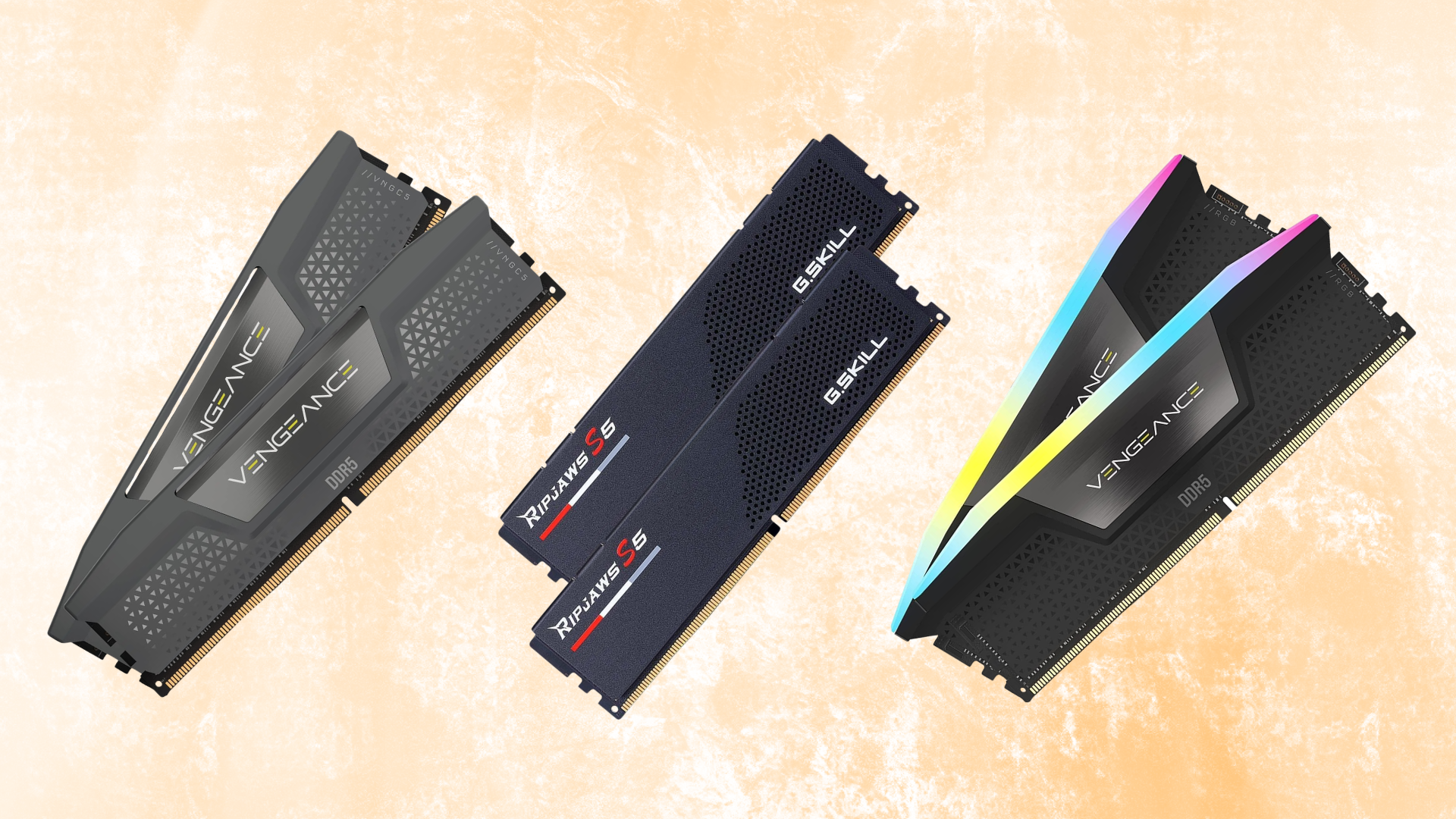
If you’re building a new gaming PC in 2026, 32GB of DDR5 memory is the capacity we would recommend for most systems.
A 32GB kit provides plenty of room for modern games while leaving additional memory available for Discord, browsers, game launchers, recording software, mods, and other background applications.
For AMD’s current AM5 platform, a 32GB DDR5-6000 kit with relatively tight timings remains an excellent starting point. DDR5-6000 CL30 kits are widely available, perform well with Ryzen processors, and do not require chasing extremely high memory frequencies to get strong gaming performance.
Intel systems can also benefit from faster memory. Core Ultra 200S processors officially support DDR5-6400, and newer Core Ultra 200S Plus processors support even higher speeds. However, buying the fastest memory kit available is rarely necessary for a gaming PC.
The memory controller in your processor, motherboard, BIOS, DIMM configuration, and memory kit all affect the speed you can reliably run. A slightly slower kit with good timings and stable XMP or EXPO settings is generally preferable to an extremely fast kit that requires significant tuning.
DDR4 is much less relevant for a brand-new gaming PC than it was when we originally published this guide. However, it is still useful if you’re upgrading an existing AM4 system or another computer that uses a DDR4 motherboard.
For most new systems, we recommend starting with the Corsair Vengeance DDR5-6000 CL30 kit below. It provides 32GB of capacity, tight timings, and support for both AMD EXPO and Intel XMP profiles.
Also Read: The Best CPUs for Gaming
Watch: What to Look for in RAM
Watch our Beginner’s Guide to Choosing RAM below, or on our YouTube channel.
Corsair Vengeance DDR5-6000 CL30
The best RAM for gaming overall.

Tech Specs
- CAPACITY: 32GB (2x16GB)
- TYPE: DDR5
- SPEED: 6000 MT/s
- LATENCY: CL30
- TIMINGS: 30-36-36-76
- VOLTAGE: 1.40V
- PROFILE: EXPO / XMP 3.0
Pros & Cons
- Excellent speed and latency for a gaming PC
- 32GB is ideal for most modern gaming builds
- Supports both AMD EXPO and Intel XMP 3.0
- Low-profile design works well with large air coolers
- Faster kits may make more sense for high-end Intel builds
Corsair Vengeance DDR5-6000 CL30 Overview
For most new gaming PCs, a 32GB DDR5-6000 CL30 kit is about where we would start, and this Corsair Vengeance kit checks essentially every box we are looking for.
You get two 16GB modules for a total capacity of 32GB. That is enough memory for modern games while providing considerably more breathing room than a 16GB configuration when you have a browser, Discord, game launchers, recording software, or other programs running in the background.
The DDR5-6000 speed and CL30 latency provide an excellent balance as well.
This configuration is particularly attractive for AMD’s AM5 platform. You can buy faster DDR5 memory, but pushing memory frequencies significantly beyond 6000 MT/s does not automatically translate into a worthwhile gaming-performance increase.
For a Ryzen gaming build, we would generally rather have a good DDR5-6000 kit with tight timings and stable EXPO settings than spend significantly more money chasing an extreme memory frequency.
This particular Vengeance kit is also more versatile than many platform-specific memory kits because it supports both AMD EXPO and Intel XMP 3.0 profiles.
That means it can make sense whether you’re building around a Ryzen processor or an Intel platform.
Its relatively simple heat spreader is another advantage. RGB memory with tall heatsinks can occasionally interfere with large tower-style CPU coolers. Corsair’s standard Vengeance modules keep a lower profile and should work in a wider range of configurations.
Keep in mind that installing DDR5-6000 memory does not necessarily mean your computer will run it at 6000 MT/s automatically. You will typically need to enable the appropriate EXPO or XMP profile in your motherboard’s BIOS.
Memory overclocking also depends on your processor’s memory controller and motherboard. There is never an absolute guarantee that every CPU and motherboard combination will run every advertised overclocked memory profile.
Still, DDR5-6000 is a relatively conservative target compared with the extremely fast DDR5 kits now available.
For someone who simply wants to install 32GB of fast memory, enable the appropriate memory profile, and get on with using their gaming PC, Corsair’s DDR5-6000 CL30 Vengeance kit is our top overall choice.
G.SKILL Ripjaws S5 DDR5-6400 CL32
A fast low-profile kit for Intel systems.

Tech Specs
- CAPACITY: 32GB (2x16GB)
- TYPE: DDR5
- SPEED: 6400 MT/s
- LATENCY: CL32
- TIMINGS: 32-39-39-102
- VOLTAGE: 1.40V
- PROFILE: Intel XMP 3.0
Pros & Cons
- DDR5-6400 with reasonably tight CL32 latency
- Excellent fit for Intel gaming systems
- Only about 33mm tall
- 32GB capacity is plenty for most gamers
- AM5 buyers are generally better served by an EXPO kit
G.SKILL Ripjaws S5 DDR5-6400 CL32 Overview
If you’re building an Intel-based gaming PC and want something a little faster than DDR5-6000, G.SKILL’s Ripjaws S5 DDR5-6400 kit is a strong option.
This kit includes two 16GB modules for a total of 32GB, runs at DDR5-6400, and is rated for CL32 latency with 32-39-39-102 timings.
DDR5-6400 is also a sensible speed for Intel’s current desktop platform. It gives you additional memory bandwidth over DDR5-6000 without moving into the much more expensive and potentially more difficult-to-run speeds offered by enthusiast DDR5 kits.
You can certainly go faster.
There are DDR5-7200, 7600, 8000, and even faster kits available. Newer Intel platforms and premium motherboards are capable of running extremely high memory frequencies under the right circumstances.
But that does not mean every gaming PC needs them.
As memory frequencies increase, motherboard quality, DIMM configuration, processor memory-controller quality, and BIOS tuning become increasingly important. Extremely fast memory can also carry a significant price premium while providing relatively small real-world gains in many games.
The Ripjaws S5 series takes a more practical approach.
Another advantage is its physical size. G.SKILL lists the modules at approximately 33mm tall, making them significantly easier to fit underneath large air coolers than many RGB memory kits.
This particular model is designed around Intel XMP 3.0 rather than AMD EXPO. That makes it a more natural choice for an Intel system.
An AMD motherboard may still be able to run the memory, but if you’re building an AM5 PC from scratch, we would choose an EXPO-certified DDR5-6000 CL30 kit instead.
For an Intel gaming PC, though, this DDR5-6400 Ripjaws S5 kit offers an excellent combination of capacity, memory frequency, latency, clearance, and price.
Corsair Vengeance RGB DDR5-6000
A great RGB memory kit for an Intel build.

Tech Specs
- CAPACITY: 32GB (2x16GB)
- TYPE: DDR5
- SPEED: 6000 MT/s
- LATENCY: CL36
- TIMINGS: 36-44-44-96
- VOLTAGE: 1.35V
- PROFILE: Intel XMP 3.0
Pros & Cons
- Attractive customizable RGB lighting
- Good DDR5-6000 performance
- 32GB capacity is ideal for modern gaming PCs
- Integrates with Corsair’s iCUE ecosystem
- The linked CL36 XMP kit is better suited to Intel than AM5
Corsair Vengeance RGB DDR5-6000 Overview
If you’re building a system with a tempered-glass side panel and want the memory to contribute to the overall look of the build, Corsair’s Vengeance RGB series is one of the better-looking DDR5 options available.
This specific kit includes 32GB of memory across two 16GB DIMMs and runs at DDR5-6000 with CL36 latency.
That is not quite as tight as the CL30 memory we selected as our top overall choice, but the performance difference is unlikely to transform your gaming experience.
For an RGB-oriented build, aesthetics, software support, and compatibility become part of the buying decision as well.
The lighting across the top of each module can be configured through Corsair’s iCUE software, which is particularly convenient if you’re already using Corsair fans, coolers, peripherals, or other RGB components.
The linked kit uses an Intel XMP 3.0 memory profile, so we would primarily recommend this particular version for an Intel gaming PC.
Corsair also produces Vengeance RGB memory in other specifications, including kits targeted at AMD EXPO.
If you’re building an AM5 system, we would look specifically for a DDR5-6000 CL30 EXPO version rather than purchasing based on the Vengeance RGB name alone. Manufacturers often sell many different speeds, timings, capacities, and memory-profile configurations under the same product family.
That is an important point when shopping for RAM in general.
Two kits that both say “Corsair Vengeance RGB” can have very different underlying specifications, so always check the complete model and memory timings before purchasing.
If the linked DDR5-6000 CL36 kit is reasonably priced and you’re putting together an Intel-based RGB gaming computer, it provides plenty of capacity, solid performance, and some of the better lighting customization available on a memory kit.
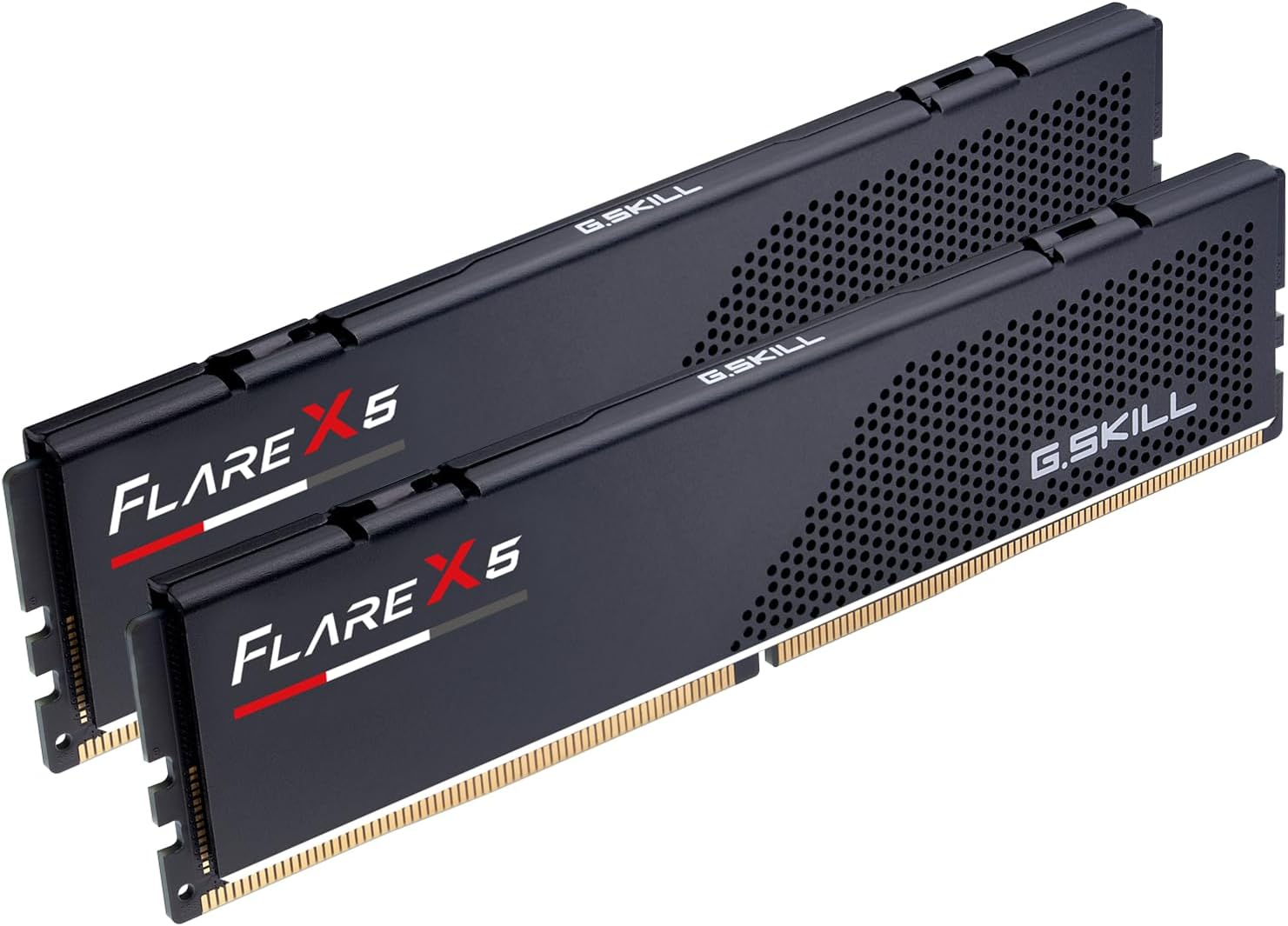
G.SKILL Flare X5 64GB DDR5-6000 CL30
The best 64GB memory kit for a high-end gaming PC.
Tech Specs
- CAPACITY: 64GB (2x32GB)
- TYPE: DDR5
- SPEED: 6000 MT/s
- LATENCY: CL30
- TIMINGS: 30-40-40-96
- VOLTAGE: 1.40V
- PROFILE: AMD EXPO
Pros & Cons
- Huge 64GB capacity
- Excellent DDR5-6000 CL30 specifications
- Uses only two DIMMs instead of four
- Great for gaming, streaming, editing, and heavy multitasking
- 64GB is unnecessary for most gaming-only systems
G.SKILL Flare X5 64GB DDR5-6000 CL30 Overview
Most gamers do not need 64GB of RAM.
But there are plenty of gaming PCs that are used for more than gaming, and that is where this 64GB G.SKILL Flare X5 kit starts to make sense.
You get two 32GB modules running at DDR5-6000 with CL30 latency and 30-40-40-96 timings.
That is an excellent memory configuration for a high-end AM5 system.
The main benefit, obviously, is capacity.
A 64GB configuration gives you much more room for video editing, streaming, 3D applications, virtual machines, software development, heavily modded games, large simulation titles, and workloads that involve keeping a significant number of applications open simultaneously.
It can also make sense for someone who plans to keep the same computer for a long time and knows their non-gaming applications already use significant amounts of memory.
For gaming alone, though, we would still buy 32GB.
Putting the money saved toward a faster graphics card, better processor, larger SSD, or higher-quality monitor will usually make a much bigger difference to your gaming experience than going from 32GB to 64GB.
We also prefer this 2x32GB kit over filling four motherboard slots with four 16GB DIMMs.
DDR5 memory can place more stress on a processor’s memory controller as you add DIMMs. Running two matched modules generally gives you a better chance of reaching your desired memory speed than filling all four slots.
The Flare X5 series is designed around AMD EXPO and has a relatively understated low-profile heatsink.
That makes this kit especially attractive for a high-end Ryzen gaming/workstation hybrid where you want 64GB of RAM without sacrificing memory speed or creating clearance problems around a large CPU cooler.
If your PC is strictly for gaming, stick with one of the 32GB options. If gaming is only one part of what your system does, this 64GB Flare X5 kit is the option we would consider.
TEAMGROUP T-Create Expert DDR5-6000 CL30
The best-value DDR5 memory kit.

Tech Specs
- CAPACITY: 32GB (2x16GB)
- TYPE: DDR5
- SPEED: 6000 MT/s
- LATENCY: CL30
- TIMINGS: 30-36-36-76
- VOLTAGE: 1.35V
- PROFILE: EXPO / XMP 3.0
Pros & Cons
- Excellent DDR5-6000 CL30 specifications
- Supports both AMD EXPO and Intel XMP 3.0
- 32GB capacity is ideal for most gaming PCs
- Simple low-profile design avoids RGB premiums
- Plain appearance will not appeal to RGB-focused builds
TEAMGROUP T-Create Expert DDR5-6000 CL30 Overview
You do not need an elaborate heatsink or RGB lighting to get excellent gaming performance from your memory.
TEAMGROUP’s T-Create Expert is a good example.
This 32GB kit includes two 16GB modules rated for DDR5-6000 with CL30 latency and 30-36-36-76 timings.
In other words, its important performance specifications are essentially right where we want them for a modern gaming build.
It also supports both Intel XMP 3.0 and AMD EXPO profiles, giving it flexibility across current platforms.
What makes the T-Create Expert particularly attractive is its straightforward design.
Instead of an oversized heat spreader and elaborate RGB diffuser, TEAMGROUP uses a relatively simple low-profile heatsink. That makes it easier to install underneath a large tower cooler and helps keep unnecessary extras from increasing the price.
There is nothing wrong with paying extra for RGB memory if appearance matters to you.
But RGB lighting does not improve your framerate.
For a computer where performance per dollar is more important than lighting, a kit like this makes a lot of sense.
As with the Corsair Vengeance kit, you will need to enter your motherboard’s BIOS and enable the appropriate memory profile if you want the RAM to run at its advertised DDR5-6000 settings.
Without XMP or EXPO enabled, the motherboard may initially run the memory at a lower default speed.
We would compare the current prices of this kit and the Corsair Vengeance DDR5-6000 CL30 kit before purchasing.
Memory prices can change quickly, and both offer the kind of specifications we want in a mainstream gaming PC.
Whichever is cheaper at the time you buy is likely to be the better value.
Corsair Vengeance LPX DDR4-3200 CL16
The best DDR4 upgrade for an older gaming PC.

Tech Specs
- CAPACITY: 32GB (2x16GB)
- TYPE: DDR4
- SPEED: 3200 MT/s
- LATENCY: CL16
- TIMINGS: 16-20-20-38
- VOLTAGE: 1.35V
- PROFILE: Intel XMP 2.0
Pros & Cons
- Easy way to bring an older gaming PC up to 32GB
- Good DDR4-3200 CL16 specifications
- Low-profile modules fit underneath most CPU coolers
- Mature and widely compatible DDR4 platform
- DDR4 should not be the starting point for most new builds
Corsair Vengeance LPX DDR4-3200 CL16 Overview
DDR4 is no longer where we would start when putting together a completely new gaming PC.
However, millions of perfectly capable gaming systems still use DDR4, and replacing an entire processor, motherboard, and memory platform just because your computer needs more RAM often makes little sense.
For those systems, Corsair’s Vengeance LPX remains one of the safest DDR4 recommendations.
This kit includes two 16GB modules for a total of 32GB and is rated for DDR4-3200 with CL16 latency and 16-20-20-38 timings.
Those specifications pair well with a wide variety of older gaming platforms.
The kit is especially useful if you have a 16GB system that is beginning to run short on memory when playing newer games, running heavily modded titles, or multitasking.
We generally recommend replacing the existing memory with a matched 32GB kit rather than purchasing a second unrelated kit and assuming the two will work perfectly together.
Even RAM with the same advertised speed can use different memory chips, subtimings, or revisions.
Mixing kits can work, but it can also force you to run at lower speeds or manually adjust memory settings to achieve stability.
Corsair’s LPX heat spreader is also short enough to fit underneath nearly every mainstream tower CPU cooler.
Just make sure your motherboard actually uses DDR4 before purchasing it.
DDR4 and DDR5 are physically and electrically different technologies. A DDR4 module cannot be installed in a DDR5 memory slot, and a DDR5 module cannot be installed in a DDR4 slot.
For a brand-new build, choose DDR5.
For an otherwise capable DDR4 gaming PC that simply needs more memory, this 32GB Vengeance LPX kit is an inexpensive way to extend the useful life of the system.
Which RAM should you choose?
For most new gaming PCs, we recommend 32GB of DDR5 memory installed as a matched pair of 16GB modules.
The Corsair Vengeance DDR5-6000 CL30 kit is our top overall choice. Its combination of capacity, speed, latency, low-profile heat spreaders, and support for both AMD EXPO and Intel XMP makes it suitable for a wide range of current gaming builds.
The TEAMGROUP T-Create Expert DDR5-6000 CL30 is an excellent alternative. It offers very similar specifications, so we would compare the current prices of the Corsair and TEAMGROUP kits and buy whichever provides the better value.
For an Intel gaming system, G.SKILL’s Ripjaws S5 DDR5-6400 CL32 provides additional memory bandwidth while maintaining reasonably tight timings. Its low-profile design is also useful when installing a large air cooler.
If RGB lighting matters, the Corsair Vengeance RGB DDR5 kit is a good option for an Intel-based build. Just pay attention to the exact model you purchase, as Vengeance RGB kits are available with different speeds, timings, and memory profiles.
If you actually need more than 32GB, the 64GB G.SKILL Flare X5 DDR5-6000 CL30 kit gives you two 32GB modules without sacrificing the memory specifications we would want in a high-end Ryzen system.
Finally, if you’re upgrading an older DDR4 computer rather than building a new system, Corsair’s 32GB Vengeance LPX DDR4-3200 CL16 kit remains an inexpensive and practical option.
Frequently Asked Questions
What is the best RAM for gaming in 2026?
For most gaming PCs, we recommend a 32GB DDR5 kit consisting of two 16GB modules.
DDR5-6000 CL30 provides an excellent combination of memory speed and latency, particularly for AMD AM5 systems.
Our top overall choice is the 32GB Corsair Vengeance DDR5-6000 CL30 kit. TEAMGROUP’s T-Create Expert DDR5-6000 CL30 is another excellent option and may be the better buy when it is less expensive.
Intel users can also consider faster DDR5-6400 and DDR5-7200 memory depending on their processor and motherboard.
How much RAM do you need for gaming in 2026?
We recommend 32GB for a new gaming PC.
A 16GB system can still run a large number of games, particularly esports titles and older releases. However, 32GB provides additional headroom for newer games, background programs, browser tabs, game launchers, Discord, recording software, mods, and future releases.
Since a gaming PC is typically used for several years, starting with 32GB makes more sense than building a new 16GB system and planning to upgrade shortly afterward.
Is 16GB of RAM still enough for gaming?
16GB is still usable for gaming, but we no longer consider it the ideal capacity for a completely new gaming PC.
It remains appropriate for very inexpensive builds, esports-focused systems, or computers used for less demanding games.
If your budget allows it, we would install 32GB instead.
The cost difference between comparable 16GB and 32GB DDR5 kits is usually much smaller than the cost of upgrading other major components, and the extra capacity gives you significantly more room for multitasking.
Is 64GB of RAM overkill for gaming?
For gaming by itself, yes.
Most gaming PCs will see little or no benefit from moving from 32GB to 64GB as long as the system is not already running out of memory.
However, 64GB can make sense if the same computer is used for video editing, 3D rendering, virtual machines, software development, large creative projects, heavily modded games, simulation workloads, or extreme multitasking.
If you do need 64GB, we recommend purchasing a matched 2x32GB kit rather than combining multiple separate memory kits.
What RAM speed is best for AMD Ryzen?
For a current AM5 gaming PC, DDR5-6000 with relatively tight timings is a sensible target.
A 32GB DDR5-6000 CL30 EXPO kit provides an excellent balance of memory bandwidth, latency, compatibility, and price.
Faster memory can work, but the performance improvement will depend on the processor, game, motherboard, and memory configuration.
For most Ryzen gaming systems, we would prioritize stable DDR5-6000 CL30 memory over spending significantly more on an extreme-frequency kit.
What RAM speed is best for Intel Core Ultra?
Intel Core Ultra desktop processors can take advantage of faster DDR5 memory.
Core Ultra 200S processors officially support memory speeds up to DDR5-6400, while newer Core Ultra 200S Plus processors support higher speeds.
High-end motherboards can also support XMP memory kits running well beyond those speeds.
However, faster memory does not always provide a large gaming-performance improvement.
DDR5-6400 is a sensible target for many Intel gaming PCs. Enthusiasts with a suitable motherboard can consider DDR5-7200 or faster memory, but system stability and price become increasingly important as memory frequency rises.
What are XMP and EXPO?
XMP and EXPO are memory profiles that allow compatible motherboards to configure RAM at its advertised performance settings.
Intel XMP stands for Extreme Memory Profile, while AMD EXPO stands for Extended Profiles for Overclocking.
Without one of these profiles enabled, a memory kit may initially operate at a lower default speed.
After assembling your PC, enter your motherboard’s BIOS and enable the appropriate XMP or EXPO profile if you want the memory to run at its advertised settings.
Some modern memory kits include profiles for both platforms.
Should you use two or four sticks of RAM?
For most gaming PCs, we recommend two sticks.
If you want 32GB, use a 2x16GB kit. If you need 64GB, a 2x32GB kit is generally preferable.
Using four DDR5 DIMMs can place additional stress on the processor’s memory controller and may make high memory frequencies more difficult to achieve.
A two-DIMM configuration also leaves two motherboard slots open if you need additional capacity later.
Should you mix different RAM kits?
We generally recommend against it.
Two memory kits can have the same advertised capacity, speed, and timings yet use different memory chips, subtimings, or revisions.
The system may still work, but you could experience instability or need to run the memory at a lower speed.
If you want 32GB or 64GB of RAM, buying one matched kit with the total capacity you need is the safer approach.
Does faster RAM increase FPS?
It can, but the improvement varies significantly.
Memory speed can have a larger effect when a game is limited by CPU performance. That makes memory performance more important at lower resolutions, with high-end graphics cards, or when trying to achieve extremely high framerates.
In GPU-limited situations, changing memory speed may produce very little difference.
Processor architecture matters as well. Some CPUs respond more strongly to memory bandwidth and latency than others.
That is why buying the fastest memory available is rarely the best use of a gaming-PC budget.
Does CAS latency matter?
Yes, but memory frequency and latency should be considered together.
A lower CL number does not automatically mean one memory kit is faster than another if the two kits operate at different frequencies.
For example, DDR5-6000 CL30 is generally more attractive than DDR5-6000 CL40 because both kits run at the same frequency while the CL30 kit has lower latency.
This is one reason DDR5-6000 CL30 has become such a useful target for gaming systems.
Can DDR4 RAM work in a DDR5 motherboard?
No.
DDR4 and DDR5 DIMMs use different physical keying and electrical specifications.
A DDR4 module cannot be installed in a DDR5 slot, and DDR5 memory cannot be installed in a DDR4 slot.
Always check your motherboard’s memory type before purchasing RAM.
Should you upgrade from DDR4 to DDR5?
Not necessarily.
Moving from DDR4 to DDR5 usually requires replacing the motherboard and potentially the processor as well.
If your existing DDR4 computer still provides the gaming performance you need, upgrading from 16GB to 32GB of DDR4 may be considerably more cost-effective than replacing the entire platform.
DDR5 makes more sense when you’re already building a new computer or upgrading to a processor and motherboard that require it.
Do you need RGB RAM for gaming?
No.
RGB lighting has no impact on memory performance.
RGB memory can be worthwhile if you have a tempered-glass case and want the memory to match the rest of your system’s lighting.
If appearance is not important, a non-RGB kit will provide the same gaming performance when the underlying memory specifications are identical.
How do you know if RAM will work with your motherboard?
Start by checking whether your motherboard supports DDR4 or DDR5.
Next, check the maximum supported memory capacity, supported speeds, number of DIMM slots, and whether the motherboard supports Intel XMP, AMD EXPO, or both.
Motherboard manufacturers also publish memory QVLs, or Qualified Vendor Lists, containing memory kits that have been tested on specific boards.
A kit does not necessarily have to appear on the QVL to work, but the list can provide additional confidence when using high-capacity or extremely fast memory configurations.
Do you need to enable XMP or EXPO?
If you want your memory to operate at the speed advertised on the package, usually yes.
Memory will commonly boot at a conservative default setting when it is first installed.
Enabling XMP or EXPO tells the motherboard to load the memory manufacturer’s tested frequency, timings, and voltage profile.
After enabling the profile, verify that your system is stable. If you experience crashes, failed boots, or memory errors, update your motherboard BIOS and check the memory settings before assuming another component is causing the problem.
