
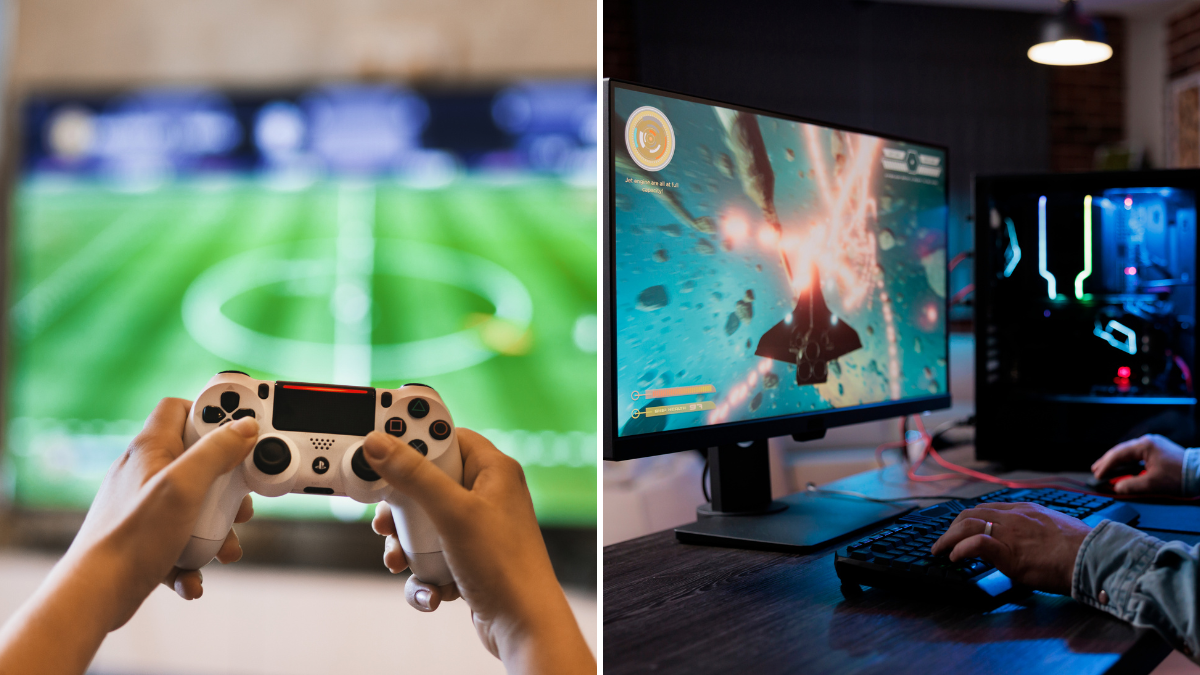
 Thinking about upgrading your current gaming setup? Not sure if you should buy a new console or switch to PC? In this updated guide, I’m going to weigh the pros and cons of PC gaming vs. console gaming (in 2026) to help you decide which one actually makes more sense for you.
The age-old battle wages on: PC gaming vs. console gaming. Which is better? This debate is rarely friendly, occasionally fact-based, and mostly “my platform is my personality” driven.
And the truth is… there isn’t a single correct answer. Both platforms have legit pros and legit downsides. Depending on your budget, the types of games you play, and how you like to play them, you might be better suited for a console, a PC, or (what a lot of us end up with) both.
That said—in my opinion—PC gaming still offers the most upside for the widest range of gamers… most of the time. But PC gaming isn’t perfect, and the “best” choice isn’t the same for everyone.
So, instead of turning this into a fanboy fight, I’m going to break it down in a way that actually helps you make a decision.
Table of Contents
1. You Do You
4. Performance & Upgrade Paths
5. Available Games & Exclusives
6. Which Platform Offers More Comfort?
8. Modding
You Do You
First off—if you came here to argue, I’m not going to take the bait. Because at the end of the day, if you prefer console gaming over PC gaming (or the other way around), you’re correct.
It’s your preference.
Whatever platform you enjoy more is the platform you should spend your time on. If you’re happy with what you’ve got, there’s no reason to let someone on the internet convince you you’re “doing gaming wrong.”
But if you’re not sure what platform is right for you—or you’re gaming on one platform and curious what the other brings to the table—keep reading.
Cost of Entry
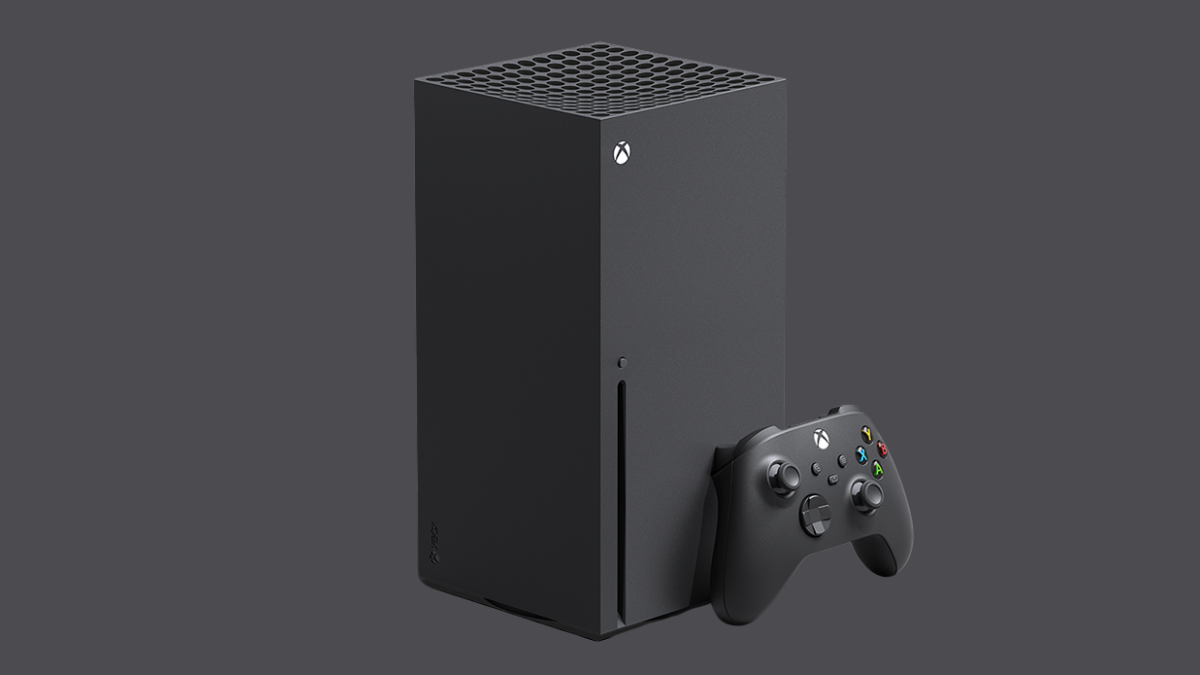
The cost argument is still the #1 reason this debate never dies.
And in 2026 the “cost of entry” conversation basically goes like this:
Console gamer: “I want to play now. A console is a single purchase, it’s easy, and it runs the games I want.”
PC gamer: “If you build smart (or buy the right prebuilt), you can get close to console performance and upgrade over time instead of buying a whole new box later.”
In my opinion, both are correct—because they’re talking about two different types of cost.
Consoles are still the cleanest “plug it in and start playing” option. You don’t have to learn parts, drivers, Windows settings, or troubleshooting. You buy the box, buy/download the game, and you’re gaming.
With PC, you can absolutely build something great… but the upfront cost can be higher, especially if you’re starting from scratch and need a monitor, keyboard/mouse, and other accessories.
If You Also Need a Computer, You Can Double Up
One thing that still matters here: most people need a computer anyway—school, work, side projects, general life stuff.
So if you need a PC (or need to upgrade your old one), a gaming PC can solve multiple problems at once. A console can stream video and browse the web… but it’s not replacing a real computer.
If your “console vs PC” decision is also a “I need a better computer” decision, PC becomes a lot more practical.
Cost Over Time
Cost over time is where the debate gets interesting—because it depends heavily on how you game.
Here’s what tends to shift the long-term math in PC’s favor:
- You don’t need to pay per month just to play multiplayer (PC doesn’t lock online play behind a subscription)
- PC game pricing is often more aggressive (sales, bundles, older titles getting cheap fast)
- Your “hardware lifecycle” can be flexible (you upgrade parts when needed vs. a full platform refresh)
Consoles, on the other hand, have become more subscription-centric. They’re not “wrong” for doing it—subscriptions offer value for a lot of people—but it does add up.
Now, here’s the part people always ignore:
Cost over time only matters if your habits make it matter.
If you buy two or three games a year and mostly play the same titles (sports, one main shooter, a couple exclusives), the “PC games are cheaper!” argument doesn’t hit as hard.
But if you’re the type who plays a lot of different games and you take advantage of sales, PC pricing can save you a surprising amount over a few years.
So, don’t generalize this one. Think about how you actually buy and play games.
Ecosystem Lock-In Is a Bigger Deal Than It Used to Be
One factor that matters a lot more in 2026 than it did years ago is ecosystem lock-in.
Most gamers today already own large digital libraries. Hundreds of dollars’ worth of games can be tied to a single PlayStation, Xbox, or PC storefront account. Switching platforms isn’t just buying new hardware—it often means leaving a library behind.
This is an area where PC has a quiet long-term advantage. PC libraries aren’t tied to a single hardware generation or manufacturer. Games bought years ago can usually still be accessed, patched, and played on new systems, and multiple storefronts (Steam, GOG, Epic, etc.) coexist on the same machine.
That doesn’t mean consoles are “bad” here—just that platform switching tends to be more expensive once you’re deeply invested. If you already own a large library on one platform, that alone can outweigh many theoretical pros and cons.
Performance & Upgrade Paths
This is still PC’s strongest overall advantage: performance potential.
Modern consoles are genuinely impressive for the price. You can get great-looking games, solid resolution targets, and support for modern features like high refresh modes, VRR, and fast load times.
But console performance is still fixed. You get what you get.
PC performance has a much higher ceiling:
- Higher and more consistent frame rates (especially for competitive games)
- More graphics options (and the ability to tune for performance)
- Better support for ultra-wide monitors, high refresh, and multi-monitor setups
- More flexibility with input devices (keyboard/mouse, controller, specialized peripherals)
And yes—there will always be someone who says “you can’t see above 60 FPS.” Anyone who has gone from 60Hz to 120Hz+ (and actually plays fast games) knows that’s not true. Even outside of competitive play, higher frame rates can make games feel smoother and more responsive.
Upgrade Paths
PC upgrade paths are still a huge deal, and they’ve only become more relevant as games get heavier.
With consoles, you’re in a generation cycle. When the next generation hits, you can keep your current console for a while… but eventually you’ll either upgrade the whole box or accept that you’re going to be left behind.
With PC, there’s no “your PC stops working” moment. What happens is:
- Your PC gradually stops running new games as well as you want
- You lower settings… then maybe resolution… then eventually you upgrade
Often, that upgrade can be a single part (usually the GPU). Sometimes it’s a GPU + PSU. Sometimes it’s a full platform refresh if your system is old enough.
The point is: you get to control the timeline.
Of course, upgrades add to cost over time. If you’re upgrading constantly just because you want the newest thing… PC isn’t going to be cheaper. But if you upgrade strategically, you can stretch a system for a long time.
Available Games & Exclusives

If we’re talking sheer number of games, PC still wins—by a lot. Between Steam and other storefronts, indie developers have never had an easier time publishing.
If you like indie games, weird games, niche strategy games, sims, survival games, early access projects… PC is basically the promised land.
But AAA exclusives have shifted since 2019.
We’re in a world where:
- Cross-play is common (which reduces the “platform lock” feeling)
- Some console exclusives come to PC eventually
- Some PC-focused games still never hit consoles (or feel compromised when they do)
So it’s less about “which platform has more games?” and more about which platform has the games you actually care about.
Competitive Titles Still Favor PC
Even with cross-play, the reality is that competitive play still favors PC in most cases:
- Lower input latency potential
- Higher refresh rate support
- Mouse and keyboard precision
- More performance headroom
Consoles are absolutely viable for competitive play. But if you’re serious-serious (ranked grinders, aspiring tournament players, etc.), PC is still the default.
Input Flexibility and Accessibility
Another area where PC quietly pulls ahead is input flexibility.
On PC, you can play with virtually any control method you want—keyboard and mouse, standard controllers, adaptive controllers, racing wheels, flight sticks, MMO mice, or fully customized setups. Everything from button remapping to sensitivity tuning can be handled at the system or software level.
Consoles have made major strides in accessibility and controller support, but PC still offers the widest range of options. This matters not just for competitive players, but also for gamers who need specific accessibility features or who enjoy specialized genres like flight sims, racing sims, or MMOs.
If how you control a game matters as much as the game itself, PC gives you the most freedom.
Backwards Compatibility and Emulation
PC’s “library advantage” isn’t just about new games—it’s also about old games.
PC is the most backwards-compatible platform in gaming history. You can still play classics from decades ago, either officially or through community support. And yes, PC also has a massive emulation scene (which is a whole conversation by itself).
If you care about retro gaming or preserving access to old favorites, PC is hard to beat.
Which Platform Offers More Comfort?

This is where consoles still shine: couch comfort and simplicity.
Console gaming is designed around a living room setup. Controller in hand, legs up, big screen, no desk required. It’s a vibe.
PC can do comfort too—but you have to build that experience intentionally. If you’ve got the right setup (good chair, desk, monitor, peripherals), PC can be extremely comfortable. And if you want a “couch PC,” you can do that as well… it just takes more effort.
Also, while controllers are widely supported on PC now (and that’s a good thing), a lot of PC games still feel best on keyboard/mouse—especially shooters, MOBAs, RTS games, and competitive titles.
So if “kick back and relax” is the whole point of gaming for you, console still has a real advantage.
The Esports & Twitch Scene

Streaming and esports are bigger than ever. And while consoles have improved massively for streaming, PC is still the center of gravity for the creator/competitive ecosystem.
Why?
- More control over capture, overlays, audio routing, and production
- More flexibility with streaming software and plugins
- Better multi-tasking (stream + chat + browser + tools)
- Most esports infrastructure is PC-first
Can you stream on console? Absolutely. Can you build a brand on console? Yes. But if you want the most control and the most scalable setup, PC is still the better platform.
Modding

Modding is one of the most unfair advantages PC has—because it can completely change what a game is.
Some console games have mod support now, but it’s limited compared to what PC can do.
On PC you can:
- Add new content, quests, weapons, maps, and systems
- Fix bugs the developers never fix
- Improve visuals and performance
- Create entirely new experiences (total conversions)
If you’re the type who likes tweaking, customizing, or extending a game’s lifespan, PC is the best platform by a mile.
Storage, File Access, and Game Preservation
Modding also ties into a broader advantage: file access and storage control.
On PC, you have full access to game files. That means easier backups, community patches, performance tweaks, and long-term preservation—even after official support ends. Large mods, total conversions, and community fixes aren’t limited by platform approval systems or storage restrictions.
Consoles are improving here, but they’re still more locked down. Storage expansion is more limited, file access is restricted, and mods (when available) are often capped in size or functionality.
If you care about preserving games, extending their lifespan, or fully owning the software you buy, PC remains the most flexible platform.
Which Platform Is Right for You?
Here’s my updated 2026 take:
PC is usually the better platform overall—because it offers the highest performance potential, the most flexibility, the best upgrade paths, and the most options (games, mods, competitive play, content creation, you name it).
But consoles still make a ton of sense if:
- You want the simplest setup possible
- You mostly play a few mainstream titles
- You prefer couch gaming
- You don’t want to troubleshoot anything
- You want the lowest cost to start playing today
And PC makes the most sense if:
- You care about frame rate, responsiveness, and settings control
- You want to upgrade over time instead of buying a whole new box later
- You play competitive games (especially with mouse/keyboard)
- You want access to the widest library of games
- You want mod support, creator tools, and maximum flexibility
Value Beyond Gaming
One last thing that’s worth mentioning—especially in 2026—is that a gaming PC doesn’t stop being useful when you’re not gaming.
A PC is also your work machine, content creation setup, productivity tool, and general-purpose computer. Whether that’s editing videos, streaming, coding, schoolwork, remote work, or just having multiple apps open at once, a PC carries value well beyond gaming.
Consoles have expanded their capabilities over the years, but they’re still purpose-built gaming devices. A PC can replace multiple devices at once, which changes the value equation for a lot of people—especially if gaming isn’t the only thing you do on your system.
Final Verdict
In a perfect world, you’d have both and never think about this again. But if you’re choosing one platform as your “main” platform, here’s the blunt answer:
If you want the most capable gaming platform long-term, PC is the better choice most of the time.
But if a console fits your budget, your lifestyle, and the games you play… there is absolutely nothing wrong with choosing the platform that makes gaming easier and more enjoyable for you.
